Robotic Welding Machine Cost in 2026: Complete Cell Pricing & ROI
Compare publicly documented US$85,000–350,000+ complete-cell budget examples, understand what is—and is not—included, and build a realistic robotic welding RFQ with HORISTAR.
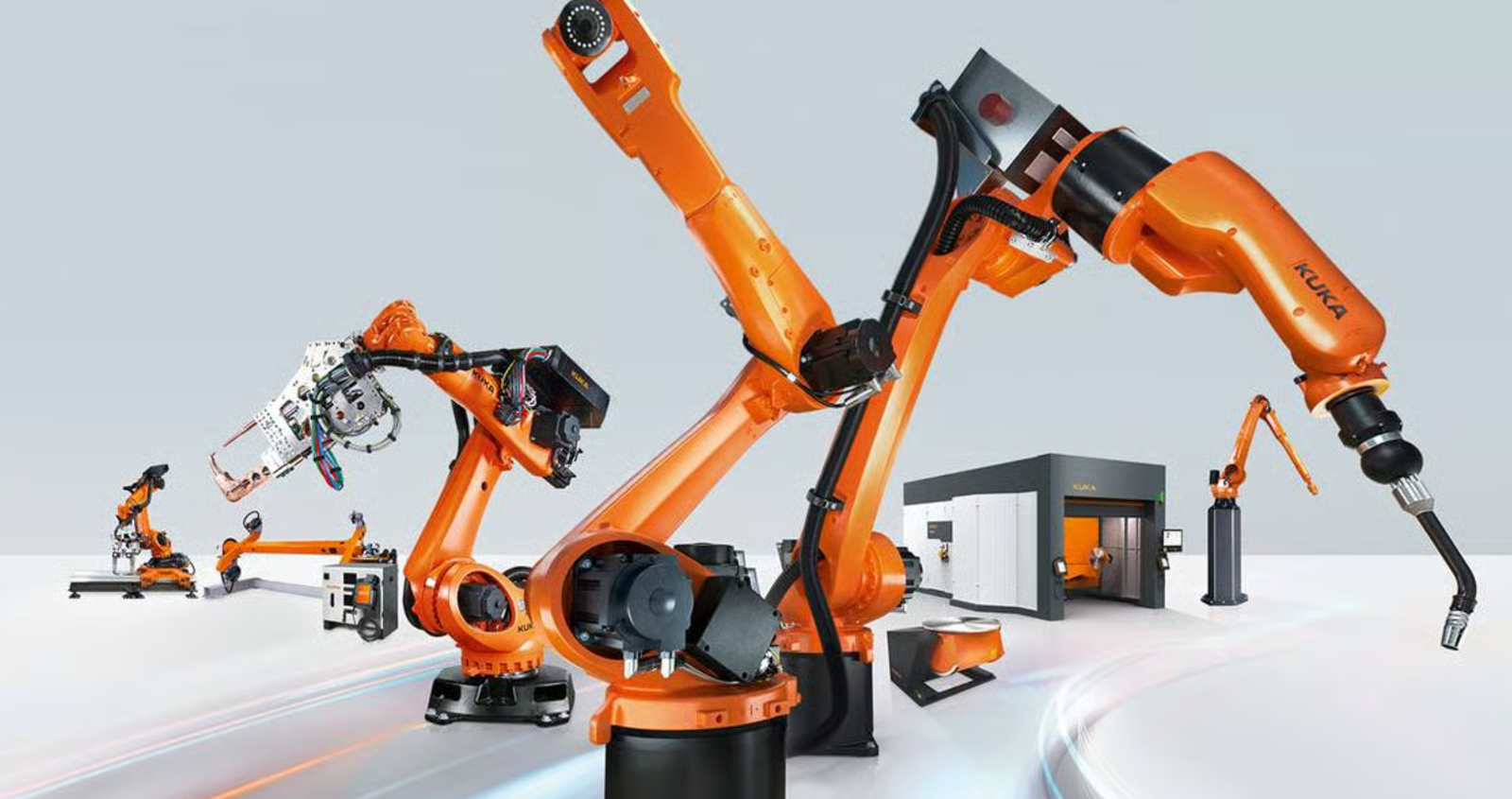
The first mistake in a robot welding budget is comparing a robot arm quotation with a complete production cell. A production-ready solution needs the right welding process, workholding, positioner, operator workflow, safety provisions and commissioning. This HORISTAR guide focuses on what buyers need to budget, compare and request—not just how many axes the robot has.
Robotic Welding Machine Price Ranges in 2026
The published amounts below help establish the scale of an investment. They come from different publicly advertised equipment packages and U.S. integrator references, so they must not be compared as identical quotations.
| Published reference type | Illustrative cost in USD | Scope warning |
|---|---|---|
| Complete collaborative MIG welding package | From $105,000 | One publicly advertised starting price; optional software, positioning and tooling may add cost. |
| U.S. pre-engineered industrial welding cell | $85,000–$180,000 | 2026 integrator budget range, dependent on robot, source, fixtures and included services. |
| U.S. custom engineered robotic welding system | $200,000–$350,000+ | Custom engineering, guarding, part presentation and integration make the scope project-specific. |
| One disclosed U.S. robotic laser welding cell quotation | $401,207 | Single September 2026 quote, including tooling, freight and commissioning; it is not a completed installation or a standard price. |
Editorial pricing methodology: category-level references checked in October 2026 from publicly available equipment prices and U.S. systems-integration guides. These do not define HORISTAR selling prices, industry averages, Chinese factory prices or the same delivery scope. Final models, shipping, taxes, site works and safety measures require a written offer.


Tell us the part size, material, welding process, output and delivery country. We can discuss what belongs in a complete scope of supply.
What Is Included in the Cost of a Complete Robotic Welding Cell?
The arm is only one line item. A useful quotation identifies the equipment needed to weld representative workpieces and who is responsible for making the cell operational.
| Component | Function | Ask the supplier |
|---|---|---|
| Robot and controller | Programmed path and coordinated movement | Exact arm model, reach, payload and controller? |
| Welding process package | Power source, torch, wire feed or laser head | MIG/MAG, TIG or laser equipment included? |
| Fixtures | Repeatable workpiece location and clamping | How many fixtures and part families are included? |
| Positioner / stations | Joint access and part presentation | Axes, load capacity, controls and guarding? |
| Seam sensing | Joint location or path correction when needed | Included, optional or unnecessary after trial? |
| Safety and extraction | Relevant robot, electrical and welding hazard controls | What assessment and protection are included? |
| Integration and commissioning | Programming, validation, operator acceptance | Who performs FAT, installation and training? |
Do not compare the cost of a bare six-axis robot with the cost of a complete welding workstation. An attractively priced partial system may still need substantial factory engineering and site investment.
Supplier comparison rule: Require three columns on every quote: included in base price, optional at extra cost, and buyer-supplied or excluded.
HORISTAR RW-10 Robotic Welding Machine: Reference Specifications
The existing HORISTAR Robotic Welding Machine product page describes an RW-10 reference arrangement with a six-axis robot and frame-welding positioner. The figures below are taken from that published product information; they are not a quotation or a guarantee for every ordered configuration.
| Parameter | Published reference | Buyer verification |
|---|---|---|
| Robot axes | 6 | Exact robot/controller model and tool mounting |
| Robot wrist rated payload | 10 kg | Installed torch/head and cable loads |
| Maximum working radius | 2,018 mm | Access with your real fixture and workpiece |
| Positioner rated load capacity | 1,000 kg | Combined part and fixture mass, center of gravity |
| Positioner rotation | ±180° | Clearance and actual motion/coordinate needs |
| Robot repeatability | ±0.05 mm | Not a promise of finished weld tolerance |
| Positioner repeatability | ±0.1 mm | Confirm combined cell accuracy by sample welding |


The 1,000 kg figure describes the positioner load; it is not the robot wrist payload. Both the workpiece handling concept and reach should be checked against the part and fixture layout. Robot repeatability must also not be treated as the finished-weld dimensional accuracy.
Share a workpiece drawing so HORISTAR can discuss the arm, welding source, positioner, fixture and guarding scope that needs to be quoted.
Robotic MIG/MAG vs TIG vs Laser Welding Costs
Welding process choice changes the source, tool, process controls, consumables, safety requirements and achievable output. Select the process for the actual metal, weld joint and acceptance requirements—not for a robot brand alone.
Robotic MIG/MAG
Often evaluated for suitable repetitive fabrication and structural welds. Ask about the MIG/MAG power source, wire feeder, torch, shielding gas, extraction, cleaning and weld qualification.
Robotic TIG
May suit applications with specific weld-characteristic or appearance needs. Include filler handling, shielding, inspection and potential cycle-time impact in the budget.
Robotic laser welding
Involves laser delivery, cooling, laser-specific guarding, interlocks, process qualification and potentially more specialized integration. Do not use one expensive U.S. project quote as a universal price.
Alternative automation
If a full industrial robot cell is not justified by the workload, compare a simpler automatic welding system or improved production fixture. See the HORISTAR welding equipment range.

A competitive purchase is judged by cost per acceptable weldment, not the initial source price. Compare test welds, cycle time, inspection requirements, labor occupancy and rework under the same acceptance standard.
Fixtures, Positioners and Multi-Station Welding: What Increases Cost?
Fixtures should locate the joint repeatably and allow safe loading, access and inspection. A robot following a programmed path cannot compensate for poorly controlled part location without an appropriate process or sensing strategy.
- Fixture engineering: locating datums, clamps, access, deformation and change parts.
- Rotary positioner: mechanical load, axes, coordination and tooling interface.
- Additional loading station: controls and safeguards for overlapping work preparation.
- High-mix production: new part programs, tooling variants and first-piece checks.


An additional station does not automatically double output. Its benefit depends on complete weld cycle, handling, fixture changeover and operator responsibilities. Read HORISTAR’s Small-Batch Robotic Welding Economics Guide for a detailed way to measure setup and changeover.
Should You Pay for Robotic Seam Tracking?
Workpiece fit-up can vary because of forming, cutting, clamping and earlier welds. Some applications justify seam finding or tracking; others may achieve the required results with better fixtures and process control alone.
Locates accessible part features before welding; adds searching steps to the cycle.
Can follow suitable MIG/MAG joints under compatible welding conditions.
May locate joint geometry using a laser/vision sensor, with integration and calibration needs.
Before ordering sensors, ask for evidence from representative joints showing the required offset range, correction timing, weld quality and the added hardware/software scope. Not every proposed cell needs seam tracking.
For the technical distinction between these methods, see HORISTAR’s Robotic Welding Seam Finding and Tracking Guide.
Example: Build a $160,000 Complete Welding Cell Budget
The following breakdown is an entirely hypothetical worksheet designed to show how buyers can calculate scope and compare quotations. None of these line prices are HORISTAR prices, validated market averages or real customer results.
| Budget component | Assumed amount |
|---|---|
| Robot and controller | $42,000 |
| Welding process equipment | $18,000 |
| Fixtures and positioner | $33,000 |
| Guarding, extraction and electrical integration | $23,000 |
| Engineering, programming and controls integration | $26,000 |
| Freight, installation and commissioning allowance | $18,000 |
| Illustrative total | $160,000 |
These are invented numbers for explaining the arithmetic—not fabricated HORISTAR commercial offers. Local taxes, duties, financing, any unlisted site works and spare parts require separate review.
How to use this worksheet: Replace each hypothetical amount with the supplier’s actual equipment and service line item; note its Incoterms rule and what installation tasks remain excluded. A single low total is not meaningful until its scope is clear.
Robotic Welding ROI: How Long Will the Cell Take to Pay Back?
No universal 12- or 24-month payback can be promised. The calculation depends on realized labor costs, verified accepted output, reduced rework, downtime and the actual installed investment.
For illustration, continue with the hypothetical $160,000 investment. Assume a credible net benefit of $4,000 per month after relevant additional operating expenses. Simple payback is $160,000 ÷ $4,000 = 40 months. This is not a HORISTAR customer outcome or return guarantee.
| Net financial benefit / month | Simple payback | Interpretation |
|---|---|---|
| $2,000 | 80 months | Lower production benefit or utilization |
| $4,000 | 40 months | Central illustrative scenario |
| $6,000 | About 27 months | Higher verified benefit, not automatically guaranteed |
Do not double-count savings: A shorter weld cycle is not a direct labor-cost saving if staffing costs remain unchanged. The extra capacity has to produce saleable output or another measurable benefit. Separate first-time program development from recurring batch changeover.
A complete financial review may include cash-flow timing, financing, taxes, expected life, uncertainty and residual value beyond simple payback. For small batches, see HORISTAR’s programming and changeover economics guide.
Robotic Welding Running Costs and Maintenance
Beyond purchase and integration, operating costs can include electricity, shielding gas, wire or filler, torch consumables, fixture changes, inspection, preventive maintenance, spare parts and process requalification. A high-mix shop also needs to budget programming and first-piece approval.
Process materials
Wire, shielding gas, consumables and extraction requirements vary with the welding procedure and production schedule.
Programming labor
First-time engineering and recurring changeovers should be tracked separately when estimating the cost of a new part family.
Maintenance and downtime
Request recommended intervals, critical spare parts and service availability for the actual source, robot and positioner.
Scrap and weld inspection
Measure accepted weldments under the agreed test method, including rework and any additional inspection steps.

Robot Welding Machine Price From China: USA and India
A factory quotation is not necessarily the cost of placing a complete cell into production. Compare the landed, installed and accepted project scope rather than equipment invoices alone.
United States
U.S. buyers should review equipment and tooling inclusions, transport, customs, site unloading, local electrical and welding-gas infrastructure, fume extraction, guarding, integration services, training and available spare parts. Confirm applicable classification and duties using official tariff resources and a qualified customs professional.
India
Indian buyers should assess import duties and taxes, port and inland freight, facility power, gas infrastructure, installation, training and local service arrangements. ROI should reflect the factory’s actual labor costs and expected output—not assumptions transferred from a higher-wage market.
Incoterms matter: An EXW equipment quotation is not directly comparable to a delivered and commissioned turnkey package. Specify the trade rule, named location and every buyer responsibility.
Continue with the HORISTAR China CNC Machine Import, FAT and Shipping Checklist for broader international procurement preparation.
Safety Documentation and Factory Acceptance Testing
Robot welding hazards include motion, hot parts, electrical equipment, arc exposure and fumes. Laser welding also adds laser-radiation hazards. Applicable standards and legal obligations depend on the integrated system and destination; an equipment brochure alone is not proof of compliance.
For industrial robot applications and integrated cells, ISO 10218-2:2025 is a relevant framework to discuss, while welding and electrical requirements must be assessed for the proposed process. Ask HORISTAR for machine-specific evidence and agree who is responsible for the final site risk assessment.
| Trial / acceptance item | What should be recorded |
|---|---|
| Representative part | Drawing revision, material, thickness, joint type and fixture |
| Robot and positioner | Access, collision clearance and workpiece loading |
| Welding procedure | Required parameters and weld acceptance criteria |
| Complete cycle time | Load, clamp, weld, release and inspect—not arc-on time alone |
| Repeatability and quality | Multiple parts, inspection evidence, relevant test methods |
| Guarding and extraction | Applicable protective measures and responsibilities |
| Delivery records | Test report, as-built documents, training and spare parts |


Do not mistake a movement demonstration for an accepted weld. An acceptance plan should verify the complete process against the buyer’s criteria on representative workpieces.
How to Request an Accurate HORISTAR Robotic Welding Machine Price
You do not have to choose a robot arm before speaking with HORISTAR. The best starting point is your workpiece, weld requirements and production plan.
- 2D/3D drawing or representative workpiece photograph
- Material grade, thickness, joint type and weld length
- Current welding method and required weld quality standard
- Parts per day or month and operating shifts
- Existing fixture, loading method and current cycle time
- Workpiece weight, overall size and required seam access
- Factory footprint, power and shielding-gas arrangements
- Destination country, delivery preferences and required documents
These details make it possible to discuss the complete cell scope, available process options, fixture and positioning concept, sample-test needs and practical quotation exclusions.
Send HORISTAR your weldment size, material, process, expected production and destination. Request an itemized equipment, integration and delivery proposal.
Robotic Welding Machine Cost FAQ
How much does a robotic welding machine cost in 2026?
Published examples include a complete collaborative MIG welding package from about $105,000, U.S. pre-engineered industrial cells in the $85,000–180,000 range and custom systems around $200,000–350,000+. These are different scope examples, not fixed HORISTAR prices.
How much does a complete 6-axis welding cell cost?
It depends on the arm, welding source, fixtures, positioner, safeguarding, programming, delivery and installation. A bare robot price should never be compared directly to a complete cell quotation.
What is included in a robotic MIG welding system quote?
Confirm the robot and controller, MIG/MAG source, torch, wire feeder, fixture, positioner, shielding-gas and extraction scope, guarding, software and installation responsibilities.
Is a cobot welding machine always cheaper?
No. Collaborative equipment still requires the welding process package, workholding and appropriate hazard controls. Application complexity and system scope determine total cost.
How much does robotic laser welding cost?
Integrated robotic laser cells can require significant investment. One disclosed September 2026 U.S. quotation totaled $401,207 with tooling, freight and commissioning; it was one quoted application, not a universal or HORISTAR price.
What affects a robot welding cell’s payback period?
Installed cost, actual operating hours, realized labor or capacity benefits, accepted-part yield, programming, maintenance and the production schedule. There is no guaranteed payback period.
Can robotic welding make financial sense for small batches?
It can when part families and fixtures are reusable and changeover is controlled. Assess each realistic batch and repeated order rather than relying only on the factory’s monthly total.
Does a 1,000 kg positioner mean the robot can carry 1,000 kg?
No. For the published HORISTAR RW-10 reference, the 1,000 kg rating is the positioner load, while the robot wrist rated payload is 10 kg. Verify both for the actual configuration.
Can I request a HORISTAR quotation through WhatsApp?
Yes. Send drawings or photos, material, weld process, volume and destination country. HORISTAR can discuss a suitable proposal and the details requiring further verification.
Buy the complete welding cell.
Know exactly what you pay for.
Use HORISTAR’s real robotic welding equipment information to discuss reach, fixtures, welding source, positioning, guarding, acceptance and total project cost.
Request HORISTAR Cell Price on WhatsApp ↗ Explore HORISTAR Welding Machines
Price transparency and accuracy: All USD market prices are third-party reference examples from different 2026 quotations or scopes and are not official HORISTAR prices. The $160,000 worksheet and all ROI scenarios are explicitly hypothetical and do not describe customer projects. RW-10 specifications come from the current HORISTAR product page; availability, final model, safety documents, performance, warranty, delivery, training and service require a current written HORISTAR quotation. Search engine indexing and ranking cannot be guaranteed.