Quick answer:
- What it does: An exchange table lets you load the next sheet while the laser is cutting. Manufacturers quote pallet swaps of about 9–30 seconds.
- Throughput gain: about +60–80% on short cuts (4 min/sheet), +30–40% on medium cuts (8 min) and +15–18% on long cuts (18 min), assuming 3.5 minutes of loading per sheet.
- Rule of thumb: Consider an exchange table when your laser sits idle for loading and unloading 15–25% of the shift or more.
| Cut time per sheet | Single table (cut + 3.5 min loading) | Exchange table (swap 9 s – 42 s) | Throughput gain |
|---|---|---|---|
| 4 min | 7.5 min | 4.15 – 4.7 min | +60 to +81% |
| 8 min | 11.5 min | 8.15 – 8.7 min | +32 to +41% |
| 18 min | 21.5 min | 18.15 – 18.7 min | +15 to +18% |
Is your laser waiting for sheets? Send HORISTAR your cut time per sheet and loading time. We will calculate the gain from an exchange table and quote both configurations. Calculate My Exchange-Table Gain on WhatsApp
1. What Is the Difference?
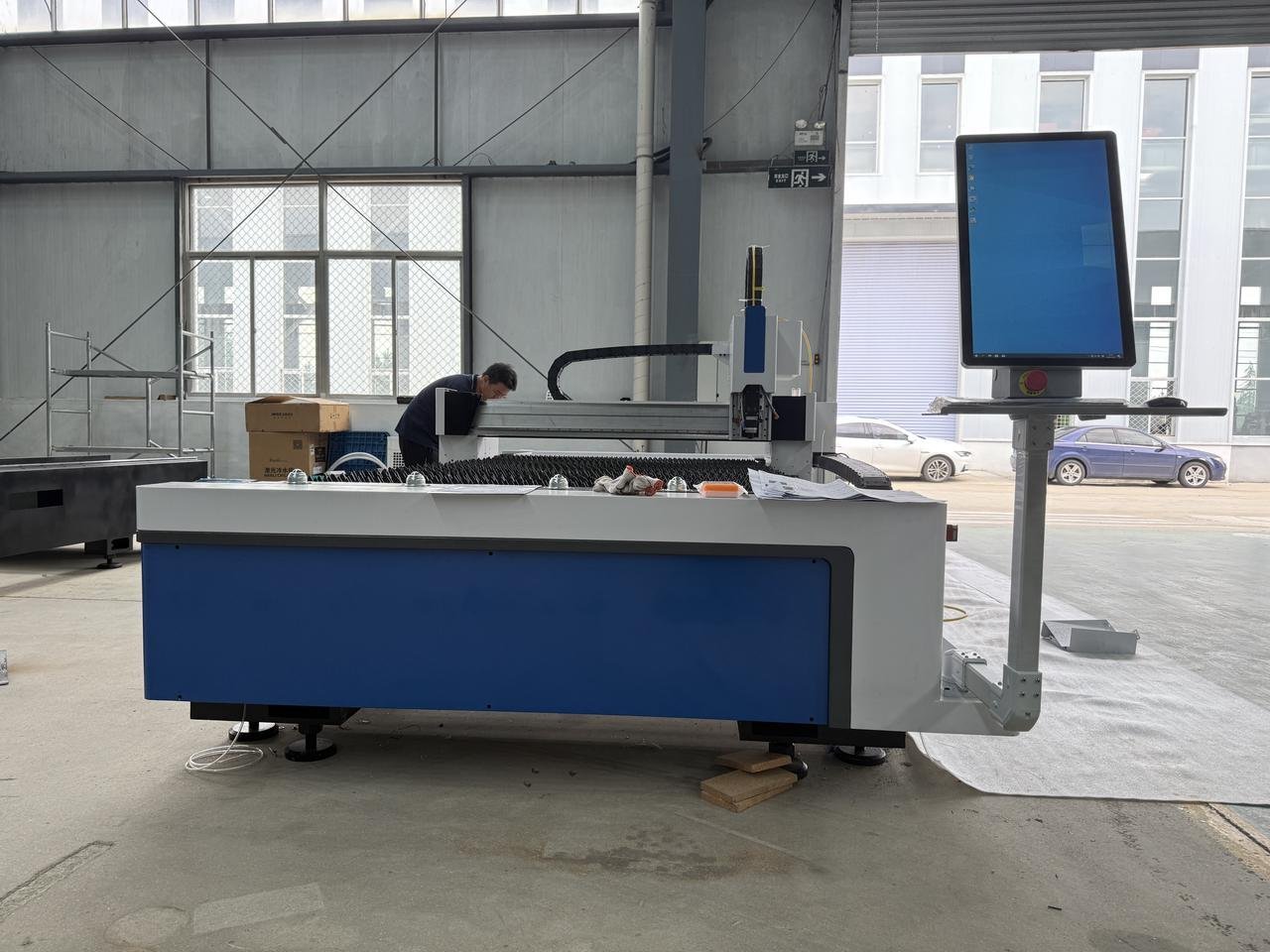
Single table: One cutting bed. The laser stops while the operator unloads parts and loads the next sheet.
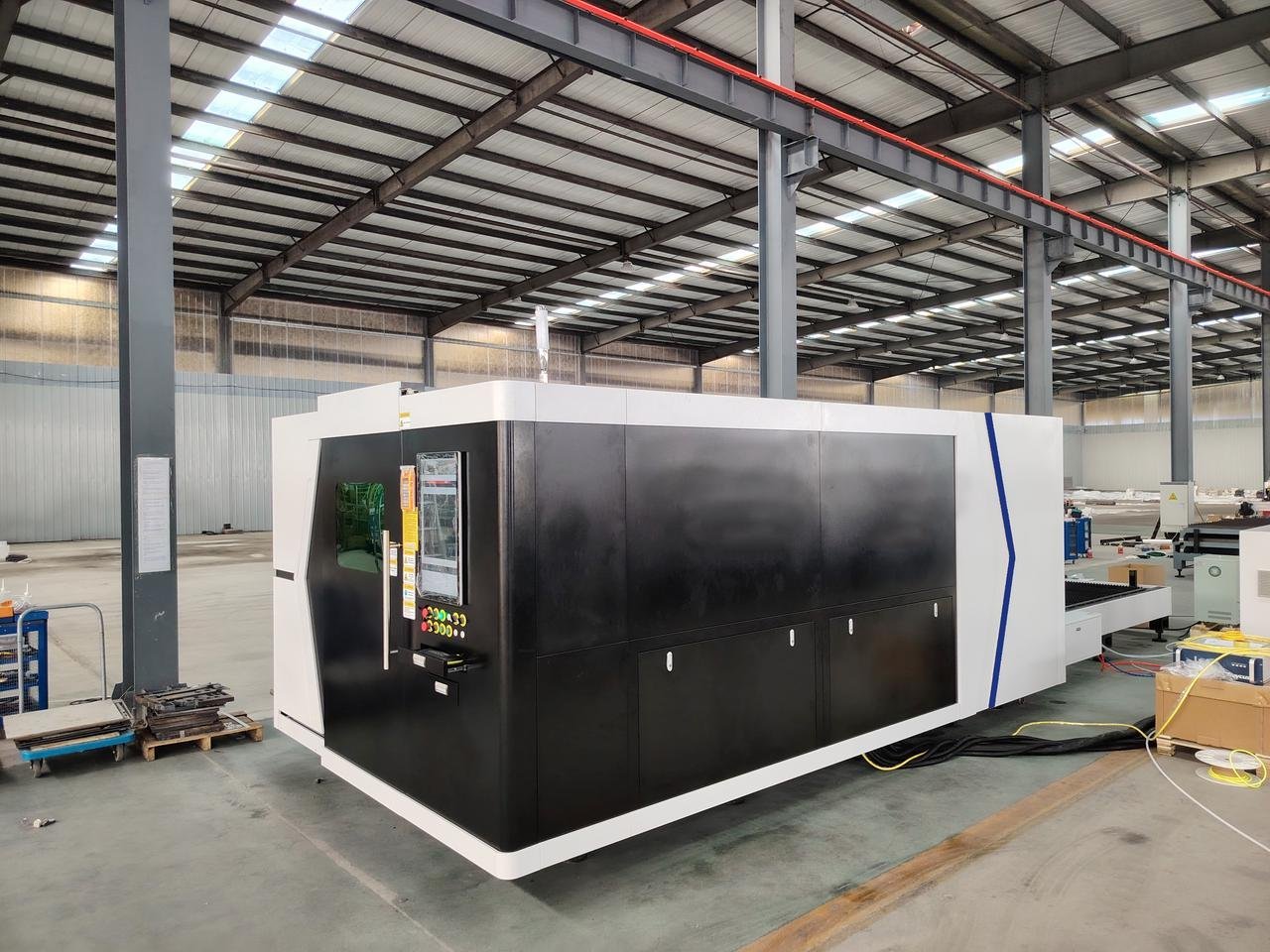
Exchange (shuttle) table: Two pallets. One is cut while the other is unloaded and reloaded outside the machine. When cutting finishes, the pallets swap in seconds.
An exchange table does not make the laser cut faster, improve edge quality or increase thickness. It removes waiting time.
2. Pallet Exchange Times Quoted by Manufacturers
| Machine | Quoted pallet exchange |
|---|---|
| Reference equipment A | 9 s |
| Reference equipment B (1530 format) | 9 s |
| Reference equipment B (2040 format) | 13 s |
| Reference equipment C | 11 s |
| Reference equipment D | about 30 s |
These are vendor figures. Ask for the test conditions and measure the swap on your own sheets during acceptance.
3. The Throughput Formula
Single table: cycle = cutting time + loading time
Exchange table: cycle ≈ max(cutting time, loading time) + swap time
The laser still waits if loading takes longer than cutting. With a 2-minute cut and 3.5 minutes of loading, the exchange-table cycle is 3.5 + swap, not 2 + swap.
4. Worked Example: 8-Minute Cut
| Input | Value |
|---|---|
| Cut time per sheet | 8.0 min |
| Unload and reload | 3.5 min |
| Pallet swap (non-overlapped) | 0.7 min (conservative) |
| Planned time per shift | 420 min |
| Availability | 85% (357 effective minutes) |
| Single table | Exchange table | |
|---|---|---|
| Cycle | 8.0 + 3.5 = 11.5 min | max(8.0, 3.5) + 0.7 = 8.7 min |
| Sheets per shift | 357 ÷ 11.5 ≈ 31 | 357 ÷ 8.7 ≈ 41 |
| Gain | — | +32% |
With a 9–15 s swap (0.15–0.25 min), the gain rises to about +38–41%.
Published industry worked examples show the same pattern: +44% for handling-heavy thin sheet, +27% for mid thickness and +11% for thick plate.
5. When the Exchange Table Wins — and When It Does Not
| Situation | Better choice |
|---|---|
| Short cuts, thin sheet, repeat jobs | Exchange table |
| Laser idle for loading ≥15–25% of the shift | Exchange table |
| Multiple shifts, steady backlog | Exchange table |
| Long cuts on thick plate | Single table often enough (gain about 10–18%) |
| One-off jobs, lots of programming and first-piece checks | Single table |
| Very tight floor space or budget | Single table |
| Unloading takes longer than cutting | Fix unloading first (sorting, extra operator, automation) |
6. Payback: A Transparent Example
| Input | Assumption |
|---|---|
| Extra accepted sheets per shift | 10 (from the 8-minute example) |
| Shifts per year | 220 |
| Contribution per extra sheet | US$7 |
| Extra operating and maintenance cost | US$2,500/year |
| Extra investment for exchange table | US$30,000 |
- Extra sheets per year: 10 × 220 = 2,200
- Extra contribution: 2,200 × 7 = US$15,400
- Net: 15,400 − 2,500 = US$12,900/year
- Payback: 30,000 ÷ 12,900 ≈ 2.3 years
If demand is lower:
| Extra sheets per shift | Net benefit/year | Payback |
|---|---|---|
| 0 | −US$2,500 | Never |
| 5 | US$5,200 | about 5.8 years |
| 10 | US$12,900 | about 2.3 years |
Extra capacity only pays if you can sell it. Replace the US$30,000 and US$7 assumptions with your quotation and margins.
Want the payback for your shop? Send HORISTAR sheets per shift today, target output and margin per sheet. We will calculate both options. Get My Payback Calculation
7. Floor Space and Layout
Both layouts need space for raw sheets, finished parts, skeleton removal, forklift or crane access and maintenance. An exchange table also needs its pallet travel path and an outside loading station.
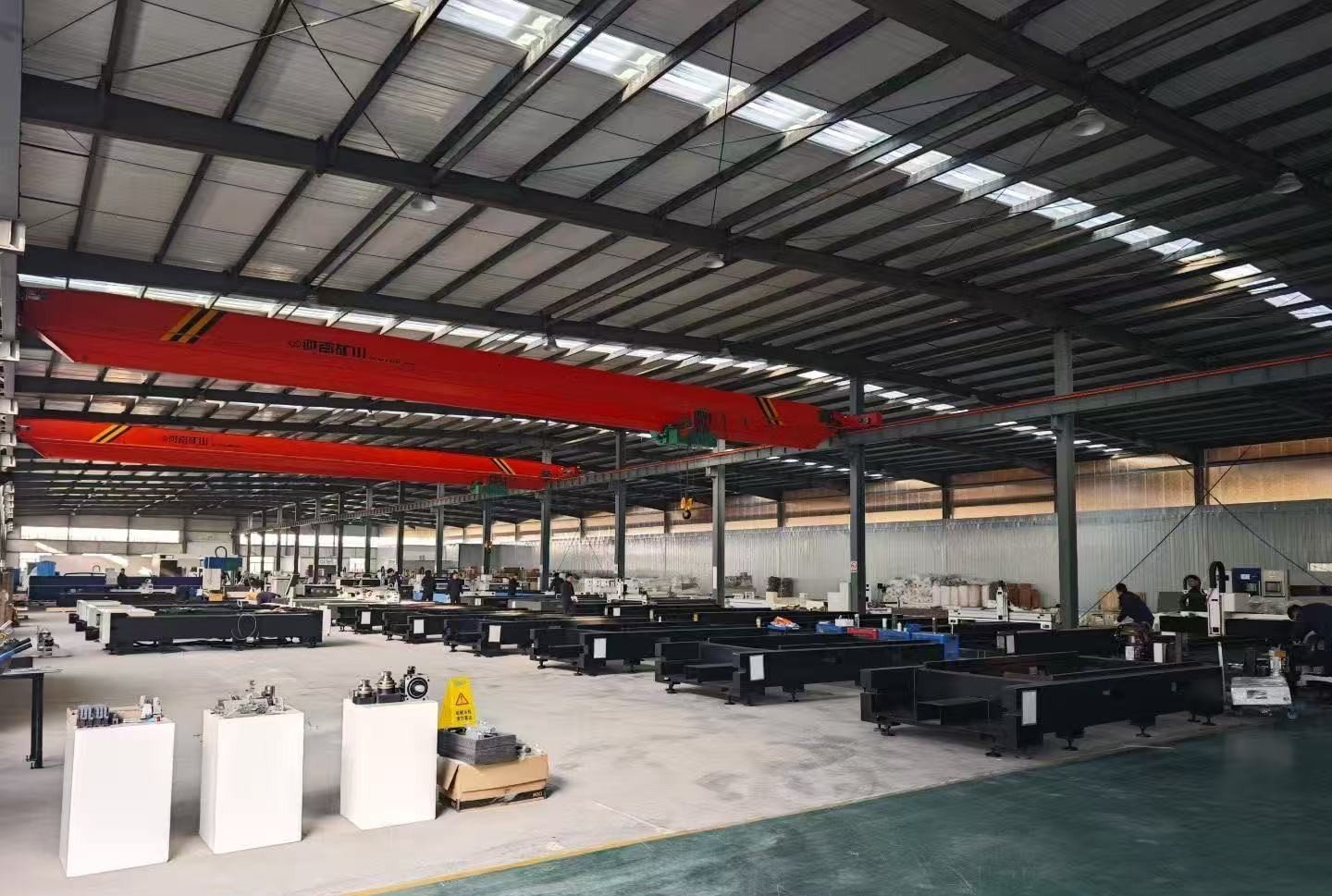
Ask for a dimensioned layout with the actual machine, chiller, extraction and walkways before ordering.
8. Pallet Exchange ≠ Automatic Loading ≠ Sorting
| Function | Does | Does not |
|---|---|---|
| Pallet exchange | Swaps pallets | Pick up raw sheets |
| Automatic loading | Puts raw sheets on the pallet | Sort parts |
| Automatic unloading | Removes cut sheets/skeletons | Separate every part |
| Automatic sorting | Picks and stacks parts | Store material |
9. Safety
The enclosure style and the table type are separate from laser safety class. For the delivered machine, check guarding, interlocks at the pallet interface, viewing windows, emergency stops and fume extraction.
Reference: ISO 11553-1:2020 — Laser processing machines.
10. HORISTAR Configurations
| Range | Models | Notes |
|---|---|---|
| HM-S single-table | HM-S3015, HM-S4020, HM-S6025 | Open single bed; flexible and lower cost |
| HM-FC enclosed | HM3015FC, HM2060FC | Enclosed cabin; ask which configurations include an exchange table |
Ask HORISTAR to confirm, for your model: number of pallets, measured swap time, usable cutting area, loading options and safeguarding.
Explore Single-Table Fiber Laser Cutters and Enclosed Fiber Laser Cutters.
11. Acceptance Test: Measure the Real Cycle
| Measure | How |
|---|---|
| Cut time per nest | From the controller |
| Unload + reload time | Stopwatch, real operator |
| Pallet swap | Stopwatch, non-overlapped part |
| Accepted parts per hour | Inspected count |
| Downtime | Cause and minutes |
Cut quality can be specified with ISO 9013:2017 (laser cuts 0.5–32 mm). See HORISTAR’s Laser Cutting Machine Acceptance Testing Guide.
Frequently Asked Questions
How much faster is an exchange-table laser cutter?
It does not cut faster, but it can process about 15–80% more sheets per shift, depending on how long each sheet takes to cut compared with loading time.
How long does a pallet exchange take?
Manufacturers quote about 9–30 seconds, for example 9 s (reference equipment A), 11 s (reference equipment C), 13 s (reference equipment B, 2040 format) and about 30 s (reference equipment D).
When is an exchange table worth it?
When your laser stands idle for loading 15–25% of the shift or more, and you can sell the extra output.
Does an exchange table double production?
No. Even on very short cuts, the gain is limited by loading time; in the examples above it ranges from about 15% to 80%.
Is a single-table laser suitable for industrial production?
Yes, for long cuts, thick plate, high-mix work or when capacity already meets demand.
Does an exchange table replace automatic loading?
No. It swaps pallets; someone or something must still load raw sheets and unload parts.
Discuss Your Laser Cutting Production with HORISTAR
Send material and thickness range, typical sheet size, sheets per shift, current loading time and destination country.
Discuss Your Laser Cutting Configuration on WhatsApp
Technical References
Exchange times are vendor figures for other manufacturers’ machines. Throughput and payback examples use stated assumptions.