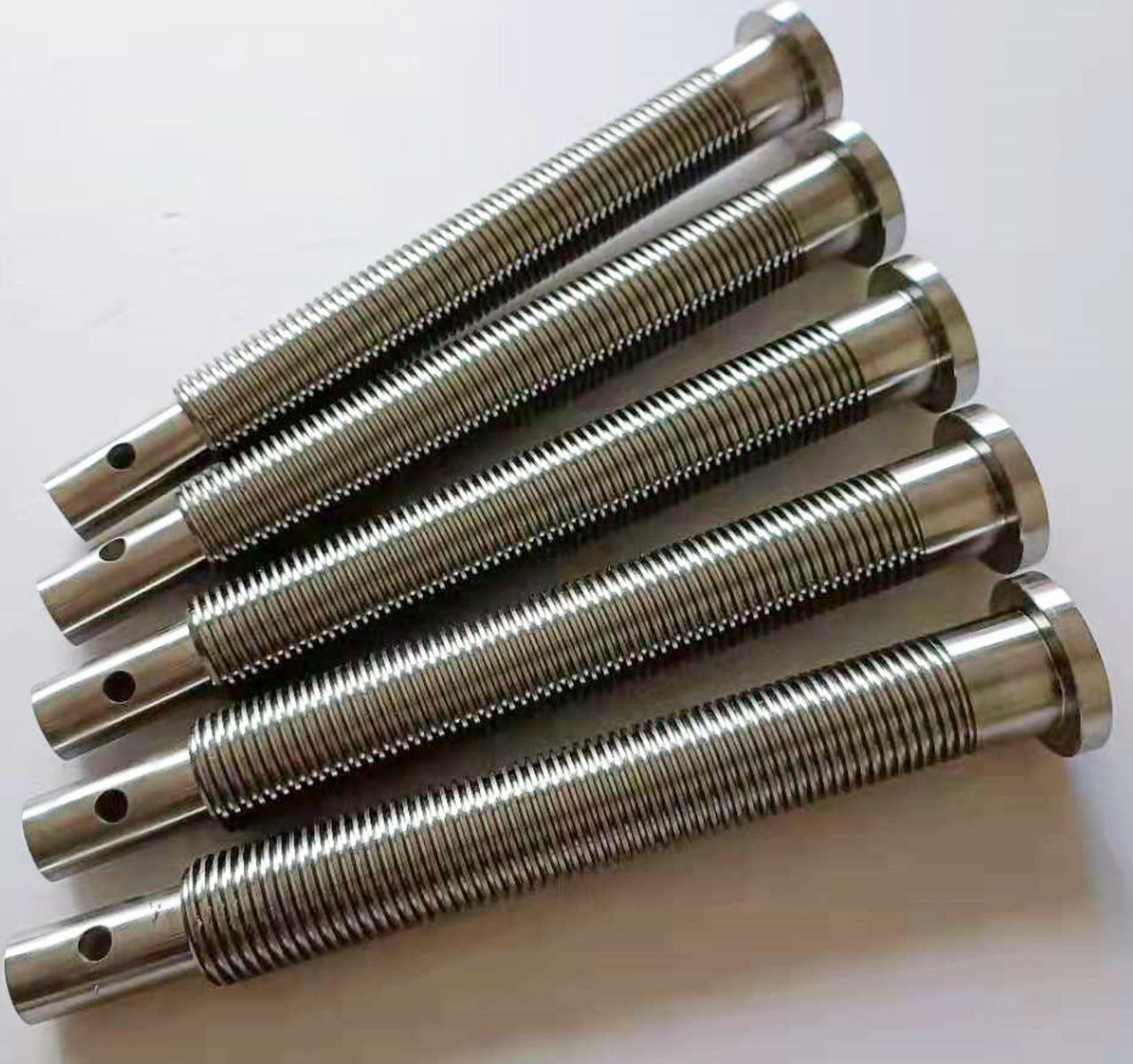
This guide calculates power turret CNC lathe ROI from setup removal, cycle-time recovery, scrap reduction, and BMT tooling cost rather than treating the turret as a general accuracy upgrade. A rigid servo power turret with driven tools and Y-axis pays when turning, drilling, tapping, slotting, or light milling can move into one setup and the investment closes inside the buyer’s target payback window.
The practical RFQ question is simple: will the machine remove a second setup, hold the required tolerance, and pass sample cutting on the buyer’s real material? HORISTAR buyers can start from the CNC Lathe Machine page — where TCK56Y / TCK63Y / TCK80Y ship with a 12-station servo power turret, three-piece curvic coupling, hydraulic clamping, and ±50 mm Y-axis travel as the upgrade path — then send drawings, tool list, material and output target for a sizing decision.
By: Doris Li, HORISTAR CNC Application Team. Doris has 8+ years working with overseas buyers on CNC machine selection, sample cutting, quotation inputs, and pre-shipment checks for HORISTAR machinery projects.
Updated: 2026-07-22 · Reviewed by: HORISTAR CNC Application Team · Estimated read time: 13 minutes
Key Takeaways
- Choose a rigid servo power turret CNC lathe when the part has 1 or more off-center holes, flats, slots or tapped features that would otherwise need a second setup on a drill press or machining center.
- Avoid paying for power turret capability when the part only needs ordinary OD turning, facing, boring and threading — a standard servo turret or even a hydraulic turret is the right configuration.
- Y-axis is a separate decision: “power turret without Y-axis” can drill and tap on the spindle axis and at fixed C-axis angles; “power turret with ±50 mm Y-axis” (HORISTAR TCK-series) can mill keyways, flats and off-center features anywhere within the Y-axis envelope.
- Use ROI math, not a sales label: if the power turret removes a second setup and recovers ≥ 12 hours per month including scrap reduction, the upgrade typically pays back in 1.5–2.5 years.
- Configuration premium reference: servo turret (no live tooling) +8–18%; rigid servo power turret with live tooling + Y-axis +25–40%; tooling and BMT55/65 holders add USD 200–800 per station.
- Ask for sample cutting: require at least 3 finished parts, 30 turret indexing cycles and a 20-minute driven-tool run before shipment.
- Map safety and acceptance to ISO 12100, ISO 230-2, ISO 13041-1, ISO 13849-1 and EN 60204-1 / IEC 60204-1.23456
What Makes a Power Turret Different
A power turret is different because selected stations can drive rotating tools through an internal driven-tool spindle, while a normal servo turret only indexes static turning tools. This matters when the part has features that are not aligned with the main spindle centerline.
For example, a hydraulic valve fitting may need OD turning, ID boring, threading and two cross holes at 90°. Without driven tooling, the part leaves the lathe and moves to a drilling machine or machining center. That second setup adds clamping time, queue time, and — most expensively — introduces location error between the turned diameter and the cross hole. With a power turret + C-axis (and Y-axis for off-center features), the lathe finishes all of those operations before the chuck releases the part.
The mechanism is tolerance control. Every time a part is unclamped, flipped, and clamped again, the reference datum changes. Industry experience suggests 0.02–0.05 mm of position error is added per setup even on well-controlled fixtures. A power turret removes that reference transfer when the feature is within the machine’s turning and driven-tool envelope.
On HORISTAR’s TCK-series, the driven-tool spindle inside the 12-station power turret typically runs at 0–6000 rpm with BMT55 holders, with the main spindle (A2-6) delivering 176 Nm of torque at 50–4000 rpm and the sub-spindle (A2-5) providing 42 Nm at 0–5000 rpm for back-side work. Those numbers set the realistic envelope for what driven tooling can and cannot do on the same machine.1
Power Turret With or Without Y-Axis
Most buyers underestimate how much the Y-axis option changes both the price and the capability of a power turret lathe. These are effectively two different machines:
| Capability | Power turret WITHOUT Y-axis | Power turret WITH Y-axis (±50 mm, TCK-series) |
|---|---|---|
| Axial drilling on spindle centerline | ✅ Yes | ✅ Yes |
| Axial drilling on bolt-circle (C-axis index) | ✅ Yes | ✅ Yes |
| Radial drilling (cross holes through center) | ✅ Yes | ✅ Yes |
| Off-center holes NOT through centerline | ⚠️ Limited / not possible | ✅ Yes |
| Milling a flat across the part diameter | ⚠️ Polygon turning workaround | ✅ True milled flat |
| Keyway milling | ❌ Not practical | ✅ Yes |
| Hex / square / D-shape milling | ❌ Not practical | ✅ Yes |
| Off-center pockets, slots, contoured features | ❌ No | ✅ Yes |
| Typical premium over hydraulic baseline | +18–25% | +25–40% |
| Best for | Threaded fittings, simple flanges with bolt holes | Pump bodies, valve blocks, automotive shafts with keyways, complex fittings |
Buyer rule: if the drawing shows even one feature that is off-axis and not on a bolt circle — a keyway, a milled flat, a pocket, an off-center hole — specify Y-axis. Retrofitting Y-axis later is almost never practical because the saddle, slide and control package are designed together at the factory.
When the Extra Cost Is Justified
Use the drawing first, then the production route. The table below uses quantifiable thresholds, not vague descriptions, so the RFQ decision is repeatable.
| Part / production condition | Quantifiable threshold | Power turret value | Decision rule |
|---|---|---|---|
| OD turning only | 0 secondary ops/part | Low | Standard servo or hydraulic turret. |
| Axial drilled holes | 1–2 holes, depth/dia ≤ 5, on bolt circle ≤ swing | Medium | Compare against a $400–800 drill jig; power turret only wins above ~300 pcs/month. |
| Cross holes through center | ≥ 1 hole, dia ≤ 16 mm | High | Power turret without Y-axis is sufficient. |
| Off-center holes or pockets | ≥ 1 feature, offset > 3 mm from centerline | High | Y-axis is required. |
| Milled flats / keyways / hex | Any milled feature wider than 3 mm | High | Y-axis is required. |
| Tapping in same setup | M4–M16 in steel; M4–M20 in aluminum | High | Confirm driven-tool rpm reaches required tapping speed. |
| Batch size | ≥ 500 pcs/month AND ≥ 2 secondary ops/part | High | Setup reduction becomes measurable in the ROI math below. |
| Tight inter-feature tolerance | Hole-to-OD position ≤ 0.05 mm | High | Eliminating the second setup is the only reliable path. |
Source: HORISTAR CNC application team sizing practice, 2026.
When a Standard Servo Turret Is Enough
A standard servo turret is enough when the work stays inside normal turning operations. Facing, OD turning, ID boring, grooving, threading and parting can be handled without live tools when the drawing has no off-center or milled feature. For these jobs, the upgrade premium sits idle and the budget is better spent on better tool holders, an in-process probe, or a parts catcher.
Buyers should not over-specify a power turret for every lathe. The better rule is to count the number of operations that currently happen after turning. If the answer is 0 operations, the upgrade will sit idle. If the answer is 1–3 repeated operations per part and the batch is regular, the power turret will shorten flow time and reduce work-in-process inventory.
Cost Recovery Calculation (Realistic ROI)
The previous version of this calculation used a low-volume example that did not close — partly because power turret upgrades are real money. Here is a realistic batch scenario that reflects the kind of part HORISTAR most often quotes the TCK-series 12-station power turret for: a steel valve body with 2 cross holes and 1 tapped feature.
Inputs
- Production volume: 1,500 pcs/month
- Current process: lathe turn + transfer to drill/tap station
- Second setup time: 2.0 hours per 100 pcs (clamping, alignment, queue)
- Scrap rate from re-clamping position error: 1.2%
- Average part value: USD 28
- Shop planning rate: USD 38/hour (operator + machine burden)
Recovered hours/month
- Setup time: 1,500 ÷ 100 × 2.0 = 30 hours/month
- Scrap reduction: 1,500 × 1.2% × USD 28 = USD 504/month in avoided scrap
Annual value
- Labor + machine: 30 h × USD 38 × 12 = USD 13,680/year
- Scrap avoidance: USD 504 × 12 = USD 6,048/year
- Total recovered value: ≈ USD 19,728/year
Power turret premium reference
A 12-station servo power turret with live tooling and Y-axis on a TCK63Y-class machine typically adds USD 18,000–28,000 over the hydraulic-turret baseline, including driven-tool holders for 4–6 stations.
Payback period
USD 23,000 ÷ USD 19,728/year ≈ 1.17 years
Recommendation
If the project shows a payback inside 2.5 years using realistic numbers, and the sample part passes tolerance, the upgrade is commercially defensible. If the recovered value falls below USD 6,000/year, keep the RFQ focused on a standard servo turret and spend the budget on tooling, inspection probes, or workholding upgrades.
Source note: this is a buyer-side planning calculation using HORISTAR CNC application configuration ranges for 2025–2026. The supplier should validate it with a timed sample workflow and a written cycle-time estimate against the buyer’s actual drawing.
Power Turret vs Swiss-Type vs Mill-Turn Center
The power-turret lathe is not the only path to “turning plus driven tools.” Buyers should know where it competes and where it loses, so the RFQ stays focused on the right machine category.
| Configuration | Best part envelope | Strength | Limitation | Typical cost band (USD) | | — | — | — | — | — | — | | Hydraulic turret lathe | OD turning only, ≤ Ø300 mm | Lowest cost, simple maintenance | No live tooling | Baseline | | Servo turret lathe | OD turning, multi-tool batch | Fast indexing (0.3–1.0 s) | No live tooling | +8–18% | | Rigid servo power turret lathe (no Y-axis) | Turning + axial/radial holes, tapping | Removes second setup for hole work | Cannot mill off-center features | +18–25% | | Rigid servo power turret lathe (+ Y-axis) — TCK-series | Turning + milling + drilling + tapping; parts up to Ø500–600 mm | Full turn-mill in one setup; ±50 mm Y | Heavy milling still limited vs VMC | +25–40% | | Swiss-type lathe | Small precision parts ≤ Ø32 mm, long-thin shafts | Excellent for medical, connector, micro parts | Diameter and rigidity limited; expensive tooling | Different category; often +60–100% | | Full mill-turn center (B-axis) | Aerospace, complex 5-axis turn-mill | True 5-axis machining in one setup | 2–4× the cost; over-spec for most batch work | +120–250% |
Buyer rule: if the part fits inside Ø500 mm and the milling work is light to medium (keyways, flats, drilled patterns, tapping), the rigid servo power turret with Y-axis usually wins on total cost of ownership. Move up to a full mill-turn center only when the drawing demands B-axis tilt or simultaneous 5-axis paths.
Lifecycle and Maintenance Matrix
Power turret value should be judged over a 5–10 year ownership window because driven tools add capability and a small number of additional maintenance points. Use this matrix to compare ownership responsibility before ordering.
| Lifecycle / maintenance interval | Standard servo turret | Rigid servo power turret | Buyer action |
|---|---|---|---|
| Operator visual inspection | Every 8 hours | Every 8 hours | Watch for alarms, chips on coupling face, abnormal sound. |
| Tool station cleaning | Every 40 hours | Every 40 hours | Clean curvic coupling and tool holders; chips here cause locking error. |
| Driven-tool holder inspection | Not applicable | Every 40 hours | Check heat, runout (≤ 0.01 mm TIR), tool clamping torque. |
| Lubrication inspection | Every 1 month | Every 1 month | Confirm lubrication reaches turret, slideways and driven-tool gearbox. |
| Servo drive + encoder check | Every 6 months | Every 6 months | Verify gain, alarm history, encoder feedback. |
| Electrical cabinet inspection | Every 6 months | Every 6 months | Match EN 60204-1 / IEC 60204-1 documentation and grounding. |
| Accuracy recheck | Every 12 months | Every 12 months | Use ISO 230-2 positioning checks and finished-piece measurements. |
| Annual scheduled maintenance time | 4–10 hours/year | 8–14 hours/year | Add 4 hours for driven-tool gearbox and holder inspection. |
| Lifecycle planning horizon | 7–10 years | 7–10 years | Driven-tool gearbox is the most likely refurbish item at year 6–8. |
Source note: intervals are procurement planning values from HORISTAR CNC application sizing practice; the delivered machine manual controls final maintenance frequency.
Acceptance Test for a Power Turret Lathe
A power turret lathe should be accepted with a finished part, not only a dry run. The test should prove indexing, live-tool operation and part geometry together — because each can pass independently while the combined process still fails.
| Test item | Minimum evidence | Pass direction |
|---|---|---|
| Turret indexing | 30 station changes on video | No alarm, stable lock, consistent station seating |
| Bi-directional indexing | 10 random-station moves | Shortest path selected by control automatically |
| Driven-tool run | 20 minutes under light cutting load | Holder temperature rise ≤ 25 °C; no abnormal vibration |
| Driven-tool runout | Indicator on test bar | ≤ 0.01 mm TIR at the tool holder nose |
| Sample parts | 3 finished parts from buyer drawing | All dimensions inside agreed tolerance |
| Hole / slot position | Measured against drawing | Position tolerance ≤ 0.05 mm proves second setup was removed |
| Surface finish | 1 rough pass + 1 finish pass | No repeated tool marks from turret indexing |
| Repeatability | Indicator on test bar across 10 cycles | ≤ 4 μm at the tool tip |
| Safety functions | E-stop, guards, door interlock | Matches ISO 12100 / ISO 13849-1 review |
| Documents | Manual, electrical diagram, packing list | Complete on shipment |
During a 2026 HORISTAR CNC application inspection for a European valve-fittings buyer, the team used a 30-cycle indexing video, a 20-minute driven-tool run, and 3 measured sample parts as the minimum evidence package before recommending overseas shipment of a TCK63Y with 12-station servo power turret. This quantified inspection habit is now built into the quotation checklist for power-turret projects.
Source: HORISTAR CNC application team inspection practice, 2026.
RFQ Input List
To request a quote, send HORISTAR the part drawing, material grade, maximum diameter, maximum length, required driven-tool features (holes, taps, milled flats, slots), hole sizes and thread sizes, tolerance, surface-finish target, monthly output, voltage, destination country and inspection requirements. Photos or video of current production also help when replacing an older lathe.
If the buyer is still deciding how to verify a turret, read the CNC lathe turret repeatability and surface finish test guide first. If shipment inspection is the larger concern, use the CNC Lathe Pre-Shipment Acceptance Checklist before releasing the final balance payment. Buyers comparing broader machine imports should read Importing CNC and Laser Machines from China before setting payment, packing and inspection terms.
Specification Checklist
| Specification | What to request | Why it protects the buyer |
|---|---|---|
| Turret type | “Rigid servo power turret with live tooling” — not only “servo turret” | Confirms driven-tool capability is included. |
| Station count | 8, 10, or 12 stations; count all tools + 1 spare | Keeps all operations in one setup. |
| Driven-tool count | Quantity of live stations (e.g., 6 of 12) | Live-tool stations cost more — confirm how many are live. |
| Driven-tool rpm | Range from supplier (typical 0–6000 rpm) | Must match drilling, tapping, and milling speeds. |
| Driven-tool torque | Nm at the holder nose | Determines max drill diameter and tap size in steel. |
| Tooling interface | BMT45 / BMT55 / BMT65, or VDI 30/40/50 | BMT is preferred for driven tools and heavier cuts. |
| Coupling type | Three-piece curvic coupling preferred | Higher locking repeatability and chip resistance. |
| Y-axis travel | State required travel (e.g., ±50 mm) or “no Y-axis” | Prevents buying a power turret that cannot reach the feature. |
| C-axis resolution | 0.001° preferred | Determines bolt-hole accuracy. |
| Sub-spindle | Required or not | Needed for full back-side finishing. |
| Tool holders | Quantity and interface included in price | Avoids hidden tooling cost after delivery. |
| Sample workflow | Turning + driven-tool operation on buyer part | Confirms the full route, not only OD turning. |
| Safety package | Guards, E-stop, door interlocks | Supports local risk assessment under ISO 12100. |
Frequently Asked Questions
Is a rigid servo power turret CNC lathe the same as a servo turret CNC lathe?
No. A rigid servo power turret CNC lathe is not the same as a normal servo turret lathe. A servo turret only indexes static turning tools — it positions each station with a servo motor and locks it on a curvic coupling. A rigid servo power turret adds an internal driven-tool spindle so selected stations can rotate tools for drilling, tapping, slotting and light milling. On HORISTAR’s TCK-series, the 12-station servo power turret combines both functions in one head, but the configuration premium over a baseline hydraulic-turret machine is significant (typically +25–40% with Y-axis). Buyers should confirm driven-tool capability, Y-axis requirement, and sample-part results before treating the two quotations as equal.
When is a power turret worth the extra cost?
A power turret is worth the extra cost when it removes a second setup, improves feature location, or recovers enough production time and scrap to justify the upgrade. A useful screening rule: if the part has cross holes, milled flats, slots or tapped features, and the batch is ≥ 500 pcs/month with ≥ 2 secondary operations per part, the ROI math usually closes inside 1.5–2.5 years. For a 1,500 pcs/month valve body with 2 cross holes and 1 tap, a realistic calculation shows roughly USD 19,000–20,000/year recovered through setup time and scrap reduction, against a USD 18,000–28,000 upgrade premium.
Does a power turret need Y-axis?
It depends on the drawing. A power turret without Y-axis can drill on the spindle centerline, drill cross holes through the centerline, and drill axial holes on a bolt circle using the C-axis. It cannot mill keyways, flats, or pockets that are not on a bolt circle. If the drawing has any milled feature wider than about 3 mm, or any hole that is off-center and not on a bolt circle, Y-axis is required. The HORISTAR TCK-series provides ±50 mm Y-axis travel, which covers the majority of valve bodies, pump components and automotive shaft features.
What is the typical driven-tool rpm and torque on a power turret?
On a mid-size CNC lathe with a BMT55 power turret, driven tools typically run at 0–6000 rpm with usable torque of 20–40 Nm at the holder nose. This is enough for drilling holes up to about Ø20 mm in steel, tapping up to M16 in steel and M20 in aluminum, and light milling of flats and keyways. For heavier milling work, the limit is usually the driven-tool gearbox rather than the main spindle — which on the TCK56Y delivers 176 Nm of turning torque from the A2-6 main spindle. Always ask the supplier for the actual driven-tool rpm/torque curve before assuming the machine will handle the planned cut.
Where does a power turret still need a machining center?
A power turret replaces some secondary drilling, tapping and light milling operations, but it does not replace a machining center for every part. Complex 3D milling, deep pockets, heavy metal removal, multi-face prismatic work, and parts that require B-axis tilt or simultaneous 5-axis paths still need a proper machining center or mill-turn center. The decision should be based on actual drawing features and sample cutting — not on a sales claim that the power turret can do everything.
What is the difference between BMT and VDI tooling on a power turret?
BMT (Base-Mounted Tooling, JIS, common sizes BMT45/55/65) uses a face-and-spigot mount that is very rigid and well suited to driven tools and heavier cuts — it is the standard choice on Asian-built power-turret lathes including HORISTAR TCK-series. VDI (DIN 69880, common sizes VDI 30/40/50) is a quick-change shank popular on European lathes; it is faster to change tools but has lower torsional rigidity, which limits driven-tool performance. For a servo power turret with live tooling, BMT55 or BMT65 is usually preferred.
How much extra does a power turret cost vs a hydraulic turret?
As a configuration-planning range on a mid-size CNC lathe (TCK63Y class), an 8-station servo turret without live tooling typically adds +8–12%, a 12-station servo turret without live tooling +12–18%, and a 12-station rigid servo power turret with live tooling and Y-axis +25–40% over the hydraulic-turret baseline. In absolute terms on a TCK63Y-class machine, the power-turret-plus-Y-axis upgrade is typically USD 18,000–28,000 including driven-tool holders for 4–6 stations. Final figures depend on station count, BMT size, Y-axis travel, control package, and shipping terms — request a written quotation for binding numbers.
Can I retrofit a hydraulic turret lathe to a power turret later?
In practice, no — not as a true retrofit. The turret body, drive, control parameters, saddle, slide, Y-axis option, and tool-holder interface are designed together at the factory. Adding a power turret later usually means replacing the entire turret head, controller package, and often the slide assembly, which costs 1.5–2× a new factory configuration. If there is any chance of needing driven-tool capability within 2–3 years, specify it at the time of purchase.
What should I test before shipment?
Test turret indexing (≥ 30 cycles), bi-directional indexing, station locking, driven-tool operation (≥ 20 minutes under light cutting load), driven-tool runout (≤ 0.01 mm TIR), 3 measured sample parts from the buyer drawing, hole or slot position tolerance, surface finish, repeatability in microns, E-stop, door interlock, lubrication, and complete documentation. This links the upgrade cost to real process evidence rather than brochure claims.
What information should I send to HORISTAR for a quotation?
Send drawings (PDF + STEP if available), material grade, tolerance, surface-finish target, maximum part diameter, maximum part length, required driven-tool features (cross holes, taps, milled flats, slots), tool list, monthly quantity, voltage, destination country, and inspection requirements. HORISTAR provides free sample cutting to demonstrate capabilities with your materials before the quote is finalized, and can recommend whether a hydraulic turret, standard servo turret, or rigid servo power turret with Y-axis fits the project.
Get a Quote or Free Sample Cutting
Ready to compare a servo, power turret, or full Y-axis turn-mill configuration against your own drawing?
→ Request a Quote and Free Sample Cutting — send your drawing and we will respond within 18 hours with a recommended turret configuration, sample-cutting plan, and lead-time estimate.
→ Browse the HORISTAR CNC Lathe Machine range — see TCK56Y / TCK63Y / TCK80Y specifications, including the 12-station servo power turret with ±50 mm Y-axis option.
HORISTAR has 10+ years in CNC and laser machinery, ships to 150+ countries, holds ISO, CE and FDA approvals, and offers a 2-year warranty with 18-hour technical response.
Review Record
Content reviewed by the HORISTAR CNC application team on 2026-07-22 for power-turret selection logic, Y-axis decision rules, ROI math, RFQ inputs, acceptance checks, internal links, and machinery safety source mapping. Last technical review: 2026-07-22.
Sources
-
HORISTAR, CNC Lathe Machine — TCK56Y / TCK63Y / TCK80Y specifications. Main spindle A2-6 at 50–4000 rpm with 176 Nm torque; sub-spindle A2-5 at 0–5000 rpm with 42 Nm; 12-station servo power turret with three-piece curvic coupling, hydraulic clamping, and ±50 mm Y-axis travel. ↩
-
International Organization for Standardization, ISO 12100:2010 Safety of machinery — Risk assessment and risk reduction. ↩
-
International Organization for Standardization, ISO 230-2:2014 Test code for machine tools — Part 2. ↩
-
International Organization for Standardization, ISO 13041-1:2020 Test conditions for numerically controlled turning machines and turning centres. ↩
-
International Organization for Standardization, ISO 13849-1:2023 Safety-related parts of control systems. ↩
-
International Electrotechnical Commission, IEC 60204-1:2016 Electrical equipment of machines. ↩