Short answer: for air bending, required force is P (t) = (1.42 × S² × L × σ) ÷ (9.81 × V). For mild steel that simplifies to about 65 × S² ÷ V tonnes per metre. Multiply by the bend length, then add a 20 % safety margin to get the machine size. Use the calculator below for your own numbers.
This page is the fast tool. For the full derivation, the complete material database and worked examples in stainless and aluminium, read our companion guide: Press Brake Tonnage Calculation: The Complete Formula, Chart and Sizing Guide.
Press Brake Tonnage Calculator
The calculator covers air bending with a standard V-die. Bottoming and coining need much more force – see the multipliers further down.
The Formula Behind the Calculator
The calculator uses the standard air-bending formula, the same one HORISTAR uses during press brake quotation review:
| Symbol | Meaning | Unit |
|---|---|---|
| P | Required bending force | metric tonnes |
| S | Sheet thickness | mm |
| L | Bend length (length of the bend line, not the part width) | m |
| σ | Tensile strength of the material | N/mm² (MPa) |
| V | V-die opening width | mm |
| 1.42 | Air-bending coefficient (standard for V ≈ 8 × S) | – |
| 9.81 | Converts kN to metric tonnes | – |
Then add a safety margin: required machine tonnage = P × (1 + margin). Use 20 % for routine production, 30 % when the material grade is uncertain, and 15 % only with certified material and identical bends.
Worked example: 4 mm mild steel, 2.5 m bend
- V-die = 8 × 4 = 32 mm
- Force per metre = 65 × 4² ÷ 32 = 32.5 t/m
- Bending force = 32.5 × 2.5 = 81 t
- With 20 % margin: 81 × 1.2 ≈ 98 t – fits HORISTAR's reference 1250 kN (125 t), 2500 mm CNC press brake with headroom.
Imperial shortcut: tons per foot ≈ 575 × T² ÷ V, with T and V in inches, for 60 ksi mild steel.
Metric Press Brake Tonnage Chart
Values are tonnes per metre of bend length for mild steel, σ ≈ 450 MPa, air bending, before safety margin. Dashes mark V-openings outside the practical 6–12 × S range.
| S (mm) \ V (mm) | 8 | 10 | 12 | 16 | 20 | 25 | 32 | 40 | 50 | 63 | 80 | 100 |
|---|---|---|---|---|---|---|---|---|---|---|---|---|
| 1.0 | 8 | 7 | 5 | – | – | – | – | – | – | – | – | – |
| 1.5 | – | 15 | 12 | 9 | – | – | – | – | – | – | – | – |
| 2.0 | – | – | 22 | 16 | 13 | 10 | – | – | – | – | – | – |
| 2.5 | – | – | – | 25 | 20 | 16 | – | – | – | – | – | – |
| 3.0 | – | – | – | – | 29 | 23 | 18 | – | – | – | – | – |
| 4.0 | – | – | – | – | – | 42 | 33 | 26 | 21 | – | – | – |
| 5.0 | – | – | – | – | – | – | 51 | 41 | 33 | – | – | – |
| 6.0 | – | – | – | – | – | – | – | 59 | 47 | 37 | – | – |
| 8.0 | – | – | – | – | – | – | – | – | 83 | 66 | 52 | 42 |
| 10.0 | – | – | – | – | – | – | – | – | – | 103 | 81 | 65 |
| 12.0 | – | – | – | – | – | – | – | – | – | – | 117 | 94 |
How to read it: find your thickness on the left, move across to your V-opening, multiply by the bend length in metres, then add your safety margin.
Material correction factors
For other materials, multiply the chart value by the factor below. Always check the mill certificate – tensile strength varies by grade, temper and supplier.
| Material | σ used (MPa) | Factor vs. chart |
|---|---|---|
| Aluminium 1100 / 3003 (soft) | 120 | ≈ 0.27 |
| Aluminium 5052 | 230 | ≈ 0.51 |
| Aluminium 6061-T6 | 310 | ≈ 0.69 (prone to cracking – use a larger V) |
| Cold-rolled steel SPCC / DC01 | 380 | ≈ 0.85 |
| Galvanised steel DX51D | 400 | ≈ 0.89 |
| Mild steel S235 / A36 / SPHC | 450 | 1.00 |
| HSLA steel S355 | 550 | ≈ 1.22 |
| Stainless steel 304 / 316 | 700 | ≈ 1.55 |
| High-strength steel S700MC | 800 | ≈ 1.78 |
Choosing the Right V-Die Opening
The V-opening changes tonnage more than anything except thickness, so choose it first. 8 × thickness is the safe default for most carbon-steel air bending.
| Sheet thickness | Recommended V-opening | Typical V |
|---|---|---|
| 0.5–1.0 mm | 6 × S | 4–6 mm |
| 1.0–4.0 mm | 8 × S | 8–32 mm |
| 4.0–6.0 mm | 8–10 × S | 32–60 mm |
| 6.0–10.0 mm | 10 × S | 60–100 mm |
| above 10 mm | 10–12 × S | 100 mm + |
Inside radius ≈ V ÷ 6
If the drawing needs a tighter radius, air bending alone will not achieve it.
Minimum flange ≈ 0.65 × V
A shorter flange slips into the die and the angle goes wrong.

Air Bending vs. Bottoming vs. Coining
| Method | Force vs. air bending | When it is used |
|---|---|---|
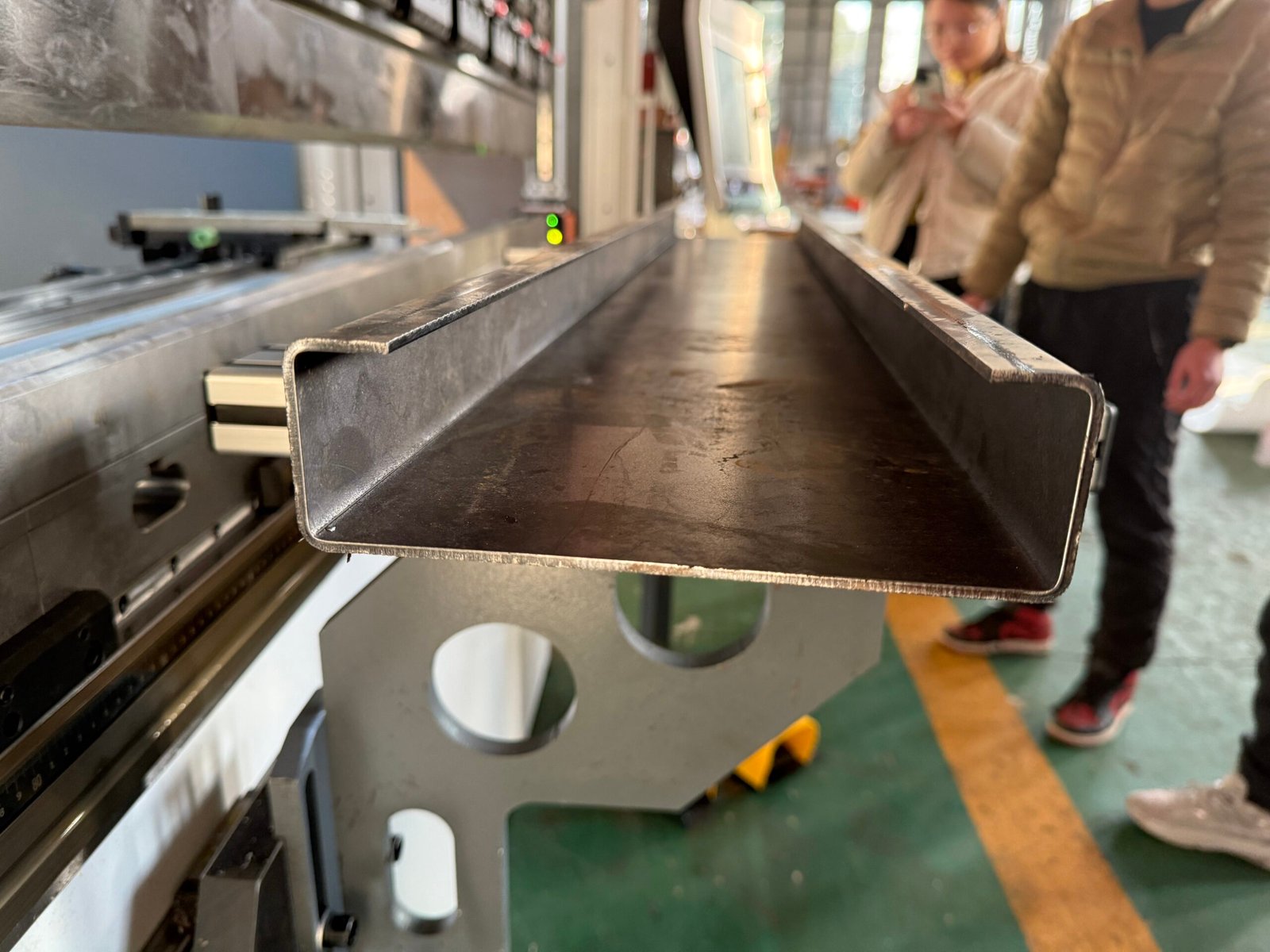
| Air bending | 1× | Most modern CNC press brake work |
| Bottoming | ≈ 3–5× | Tighter angle consistency on older or non-CNC machines |
| Coining | ≈ 5–10× | Very small radii, thin material only |
Buyer rule: choose the bending method before sizing the machine. A job that is comfortable in air bending can overload the same press brake when bottomed or coined.
Four Checks Before You Trust the Number
- Load per metre on the tooling. Every punch and die has a maximum load in t/m. A 300 mm part needing 50 t puts about 167 t/m on the tooling – far above what many standard tools allow, even on a 100 t machine.
- Concentrated loads. Short, heavy bends in the middle of the bed can over-stress the ram and beam even when total tonnage is fine. Check the minimum bend length for full tonnage in your machine manual.
- Off-centre bending. Bending near one end loads one cylinder more than the other. Spread jobs across the bed or reduce the load.
- Crowning. On long parts, beam deflection changes the angle along the length. See press brake crowning compensation.
FAQ
How do I calculate press brake tonnage?
For air bending use P (t) = (1.42 × S² × L × σ) ÷ (9.81 × V), with S and V in mm, L in metres and σ in MPa. For mild steel the shortcut is about 65 × S² ÷ V tonnes per metre. Then add a 20 % safety margin.
How many tonnes do I need to bend 6 mm mild steel?
With a 50 mm V-die, about 47 t per metre. A 3 m bend needs about 141 t, or about 170 t with a 20 % margin. A 3 m bend also needs a worktable longer than 3 m.
Why does stainless steel need more tonnage?
Stainless 304 has a tensile strength of about 700 MPa against about 450 MPa for mild steel, so the same bend needs roughly 1.55 times the force. A press brake sized for mild steel can be about 55 % under-spec for stainless of the same thickness.
Does a CNC press brake calculate tonnage automatically?
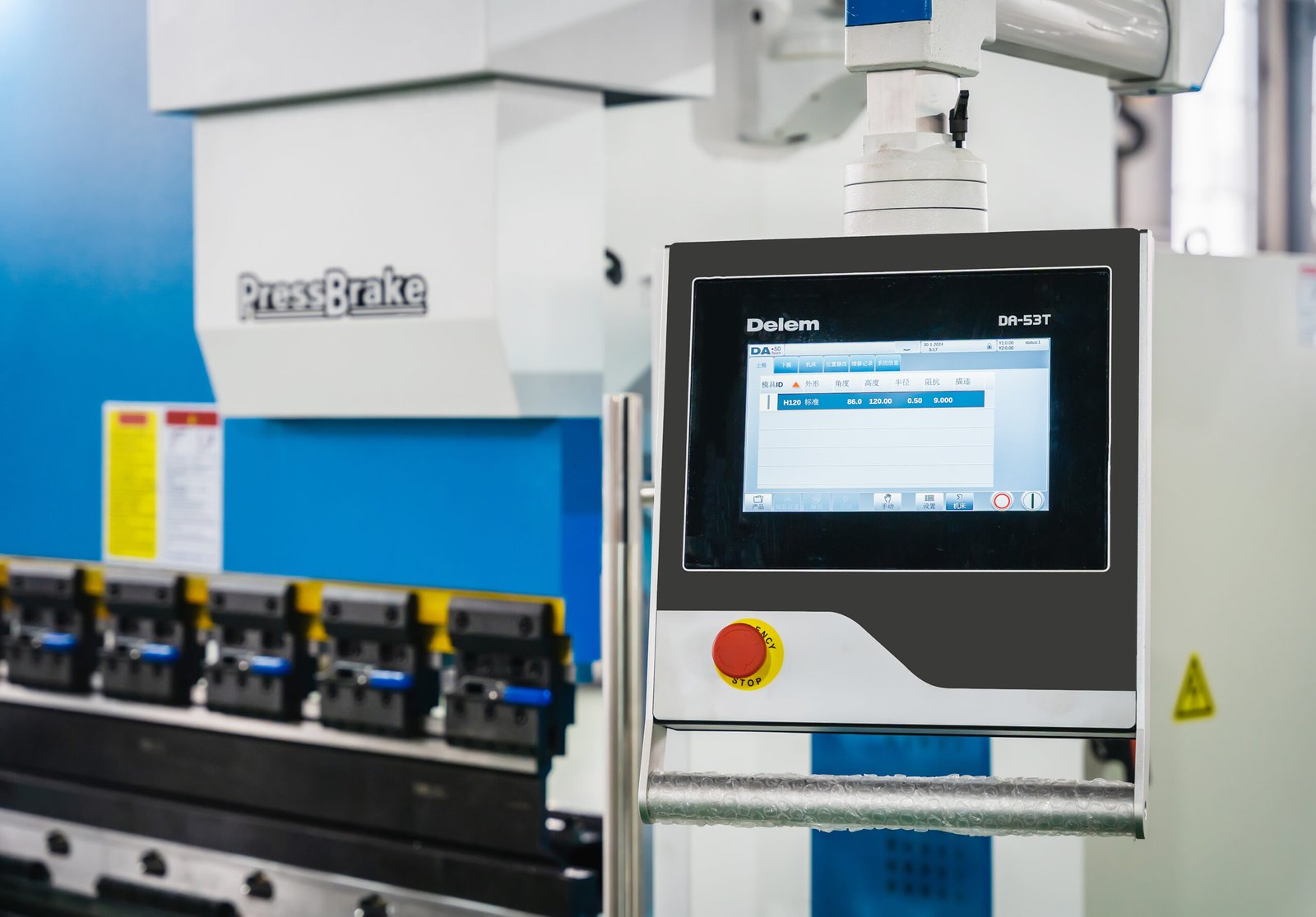
Yes. Delem, ESA and Cybelec controls – all available on HORISTAR CNC bending machines – calculate tonnage from the programmed material, thickness and tooling. You still need this calculation when choosing which machine to buy.
Is the calculator accurate enough to buy a machine?
It is accurate enough for first sizing. Before ordering, send HORISTAR the material grade, thickness, bend length, bend angle, inside radius, V-die plan and monthly volume, and we will confirm machine size and tooling and can run a sample bend on your material.
Need help sizing a press brake?
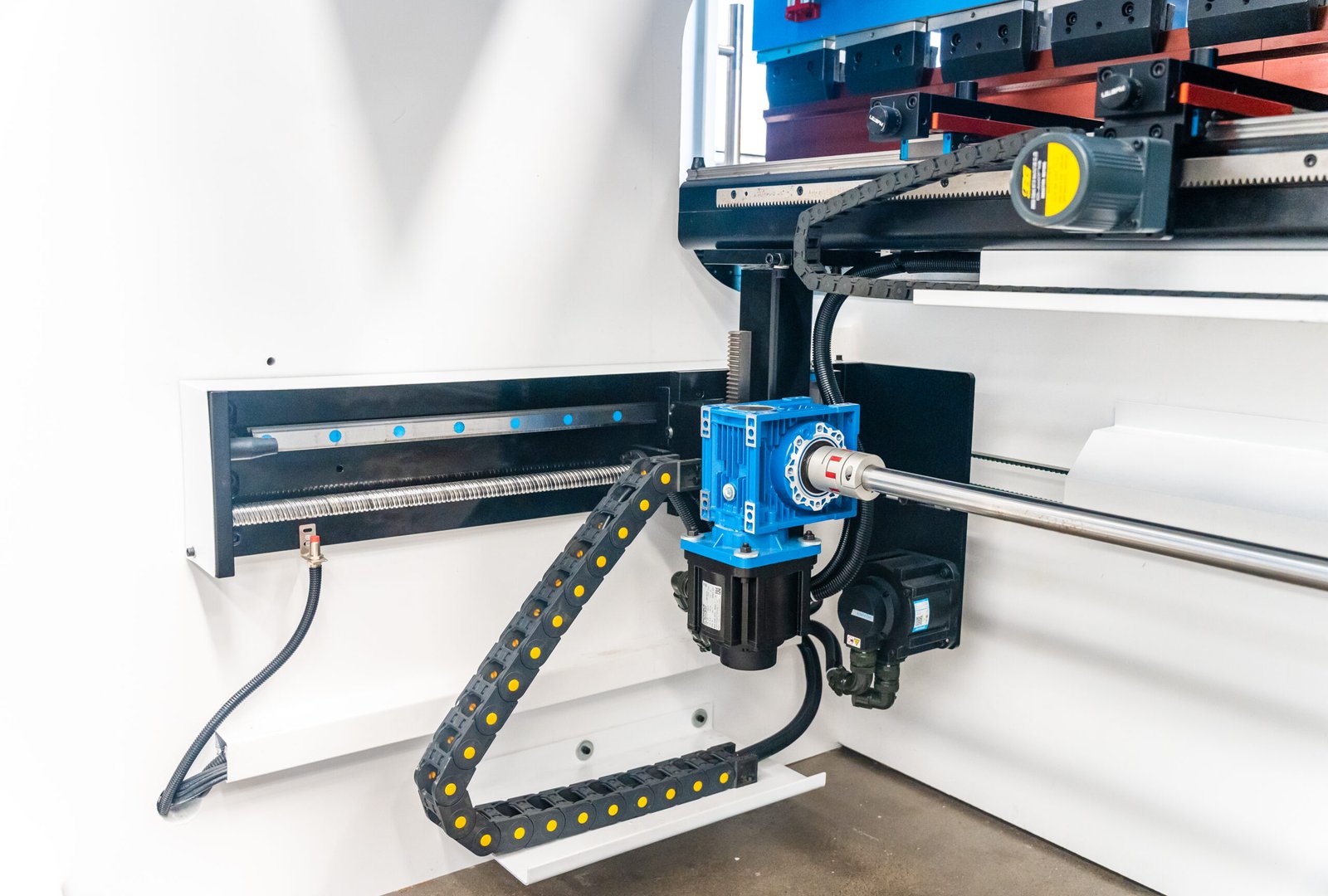
HORISTAR CNC bending machines combine a welded monoblock frame, Bosch-Rexroth closed-loop hydraulics, Delem, ESA or Cybelec controls (4+1, 6+1 or 8+1 axes) and automatic crowning. Send your part data and we will recommend the machine and tooling.
View CNC bending machinesRequest a quoteChart values are calculated estimates for air bending. Real forces vary with material batch, grain direction, tool condition and bend angle. Confirm critical jobs with a sample bend or with your tooling supplier. Related: How to Choose a CNC Press Brake.