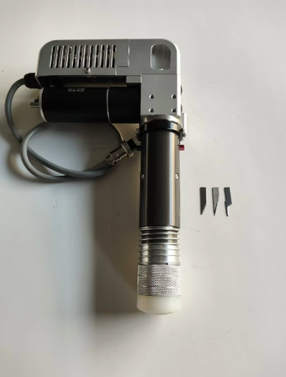
A foam insert cutting machine should be selected by foam type, density, thickness, part shape, nesting efficiency and edge quality. EVA, EPE, PE foam and cushioning foam behave differently under a knife, so the buyer should not judge the machine only by table size or maximum speed. For protective packaging — tool drawers, Pelican-style cases, electronics inserts and shipping cushioning — the most important result is repeatable fit around the product, clean internal corners and stable material holding.
This guide is specifically for protective foam cavities and cushioning inserts, where density, compression recovery, blade oscillation and part retention determine the result. It is intentionally separate from carton and corrugated-board sampling, which depends on creasing, V-cutting, printed registration and box assembly.
The global foam protective packaging market is projected to grow from USD 5.84 billion in 2025 to USD 8.23 billion by 2035 (CAGR 3.5%),1 and the broader protective packaging market is expected to reach USD 56.97 billion by 2033.2 More buyers are switching from manual knives and hot-wire cutters to digital knife systems to handle multi-SKU custom inserts without dies.
HORISTAR buyers can start with the digital knife cutting machine page, then send foam type, density (kg/m³), thickness, insert drawing, product photo, largest sheet size, smallest inner cutout and daily output. HORISTAR uses those inputs to recommend the oscillating knife, vacuum table, nesting workflow and sample testing.
By: Doris Li, CNC Application Engineer, HORISTAR CNC Application Team. Doris is a technical procurement specialist who works with overseas buyers on CNC machine selection, sample testing, quotation inputs and pre-shipment checks for HORISTAR machinery projects.
Updated: 2026-08-10
Estimated read time: 11 minutes
Key Takeaways
- Foam insert cutting is a fit problem, not only a cutting problem. The product must sit securely in the cavity after cutting; a foam insert that “cuts cleanly” but lets the product shift in transit has still failed.
- Foam density matters more than the brochure usually says. EVA ranges roughly 33–280 kg/m³; PE / EPE foam typically sits at 24–50 kg/m³.34 Higher density needs sharper blades and more vacuum.
- Use an oscillating knife for thicker flexible foam. Blade selection, blade length and vibration frequency directly affect edge tearing.
- Nesting matters because foam waste is expensive across large sheets. The HORISTAR ET nesting module targets >92% material usage on flat sheet jobs.
- Sample testing should include 3 foam materials, 3 thicknesses, 3 inner cutout shapes and a 2-hour trial window — before quotation approval.
- Machine safety and electrical planning should reference OSHA 1910.212, ISO 12100, ISO 13849-1, ISO 14120, ISO 9001 and EN 60204-1 / IEC 60204-1.56789
Start With Foam Type and Density
Foam type, density and thickness together decide the blade and holding method. Soft foam compresses, thick foam drags on the blade, and small cavities can deform during cutting. Buyers should send the foam density in kg/m³ to HORISTAR — not just the trade name — because the same “EVA” can range from light cosplay grade to industrial tool-tray grade.
| Foam material | Typical density range | Common packaging use | Cutting direction |
|---|---|---|---|
| EVA foam | 33–280 kg/m³310 | Tool trays, Pelican-style case inserts, electronics packaging, display | Test 2–40 mm thickness with oscillating knife and nesting workflow. |
| EPE foam | 24–45 kg/m³3 | Protective packaging, void-fill, cushioning | Test 5–50 mm thickness with strong vacuum holding. |
| PE foam (closed cell) | 30–50 kg/m³4 | Industrial cushioning, case interiors | Test 3–40 mm thickness for density and edge quality. |
| Sponge / PU foam | 20–60 kg/m³ | Light protection and lining | Test 5–30 mm thickness with reduced compression. |
| Laminated foam | Varies by layer | Multi-layer inserts (e.g. flocked top + EPE base) | Test 2–5 layers for bonding and layer movement. |
Source: HORISTAR digital knife foam application practice, 2026; density ranges cross-checked with industry data.
Field note (Doris Li): I get RFQs that say “EVA foam, 20 mm” and nothing else. That description covers a 4× density range. If the buyer cannot provide density, ask for a 100 × 100 mm sample — we weigh it and back-calculate before quoting blade and vacuum.
Cutout Shape Controls Machine Fit
Foam inserts often fail because the inner cutout does not match the product, not because the outside rectangle is wrong. The RFQ should include product photos and the tightest cavity details.
| Cutout feature | Risk | Buyer rule |
|---|---|---|
| Inner radius below 5 mm | Corner tearing or overcut | Test with real foam thickness, not a thin sample sheet. |
| Thin wall below 8 mm | Wall collapse, deformed cavity | Increase wall or redesign nesting. |
| Deep cavity above 30 mm | Blade drag, taper on side walls | Use suitable oscillating knife length and multi-pass strategy. |
| Dense EVA above 40 mm | Heat / friction and edge drag | Require sample proof; verify blade temperature. |
| Loose-fit insert | Product moves in shipping, fails drop test | Reduce cavity clearance to 1–2 mm per side. |
| Logo or branding pocket | Cosmetic surface | Use kiss-cut or shallow groove instead of through-cut. |
Source: HORISTAR foam insert drawing review practice, 2026.
The mechanism is compression. When the blade presses into soft foam, the material deforms before it separates. That deformation shifts corners and cavities, which leads to a loose product fit after the foam relaxes. Higher-density foam compresses less but loads the blade more — both extremes require sample proof.
Digital Knife vs Manual Foam Cutting
Digital knife cutting is strongest when the factory repeats many shapes or needs fast design changes. Manual cutting is still acceptable for rough padding and low-volume repair work.
| Workflow | Best fit | Measurable threshold |
|---|---|---|
| Manual knife | Rough pads and repair inserts | Below 20 inserts/month. |
| Hot wire | Simple straight or profile cuts in EPS / EPE | Limited for complex cavities; melts edges on EVA. |
| Digital knife cutting | CAD-based inserts and mixed shapes | Above 50 inserts/month or 5 designs/month. |
| Die cutting | Stable high-volume shapes | Above 5,000 pcs/design with frozen artwork. |
| CNC routing | Rigid foam blocks (XPS, dense PU) | Use when knife cannot achieve depth or shape. |
| Waterjet | Specialty / very thick stacks | Higher cost, slower setup; not typical for sample rooms. |
Digital cutting helps because a CAD file controls the path and nesting. It reduces operator variation, which matters when multiple product sizes share the same packaging family — for example a tool brand that sells a 12-bit, 24-bit and 48-bit drawer insert from the same artwork family.
Recommended HORISTAR Configuration for Foam Inserts
The following configuration is based on the HORISTAR digital knife cutting machine product data and should be treated as a quotation starting point. The final configuration depends on the buyer’s foam type, density, thickness, sheet size, tool package and production workflow.
| Item | HORISTAR HM-1625 reference configuration | Why it matters for foam inserts |
|---|---|---|
| Model | HM-1625 | Common working format for protective packaging and tool-drawer inserts. |
| Working area | 1600 × 2500 mm | Determines the largest foam sheet that can be processed in one cycle. |
| Cutting thickness | 0.1–50 mm depending on material; customized heightened beams up to 100 mm are available for thick foam blocks | Cushioning foam buyers should test their thickest stock before ordering. |
| Cutting tolerance | ±0.1 mm | Critical for cavity fit, especially Pelican-style and electronics inserts. |
| Maximum cutting speed | 1200 mm/s | Real foam speed is lower than max; useful for productivity comparison only. |
| Acceleration | 3000 mm/s² | Affects throughput on parts with many short segments. |
| Transmission interface | Ethernet | Stable digital file transfer from the design station. |
| Fixing mode | Vacuum absorb | Keeps soft foam flat and prevents lift during oscillating cut. |
| Supported formats | DXF, PLT, PDF, AI | Buyers should send actual insert dieline files for testing. |
| Recommended tool package | Double-head: oscillating knife + drag knife + creasing tool + kiss-cutting tool | Lets the foam room switch between through-cut, kiss-cut logo pockets and laminated foam top layers. |
| Nesting | ET automatic nesting, >92% utilization target | Foam waste is expensive across large sheets — nesting is a direct cost saver. |
| Safety | Infrared blocking stop, anti-collision protection | Aligns with ISO 12100 / ISO 13849-1 risk-reduction logic.67 |
Source: HORISTAR digital knife cutting machine product data, 2026.
Worked Cost Calculation
Use material waste and manual cutting hours to decide whether a foam insert cutting machine belongs in the packaging workflow.
Inputs
- Foam sheets used: 120 sheets/month
- Current material waste: 18% per month
- Expected waste after nesting: 10% per month (HORISTAR nesting target >92% utilization)
- Foam sheet cost: USD 12/sheet
- Manual cutting labor saved: 30 hours/month
- Labor rate: USD 8/hour
- Current manual cutting time: 6 hours/day
- Planning window: 12 months
Formula
Monthly value = material savings + labor savings
Substitution
Material savings = 120 sheets/month × 8% improvement × USD 12/sheet = USD 115.20/month
Labor savings = 30 hours/month × USD 8/hour = USD 240/month
Monthly value = USD 115.20 + USD 240 = USD 355.20/month
Annual value (12 months) = USD 4,262.40
Recommendation
If foam work saves more than USD 300/month through nesting and labor reduction, digital knife cutting deserves sample testing. If the factory cuts fewer than 20 rough pads/month, manual cutting remains a simpler route. Buyers with high-density EVA or multi-SKU tool-drawer inserts will usually see savings well above this baseline because manual cutting cannot hold ±0.1 mm cavity fit.
Source: HORISTAR foam packaging planning example, 2026.
Lifecycle and Maintenance Matrix
Foam cutting should be evaluated over a 5-year ownership window because blades, mats, vacuum pumps and software libraries affect repeatability.
| Lifecycle / maintenance interval | Sample / low-volume use | Production use | Buyer action |
|---|---|---|---|
| Blade inspection | Every 8 hours | Every 8 hours | Replace dull blades before tearing appears. |
| Cutting mat inspection | Every 1 month | Every 1 month | Prevent depth variation across the table. |
| Vacuum table cleaning | Every 8 hours | Every 8 hours | Keep foam flat; clogged vacuum is the #1 cause of lifted edges. |
| Nesting template audit | Every 6 months | Every 3 months | Reduce waste as the SKU library grows. |
| Camera / alignment check | Every 1 month | Every 1 month | Maintain printed or marked alignment for top-layer logos. |
| Electrical cabinet inspection | Every 6 months | Every 6 months | Match EN 60204-1 / IEC 60204-1 documentation.9 |
| Software / nesting library backup | Every 3 months | Every 1 month | Protect SKU artwork against drive failure. |
| Lifecycle planning horizon | 5 years | 5 years | Budget blades, mats, vacuum service and operator training. |
Source: HORISTAR digital knife ownership planning practice, 2026.
Sample Test Before Purchase
A foam sample test should use the buyer’s real product cavity, not only a straight strip cut. The acceptance evidence should be photographed with the actual product seated inside the cavity.
| Test item | Minimum evidence | Acceptance direction |
|---|---|---|
| Foam materials | 3 materials | EVA, EPE and PE foam if in scope. |
| Density variation | 2 density grades per material | Proves blade and vacuum handle both ends of the range. |
| Thicknesses | 3 thicknesses | Thin, routine and upper range. |
| Cutout shapes | 3 shapes | Round, rectangle and irregular product cavity. |
| Inner details | 5 mm radius and 8 mm wall if required | Proves small feature control. |
| Runtime | 2-hour trial window | Finds blade, vacuum and software issues. |
| Product fit | 3 assembled inserts with product seated | Confirms protective packaging performance. |
| Drop test (optional) | 1 m drop on packaged carton | Catches loose-fit failures before shipment. |
Case Snapshot: US Tool-Drawer Buyer, 2026
In Q1 2026, a US tool-storage distributor requested EVA tool-drawer inserts for a 36-SKU socket-set line. The buyer’s incumbent vendor used a manual knife and reported 22% scrap and a 3-week sample turnaround.
HORISTAR ran a 2-hour trial on the digital knife cutting machine with the following parameters:
- Foam: 12 mm EVA, ~80 kg/m³ density
- Oscillating knife at production cutting speed; vacuum holding active
- Smallest internal radius achieved: 4.8 mm
- Smallest wall thickness held: 7 mm
- Material waste with HORISTAR ET nesting: 11.6% (vs. 22% manual baseline)
- 3 assembled inserts photographed with sockets seated, no shift after 30-cycle handling
The buyer approved the sample evidence and moved to RFQ confirmation in the same week. Source: HORISTAR foam insert sample inspection record, 2026.
Common Buyer Objections
Buyers comparing digital knife cutting to die cutting or hot-wire usually raise the same three concerns. Honest answers below.
| Objection | Honest answer |
|---|---|
| “Die cutting is cheaper per piece.” | True at high volume with frozen artwork. Digital knife cutting wins when the design changes, when there are many SKUs, or when the buyer needs samples before approving the die. Many factories run both. |
| “Hot-wire cutting is faster.” | Hot wire is faster for straight EPS / EPE profile cuts. It melts EVA edges, leaves a yellow scar, and cannot do internal cavities with sharp corners. |
| “Can a digital knife really cut 50 mm foam?” | Yes, with the correct oscillating blade length and a heightened beam. HORISTAR offers customized heightened beams up to 100 mm for thick foam blocks. The constraint is usually density × thickness, not thickness alone. |
RFQ Input List
To request a quote, send HORISTAR:
- Foam type (EVA / EPE / PE / PU / laminated)
- Foam density in kg/m³ (or a 100 × 100 mm sample for measurement)
- Thickness — routine and maximum, in mm
- Sheet size and required working area
- Product photos and CAD drawings (DXF, PDF or AI)
- Smallest inner radius and thinnest wall
- Daily output and SKU count
- Current waste rate, if known
- Voltage and destination country
- Any branding / kiss-cut top-layer requirement
If packaging work also includes cartons, read the digital knife cutting machine for packaging samples guide. For broader configuration and price factors, review the digital knife cutting machine price guide.
Specification Checklist
| Specification | What to request | Why it protects the buyer |
|---|---|---|
| Foam material | EVA, EPE, PE, PU or laminated foam | Sets blade and vacuum direction. |
| Foam density | kg/m³ for each material in scope | Avoids “wrong blade for the density” surprise on arrival. |
| Thickness | Routine and maximum in mm | Prevents blade-length mismatch. |
| Smallest feature | Inner radius, wall thickness, smallest cutout | Protects product fit. |
| Working size | Sheet size and table size | Fits foam stock and reduces seam joins. |
| Tool package | Oscillating knife + drag + creasing + kiss-cut | Covers cavity, top-layer logos, laminated foam. |
| Nesting software | Waste-reduction workflow (target >92% utilization) | Direct cost saver across the SKU library. |
| Sample test | Product-fit sample with photos | Proves real packaging result, not brochure speed. |
| Training | Operator + CAD workflow | Reduces startup mistakes in the first 90 days. |
| Safety documentation | EN 60204-1 / IEC 60204-1 electrical file9 | Required for many customs and factory audits. |
Frequently Asked Questions
Source: HORISTAR foam cutting and sample-testing practice, 2026.
What machine cuts foam inserts?
A digital knife cutting machine cuts EVA, EPE, PE and cushioning foam inserts from CAD files using an oscillating knife, vacuum holding and nesting software. The right configuration depends on foam thickness, density (kg/m³), smallest internal radius and monthly production volume. For HORISTAR, the HM-1625 with a double-head tool package is a typical starting point for foam-insert sample rooms.
Is digital knife cutting better than manual foam cutting?
Digital knife cutting is better than manual foam cutting when the buyer repeats many insert shapes, needs CAD accuracy below ±0.5 mm, or wants to reduce material waste below the typical 15–20% manual baseline. Manual cutting remains practical for rough pads and low-volume repair work. The decision should be based on monthly insert quantity, SKU count and the required cavity fit.
What foam thickness can a digital knife cutting machine handle?
Suitable foam thickness depends on foam type, density, blade length, table holding and edge-quality requirement. The HORISTAR HM-1625 covers 0.1–50 mm out of the box, with customized heightened beams up to 100 mm for thick foam blocks. For deep cavities above 30 mm or dense EVA above 40 mm, sample proof is more reliable than a brochure claim.
What is the right foam density for case inserts?
For Pelican-style hard case inserts and tool-drawer organizers, EVA in the 60–120 kg/m³ range is a common production choice — firm enough to hold shape, soft enough to cushion. For void-fill and shipping cushioning, lower-density EPE at 24–45 kg/m³ is more typical. Buyers should send actual density (kg/m³) with the RFQ.34
Can a digital knife cut Pelican-style hard case foam inserts?
Yes. Pelican-style inserts are typically multi-layer EVA or laminated foam (firm base + soft top layer), and digital knife cutting handles both the through-cut cavities and the top-layer kiss-cut logo with the same setup. The buyer should send the case interior dimensions, product photos, smallest cavity radius and any branding requirement.
What should I test before buying a foam insert cutting machine?
Test at least 3 foam materials, 2 density grades per material, 3 thicknesses, 3 cutout shapes, small inner details and a 2-hour trial window. Ask for assembled product-fit samples with the actual product seated, not only flat cut foam. This proves the insert protects the product as intended, which is the only result that matters in shipping.
What information should I send to HORISTAR?
Send foam type, density (kg/m³), thickness, sheet size, product photos, CAD drawings, smallest radius, thinnest wall, daily output, current waste rate, voltage and destination country. HORISTAR uses those inputs to recommend tool head, vacuum table, nesting workflow and the sample evidence needed before quotation approval.
How much does a foam insert cutting machine cost?
Price depends on working area, tool head count, vacuum pump size, conveyor / feeding option and software package. The HORISTAR HM-1625 sits in the mainstream range for sample rooms and short-run production. For a current price band by configuration, see the digital knife cutting machine price guide, and request a configuration-matched quote with your foam specs.
Request a Foam Sample Test
If your team is evaluating a foam insert cutting machine, the fastest way to compare vendors is a real sample with your foam, your product, and your cavity drawing — not a generic demo strip.
Send Doris and the HORISTAR CNC Application Team your foam type + density + thickness + insert drawing, and HORISTAR will return:
- A configuration recommendation tied to your foam and SKU count.
- A sample cut on the same HM-1625 platform you would receive.
- Photos of the assembled insert with your product seated in the cavity.
- A configuration-matched quotation with safety documentation references.
→ Start at the digital knife cutting machine product page.
Review Record
Technical review by Doris Li and the HORISTAR CNC Application Team, 2026-06-25; scope included foam material behavior, density and density measurement, small cutout limits, nesting calculation, RFQ inputs, sample testing, common buyer objections and machinery safety source mapping.
Sources
-
Towards Packaging, Foam Protective Packaging Market Trends & Size 2026-2035 (USD 5.84B in 2025 → USD 8.23B by 2035, CAGR 3.5%). ↩
-
Grand View Research, Protective Packaging Market Size, Share Report 2026-2033 (USD 40.43B in 2025 → USD 56.97B by 2033, CAGR 4.6%). ↩
-
Foamtech, Foam Packaging Insert: Best Selection Guide (EVA 33–280 kg/m³; PE 30–50 kg/m³ reference ranges). ↩↩↩↩
-
MSTOR, PE Foam vs. EVA Foam: Which Should You Use? (closed-cell PE foam density reference). ↩↩↩
-
Occupational Safety and Health Administration, 29 CFR 1910.212 General requirements for all machines. ↩
-
International Organization for Standardization, ISO 12100:2010 Safety of machinery — Risk assessment and risk reduction. ↩↩
-
International Organization for Standardization, ISO 13849-1:2023 Safety-related parts of control systems. ↩↩
-
International Organization for Standardization, ISO 14120:2015 General requirements for guards. ↩
-
International Electrotechnical Commission, IEC 60204-1:2016 Electrical equipment of machines. ↩↩↩
-
Metro Foam, EVA Foam product information (EVA density 30–400 kg/m³ commercial range). ↩
-
HORISTAR, Digital Knife Cutting Machine.