- Manual deburring fits low volume and special geometry. Use it for one-off parts, repair work, internal features and final corrections after machine processing.
- CNC deburring fits repeated flat sheet metal work. It is strongest after laser cutting, punching, plasma cutting and shearing when burr removal, edge rounding or oxide removal repeats daily.
- Automation should be evaluated when manual finishing exceeds 2-4 hours per day. At that level, labor cost, delivery delay and quality variation start to justify a sample test.
- Coated parts need more than burr removal. ISO 8501-3 covers preparation grades for welds, cut edges and other surface imperfections before painting.
- Safety and guarding are part of the comparison. Manual tools and automatic equipment create different risk-control requirements.
CNC deburring is the better default when sheet metal finishing is repeated every shift, while manual deburring remains useful for prototypes, repair work, complex internal corners and final touch-up. The decision should be made from labor hours, edge consistency, burr source, coating requirement, part geometry and safety exposure, not from machine price alone.
Search Result Gap and Article Strategy
Live SERP analysis for “CNC deburring vs manual deburring” shows that top pages usually explain hand tools versus machine tools, but they under-serve B2B buyers on RFQ inputs, model sizing, sample testing, machine acceptance and measurable ROI. This article fills that gap with a buyer-side decision model for flat sheet metal factories.
| Top SERP Pattern | Common Coverage | Missing for B2B Buyers | This Guide Adds |
|---|---|---|---|
| Tool distributor article | General manual vs machine comparison | No machine width, sample pack or RFQ list | 1000 mm / 1300 mm model decision and sample test plan |
| Deburring service article | Rework and scrap discussion | Limited procurement workflow | Quote inputs, acceptance checks and support path |
| Forum thread | Shop opinions | No standards or repeatable framework | Safety standards, coating standards and ROI formula |
| Tooling blog | Cutting tool discussion | Not sheet-metal finishing focused | Laser/punching/coating use cases |
Source: LemonC SERP competitor analysis for Google US, run 2026-06-22.
Quick Decision Rule
Choose CNC deburring when flat sheet metal parts repeat every day, burrs are predictable, edge quality must be consistent, or manual grinding delays delivery. Choose manual deburring when the part is irregular, the volume is low, or only local touch-up is required.
Stay manual
Automation is usually premature unless a quality or safety failure is already severe.
Sample-test CNC
This is the practical threshold where labor, queue time and variation deserve testing.
Treat as production
Finishing is no longer a side task; it needs a process route and acceptance standard.
| Factory Condition | Better Starting Method | Decision Rule |
|---|---|---|
| Less than 1 hour/day of deburring | Manual | Automation is premature unless quality failure is severe. |
| 2-4 hours/day of deburring | Sample-test CNC deburring | Compare labor, edge quality and queue time. |
| 1 full-time operator or more | CNC deburring | Treat finishing as a production process, not a side task. |
| Flat laser-cut or punched sheet batches | CNC deburring | Machine feed and brush pressure repeat well. |
| Deep internal corners or formed parts | Manual or hybrid | Human access remains useful for non-flat geometry. |
| Powder-coated carbon steel | CNC deburring plus edge rounding / oxide removal | Coating preparation needs consistent edges. |
What Manual Deburring Does Well
Manual deburring removes burrs, sharp edges, slag and local roughness with hand tools. Workers use files, scrapers, sanding blocks, flap wheels, angle grinders or handheld polishing tools. It works because a skilled operator sees the part directly and adapts pressure, angle and tool choice.
- The batch is a prototype, repair job or sample.
- Burrs appear only in a small area.
- The feature sits inside a pocket, hole or formed shape.
- The surface is delicate and needs human judgment.
- The shop has no repeated finishing bottleneck.
The weakness is repeatability. Two operators using the same grinder create different edge break, scratch direction and surface heat. Fatigue also changes pressure because tool angle and contact pressure are controlled by the worker, not by a fixed feed system. For exported parts, that variation becomes visible in handling safety, coating quality and customer inspection.
What CNC Deburring Does Better
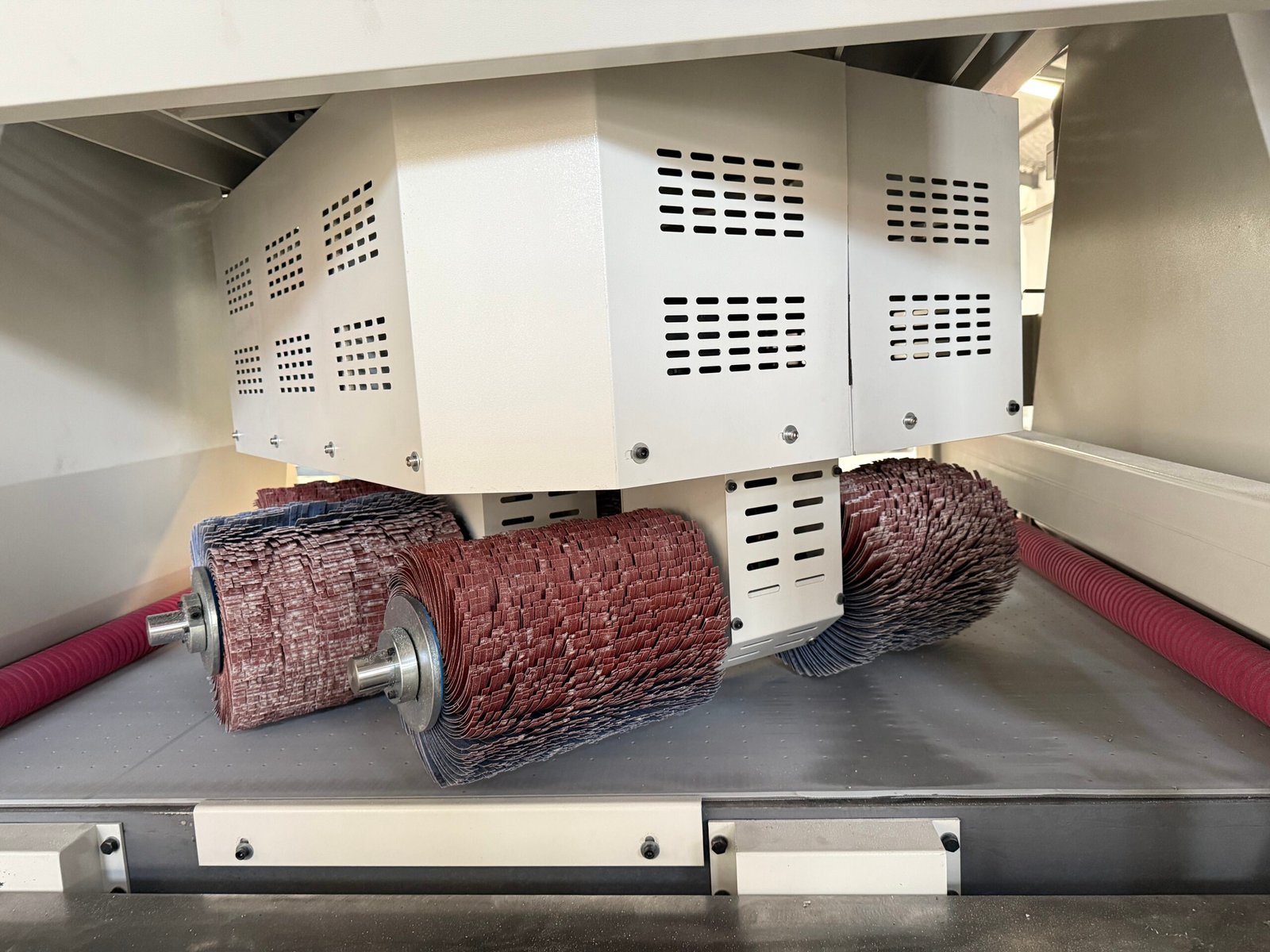
CNC deburring uses a controlled conveyor, abrasive belt, brush roller, disc brush or oxide-removal unit to process sheet metal parts automatically. The goal is not only to “remove burrs”; it is to control the finishing process so parts leave laser cutting or punching with predictable edge quality.
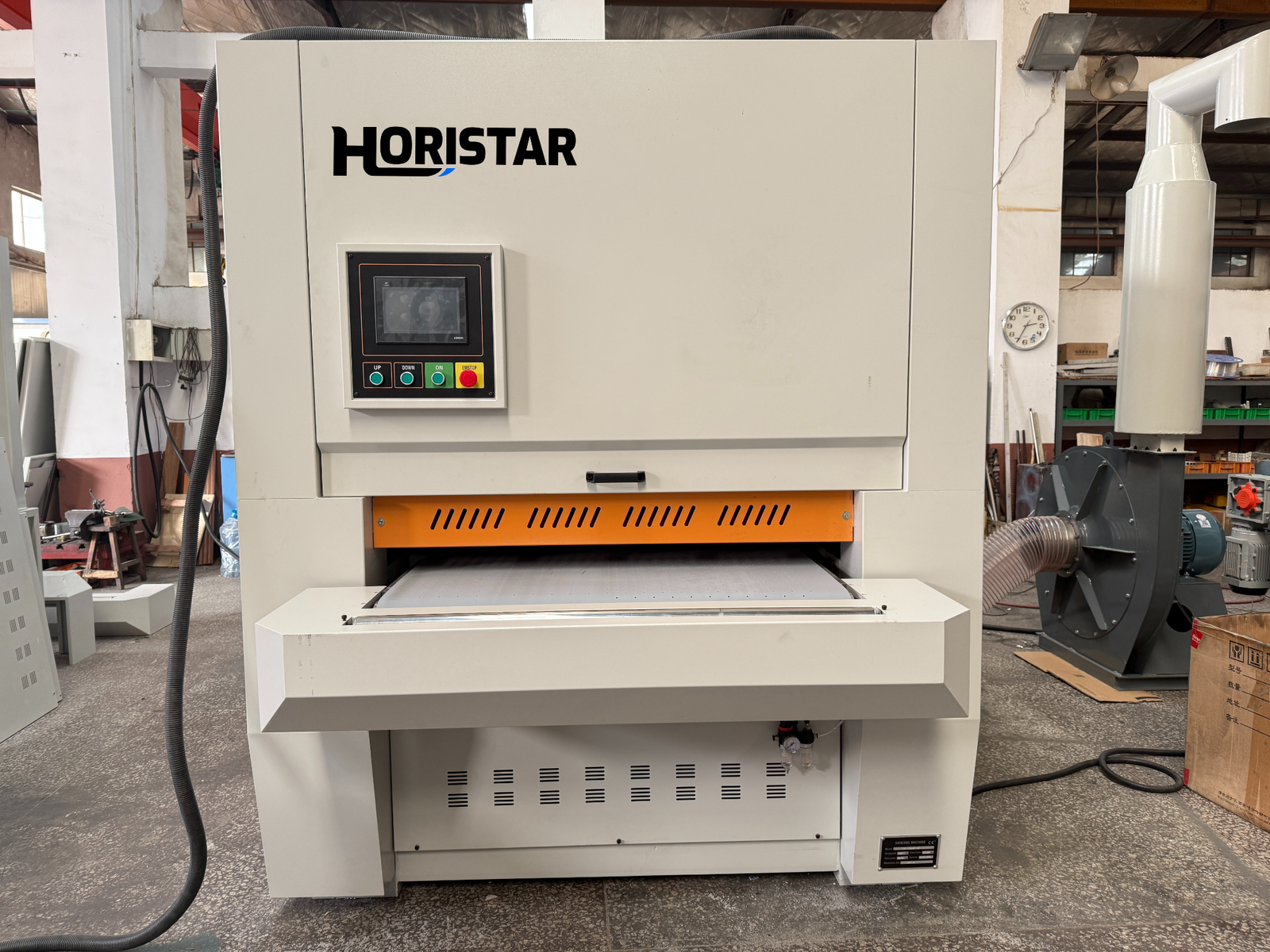
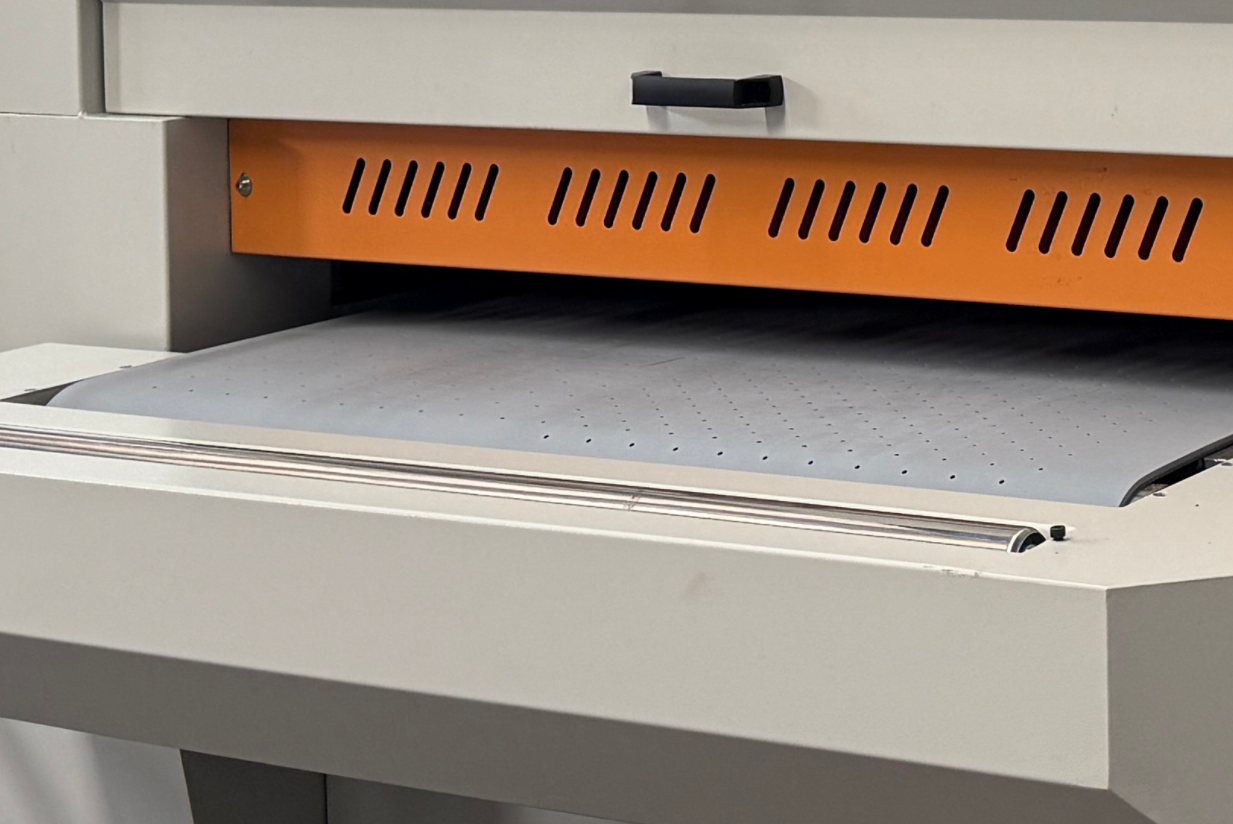
The HORISTAR CNC Sanding Deburring Machine is positioned for burr removal, edge rounding, oxide removal and surface sanding after laser cutting, punching, plasma cutting, shearing and fabrication. Published model data lists HM-1000G-W with 1000 mm working width and 6 flexible grinding rollers, and HM-1300G-W with 1300 mm working width and 8 flexible grinding rollers.
Burr removal
Stable pressure and feed remove bottom burrs without relying on hand angle.
Edge rounding
Repeatable R0.1-0.5 mm target on suitable flat sheet parts.
Oxide removal
Consistent cleaning of oxygen-cut carbon steel edges before coating.
| Function | CNC Deburring Advantage | Buyer Test |
|---|---|---|
| Burr removal | Stable pressure and feed | Bottom burr removed without over-sanding |
| Edge rounding | Repeatable R0.1-0.5 mm target on suitable parts | Radius checked on several edges |
| Oxide removal | Consistent cleaning of oxygen-cut carbon steel edges | Dark oxide reduced before coating |
| Surface sanding | Repeatable scratch pattern | Visual panels match approved sample |
| Small-part handling | Vacuum adsorption supports small sheets | 50 x 50 mm part stays stable in test |
Cost Model and Payback Example
Use cost modeling to decide whether CNC deburring deserves a sample test. Do not use this formula as a final investment promise; use it to decide whether automation is worth engineering review.
Manual Deburring Cost Model
| Cost Driver | Manual Deburring | CNC Deburring | Why It Changes ROI |
|---|---|---|---|
| Direct labor | 2-4+ hours/day grows quickly | 1 operator loads, unloads and inspects | Labor becomes less tied to every edge. |
| Rework | Varies by worker | Lower after process is set | Stable settings reduce repeated corrections. |
| Consumables | Wheels, discs, hand tools | Abrasive belts, brushes, filters | Machine consumables must be included. |
| Delivery queue | Finishing waits after cutting | Parts flow through a process route | Shorter queue reduces late shipments. |
| Safety exposure | Hands near sharp burrs and grinders | Less direct edge handling | Lower exposure improves work planning. |
Edge Quality and Coating Risk
Burr removal, edge rounding and oxide removal are related, but they are not the same process. A buyer that asks only for “deburring” may still receive parts that are too sharp for powder coating.
Coating failures often start at cut edges because the coating film is thinner on a sharp corner and oxide reduces bonding on oxygen-cut carbon steel. Edge rounding plus oxide removal reduces that risk when the part goes to painting or powder coating.
| Edge Problem | Manual Risk | CNC Process Direction | Standard / Source Note |
|---|---|---|---|
| Raised burr | Worker misses small burrs after fatigue | Abrasive belt or brush pass | Inspect top, side and bottom edges. |
| Sharp edge without burr | Looks clean but cuts hands or coating | Edge rounding R0.1-0.5 mm where suitable | HORISTAR HM range. |
| Oxygen-cut oxide | Manual grinding leaves inconsistent patches | Oxide-removal brush / belt setup | ISO 8501-3 helps define edge preparation before painting. |
| Coating failure at edge | Edge receives weak coating coverage | Round and clean edge before coating | ISO 12944-5 links paint systems to surface preparation grades. |
| Heavy plasma slag | Too much for light brushing | Pre-cleaning or stronger deburring route | Test before quotation. |
For a deeper process distinction, use HORISTAR’s edge rounding vs deburring vs oxide removal guide as the supporting page after that article is published.
Safety and Compliance Comparison
Manual deburring exposes workers to sharp sheet edges, flying particles, abrasive wheels, hand-arm fatigue and dust. Automatic deburring equipment shifts the safety work toward machine guarding, interlocks, emergency stops, electrical design and dust control.
Buyer Requirement
Ask the supplier for emergency-stop layout, guard/interlock description, dust-collection plan, electrical schematic, user manual and spare-part list.
| Safety Topic | Manual Deburring | CNC Deburring | Buyer Requirement |
|---|---|---|---|
| Sharp-edge handling | Frequent direct handling | Less direct handling after loading | Gloves and part flow still required. |
| Tool guarding | Portable tool guard / wheel control | Machine guarding and enclosure | Map to OSHA 1910.212 and ANSI B11.19. |
| Electrical system | Portable tool safety | Machine cabinet and controls | EN 60204-1 / IEC 60204-1 style documentation. |
| Control reliability | Operator behavior | Safety functions and interlocks | Use ISO 13849-1 logic for safety-related controls. |
| Dust | Local grinder dust | Collection at machine | Define dust collection and filter maintenance. |
For a production line that includes upstream cutting, the laser cutting machine and finishing workflow should be specified together. If the cutting process is still being selected, compare upstream metal-sheet options in the fiber vs CO2 laser cutting for metal sheets guide before locking the deburring sample pack.
Sample Testing Workflow
Sample testing should use the buyer’s difficult parts, not only supplier-prepared samples. During a 2026 HORISTAR HM-series sample inspection, the application team used 50 x 50 mm minimum-size coupons, 0.5-3 mm thin sheet and 8-16 mm thicker sheet to record part stability, burr removal and edge rounding before recommending the model width.
Source: HORISTAR 2026 HM-series sample inspection record.
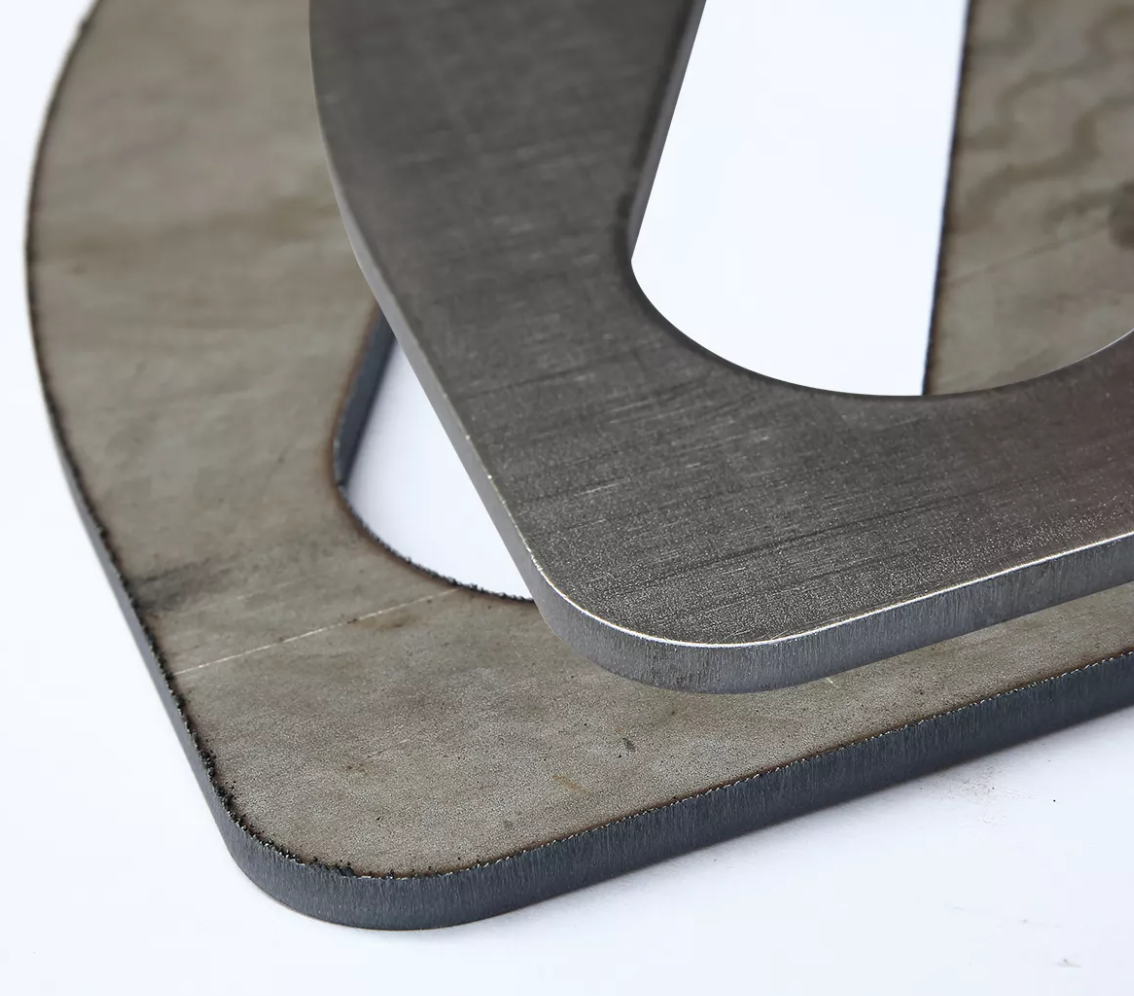
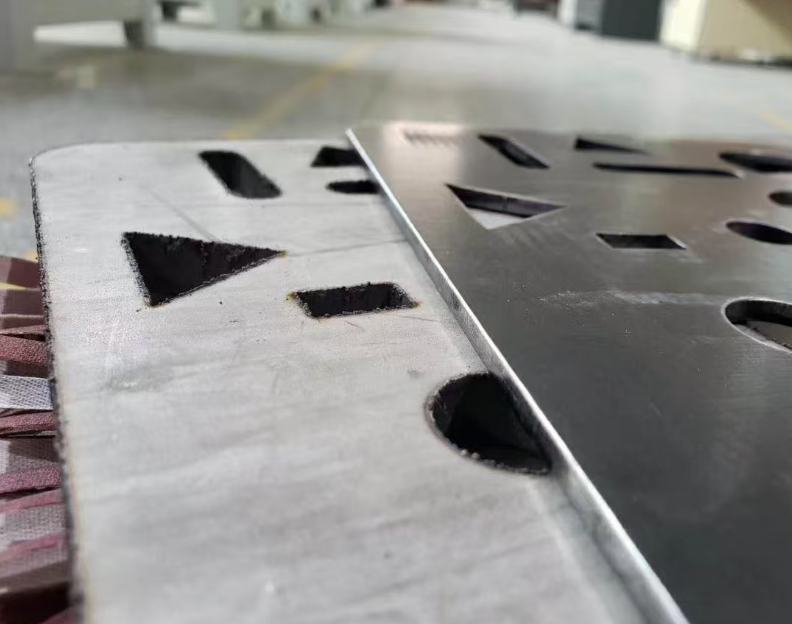
- Before/after photos from the top, side and bottom.
- Material, thickness and cutting process for every sample.
- Burr type: laser, punching, plasma, shearing or drilling.
- Machine model, feed speed, abrasive belt and brush setup.
- Whether the part stayed stable on the vacuum table.
- Edge result: burr removed, R0.1-0.5 mm rounding, oxide removed or surface sanded.
- Remaining manual touch-up areas.
- Recommended HM-1000G-W or HM-1300G-W configuration.
Request a quote only after the test record shows the process route. A quotation without sample context usually becomes a width-and-price comparison, which is too shallow for finishing quality. For imported equipment, align the sample record with the pre-shipment acceptance and import document workflow before releasing the balance payment.
Machine Configuration Decision Matrix
The correct configuration depends on part size, material, burr source and downstream process. Buyers should not purchase by the word “deburring” alone.
| Buyer Input | HM-1000G-W Direction | HM-1300G-W Direction | Manual / Hybrid Direction |
|---|---|---|---|
| Common part width below 1000 mm | Strong fit | Extra width only if growth is planned | Manual for rare parts |
| Common part width above 1000 mm | Too narrow for one-pass work | Strong fit at 1300 mm width | Manual only for local touch-up |
| Small parts near 50 x 50 mm | Test vacuum stability | Test vacuum stability | Manual if parts move |
| Daily coating work | Edge rounding and oxide removal setup | Edge rounding and oxide removal setup | Manual touch-up after CNC |
| Deep internal burrs | CNC handles outer edges first | CNC handles outer edges first | Manual remains necessary |
| High output after laser cutting | 6 rollers fit medium output | 8 rollers fit wider/higher output | Manual becomes bottleneck |
Maintenance and Lifecycle Planning
CNC deburring reduces hand grinding, but it creates a machine maintenance routine. Plan this before the purchase so the machine does not become another bottleneck.
| Lifecycle Item | Planning Interval | What to Record |
|---|---|---|
| Abrasive belt inspection | Every shift | Wear, tracking and scratch pattern |
| Brush / roller inspection | Weekly | Edge radius consistency and brush wear |
| Dust collector inspection | Weekly | Filter condition and airflow |
| Vacuum table cleaning | Daily or every shift | Small-part holding strength |
| Safety interlock validation | Monthly | Door, cover and emergency-stop response |
| Process audit | Every 6 months | Material mix, feed speed, burr result and rework rate |
RFQ Input List
Send a complete RFQ package so the supplier recommends a finishing process, not only a machine width. If the same sheet-metal line includes forming after cutting and deburring, use the CNC press brake buyer guide to keep blank size, bend length and finishing requirements aligned.
- Material grades: carbon steel, stainless steel, aluminum, galvanized sheet or mild steel.
- Thickness range and normal thickness mix.
- Largest and smallest part size.
- Current cutting process: laser, punching, plasma, shearing, drilling or milling.
- Photos of burrs, oxide and edge defects.
- Current manual deburring hours per day and worker count.
- Required result: burr removal, edge rounding, oxide removal, surface sanding or all of them.
- Downstream process: welding, powder coating, painting, assembly or packing.
- Target edge radius if specified by the customer.
- Daily output, shifts per day and current delivery bottleneck.
- Destination country and required documentation.
Get Finishing Process Support
To request a quote, send your project drawings, photos and current manual deburring hours through Contact HORISTAR. HORISTAR then recommends sample testing, model width and processing modules for your sheet metal workflow.
Specification Checklist
Use this checklist to compare automatic deburring offers line by line.
| Specification | Why It Matters | Buyer Cut-Off |
|---|---|---|
| Working width | Defines one-pass part capacity | 1000 mm or 1300 mm must cover common parts. |
| Thickness range | Defines processable material | HORISTAR HM range is 0.5-100 mm. |
| Minimum part size | Affects small-part safety | Test 50 x 50 mm parts with vacuum hold-down. |
| Feed speed | Affects throughput and finish | 0.5-6 m/min range needs sample settings. |
| Edge rounding range | Affects handling and coating | R0.1-0.5 mm should match the accepted sample. |
| Modules | Defines deburring, rounding and oxide removal | Match module to burr source and coating needs. |
| Dust collection | Affects workshop safety and cleaning | Require filter access and maintenance plan. |
| Safety design | Affects operator exposure | Require guards, E-stops, interlocks and manuals. |
| Service support | Affects downtime | Require spare parts, remote support and training. |
Frequently Asked Questions
CNC deburring is better for repeated flat sheet metal production where the buyer needs stable burr removal, edge rounding, oxide removal, safer handling and lower labor dependence. Manual deburring is better for prototypes, repair work, formed parts, deep internal features and final touch-up. Most factories should compare a hybrid workflow rather than treat the choice as all-or-nothing.
Start automation evaluation when manual deburring reaches 2-4 hours per day, when one operator spends most of a shift grinding, when cut parts wait in a finishing queue, or when customers reject parts for burrs, sharp edges or coating failure. At that point, a sample test gives better evidence than a price comparison.
Yes, when the machine is configured for the real edge condition. Laser-cut stainless steel, nitrogen-cut carbon steel and oxygen-cut carbon steel create different finishing needs. Raised burrs, oxide layers and sharp edges require different abrasive or brush settings, so send real sample parts before the supplier recommends the final configuration.
No. CNC deburring should remove the repeated work first: outer edges, flat parts, common holes and consistent burrs. Manual tools remain useful for deep internal corners, formed parts, delicate surfaces and final touch-up after inspection. A hybrid route usually gives the best mix of throughput and flexibility.
Send material, thickness, part size, cutting method, burr photos, oxide photos, required edge radius, downstream coating or welding requirement, daily output and current manual deburring hours. HORISTAR then recommends HM-1000G-W or HM-1300G-W direction, sample testing and a configuration for burr removal, edge rounding or oxide removal.
Content Review Record
Technical review record: reviewed by the HORISTAR CNC application team on 2026-06-22; scope included 5 FAQ answers, 4 decision tables, 1 ROI calculation, RFQ inputs, HM-series specifications and standards mapping.
References
- ISO, ISO 8501-3:2006, preparation grades of welds, edges and other areas with surface imperfections.
- ISO, ISO 12944-5:2018, protective paint systems.
- OSHA, Hand and Power Tools overview and 29 CFR 1910.242.
- OSHA, 29 CFR 1910.212, general requirements for all machines.
- ISO, ISO 12100:2010, safety of machinery – risk assessment and risk reduction.
- ISO, ISO 13849-1:2023, safety-related parts of control systems.
- B11 Standards, ANSI B11.19-2019 safeguarding and machinery risk reduction.
- IEC, IEC 60204-1:2016, electrical equipment of machines.