Deburring removes raised burrs from cut or punched sheet metal. Edge rounding creates a small radius (typically R0.1–0.5 mm) on sharp edges to improve safety and coating quality. Oxide removal cleans oxide layers from thermally cut edges, especially carbon steel cut with oxygen. Many laser cut parts need more than one of these processes — a machine like the HORISTAR HM series can combine all three in one pass.
Simple Definitions
What Is Deburring?
Deburring removes burrs created during laser cutting, punching, shearing, drilling, milling or plasma cutting — the raised or sharp unwanted material left on the part edge. Common signs you need deburring: workers get scratched by sharp parts, parts do not fit smoothly during assembly, burrs interfere with welding or fastening, manual grinding takes too long, or customers complain about inconsistent edges. It is often the first finishing process a sheet metal factory automates.
What Is Edge Rounding?
Edge rounding does more than remove burrs — it creates a controlled small radius on the edge, important for powder coating, painting and safer handling. Sharp edges are hard to coat evenly; coating is thinner at the edge, which can lead to corrosion. A rounded edge gives coating material a better surface to cover. On the HORISTAR HM series the chamfer/edge-rounding range is R0.1–0.5 mm. Edge rounding suits electrical cabinets, metal enclosures, machinery covers, elevator parts, architectural metal, automotive and equipment panels, and parts handled directly by workers or customers.
What Is Oxide Removal?
Oxide removal cleans the oxide layer created by thermal cutting, common after oxygen laser cutting of carbon steel. The oxide layer looks dark or rough along the cut edge. Remove it when parts will be powder coated or painted, when edge adhesion matters, when parts will be welded, when the customer requires clean metal edges, or when manual grinding is delaying production. If the problem is the oxide layer rather than burr height, a standard deburring approach may not fully solve it — the machine configuration must match the oxide removal requirement.
Which Process Do You Need?
| Part Condition | Recommended Process |
|---|---|
| Raised bottom burr after cutting | Deburring |
| Very sharp edges, little burr | Edge Rounding |
| Dark oxide after oxygen cutting | Oxide Removal |
| Parts go to powder coating | Edge Rounding + Oxide Removal if oxide exists |
| Parts go to welding | Deburring + Oxide Removal when needed |
| Visible stainless steel surface | Surface Sanding + Edge Finishing |
| Small parts move during processing | Vacuum Hold-Down (down to 50 × 50 mm) |
Why One Machine May Need Several Modules
A sheet metal finishing machine can be configured with different modules. The HORISTAR HM series uses a dual sanding system with 6 or 8 flexible grinding rollers and a PLC touch-screen control.
| Module / Element | Main Function | Buyer Use Case |
|---|---|---|
| Abrasive belt | Heavy burr removal and surface sanding | Laser cut or punched parts with burrs |
| Flexible grinding rollers | Edge rounding and contour finishing | Coating-ready parts and safer edges |
| Oxide cleaning pass | Cleans thermal-cutting oxide | Carbon steel oxygen cutting |
| Vacuum table | Holds small or thin parts | Parts down to 50 × 50 mm |
| Automatic belt deviation correction | Keeps the belt aligned | Reduces downtime and manual adjustment |
| Dust collection | Controls grinding dust | Cleaner, safer workshop |
Cutting Method Changes the Required Finishing Process
| Upstream Process | Typical Edge Condition | Finishing Priority |
|---|---|---|
| Fiber laser with nitrogen | Clean edge, possible sharpness | Edge Rounding if coating or handling requires |
| Fiber laser with oxygen | Oxide layer on carbon steel edge | Oxide Removal + Edge Rounding for coating |
| CO₂ laser | Depends on material and gas | Inspect burr and oxidation condition |
| Punching | Burrs on the punched side | Deburring + Edge Rounding |
| Plasma cutting | Heavier dross or slag | Heavy slag removal or pre-cleaning |
| Shearing | Sharp linear edge, possible distortion | Edge Softening or Deburring |
Powder Coating Preparation
If parts will be powder coated, ask three questions: are there raised burrs, are the edges sharp, and is there oxide on the cut edge? If the answer to all three is yes, the part likely needs deburring, edge rounding and oxide removal before coating. A machine selected only for basic deburring may not deliver the coating-ready edge you need.
Deeper Process Analysis: Why the Wrong Edge Process Fails
A production manager should diagnose the failure mechanism before selecting a machine.
| Failure Mode | What Happens in Production | Likely Missing Process |
|---|---|---|
| Paint or powder peels from edge | Coating cannot bond to a sharp or oxidised edge | Edge Rounding or Oxide Removal |
| Workers still hand-grind | Machine removes light burr but not heavy slag | Stronger Deburring or pre-cleaning |
| Parts scratch operators or packaging | Edge is burr-free but still too sharp | Edge Rounding |
| Weld area looks contaminated | Oxide or thermal residue remains | Oxide Removal |
| Visible panels look uneven | Surface scratches vary from manual finishing | Controlled Sanding or Brushing |
| Small parts shift or fly | Hold-down is insufficient | Vacuum Table |
Select a machine based on the final part quality you need, not only the words “deburring machine” in a quotation.
How to Specify an Edge Requirement
“We need smooth edges” is not enough for engineering selection. Use measurable or observable requirements.
| Requirement Type | Better Specification |
|---|---|
| Burr removal | No raised burr affecting assembly or handling |
| Edge rounding | Target radius, e.g. R0.1–0.3 mm or R0.2–0.5 mm |
| Oxide removal | Visible oxide removed from the cut edge before coating |
| Coating preparation | Edge passes the coating adhesion test |
| Surface finish | Brush direction, scratch pattern or sample reference |
| Small part processing | Minimum part size and hold-down method confirmed |
| Throughput | Parts per shift or feed speed (HM series: 0.5–6 m/min) |
If you cannot define an edge radius, photos and physical samples become important.
Configuration Decision Tree
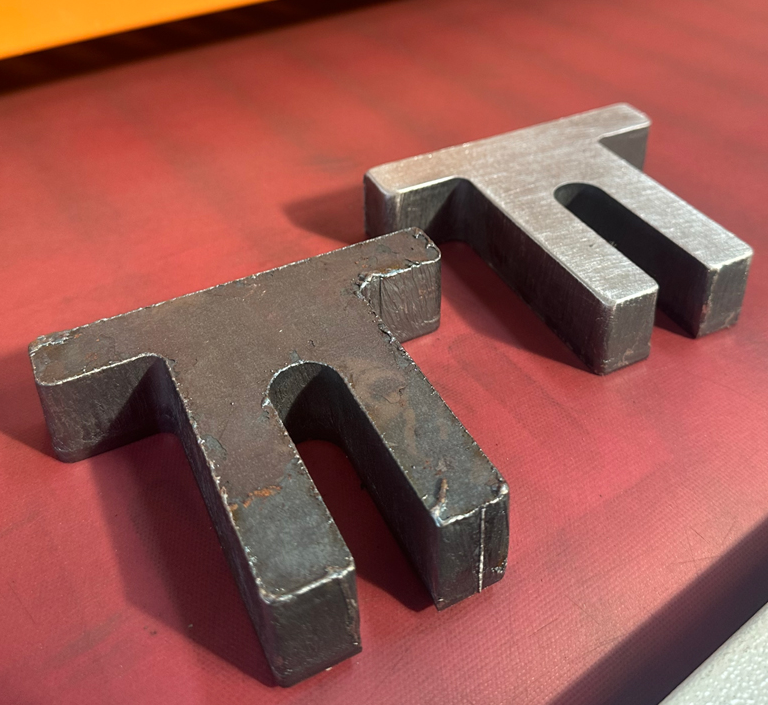
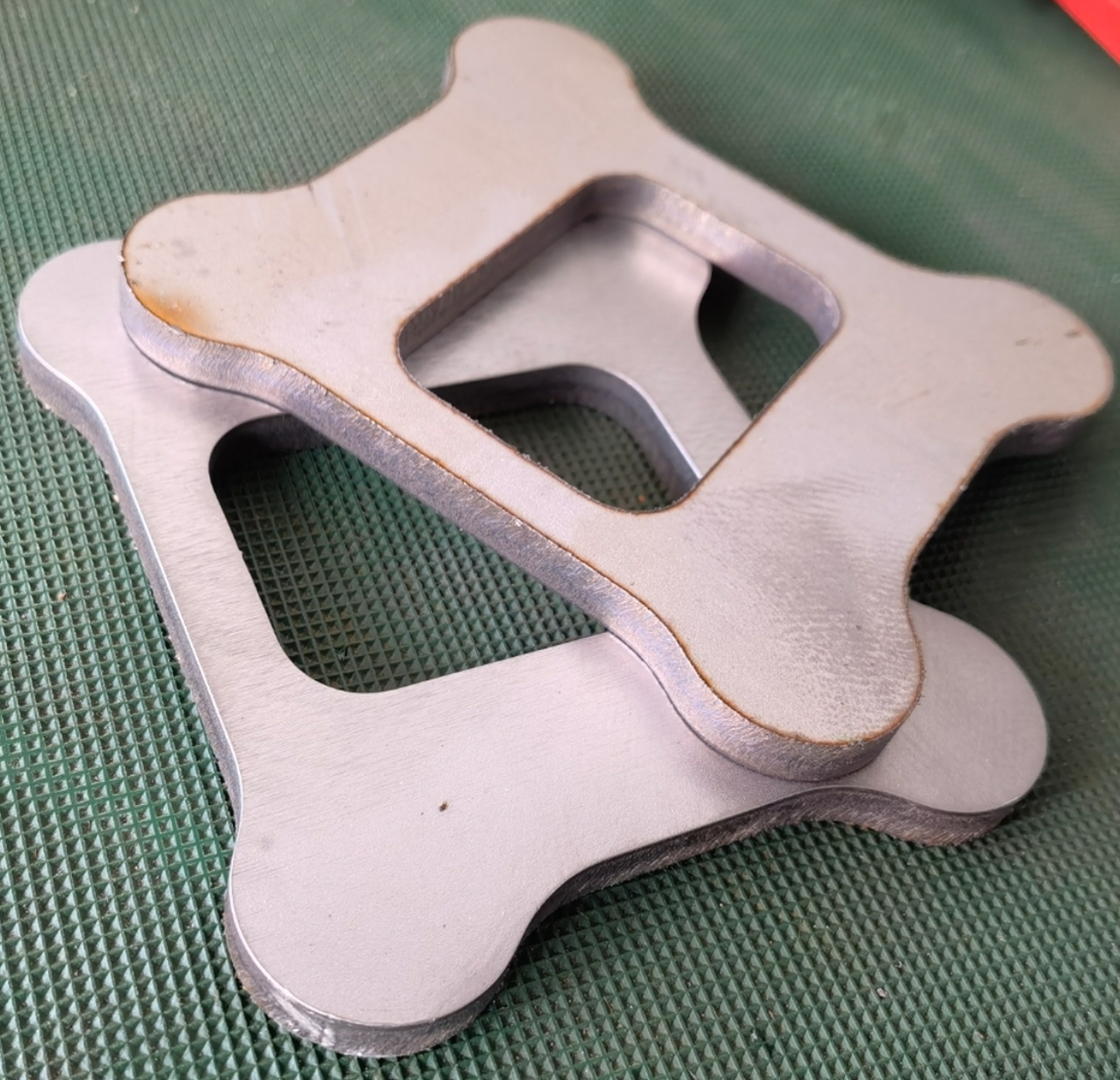
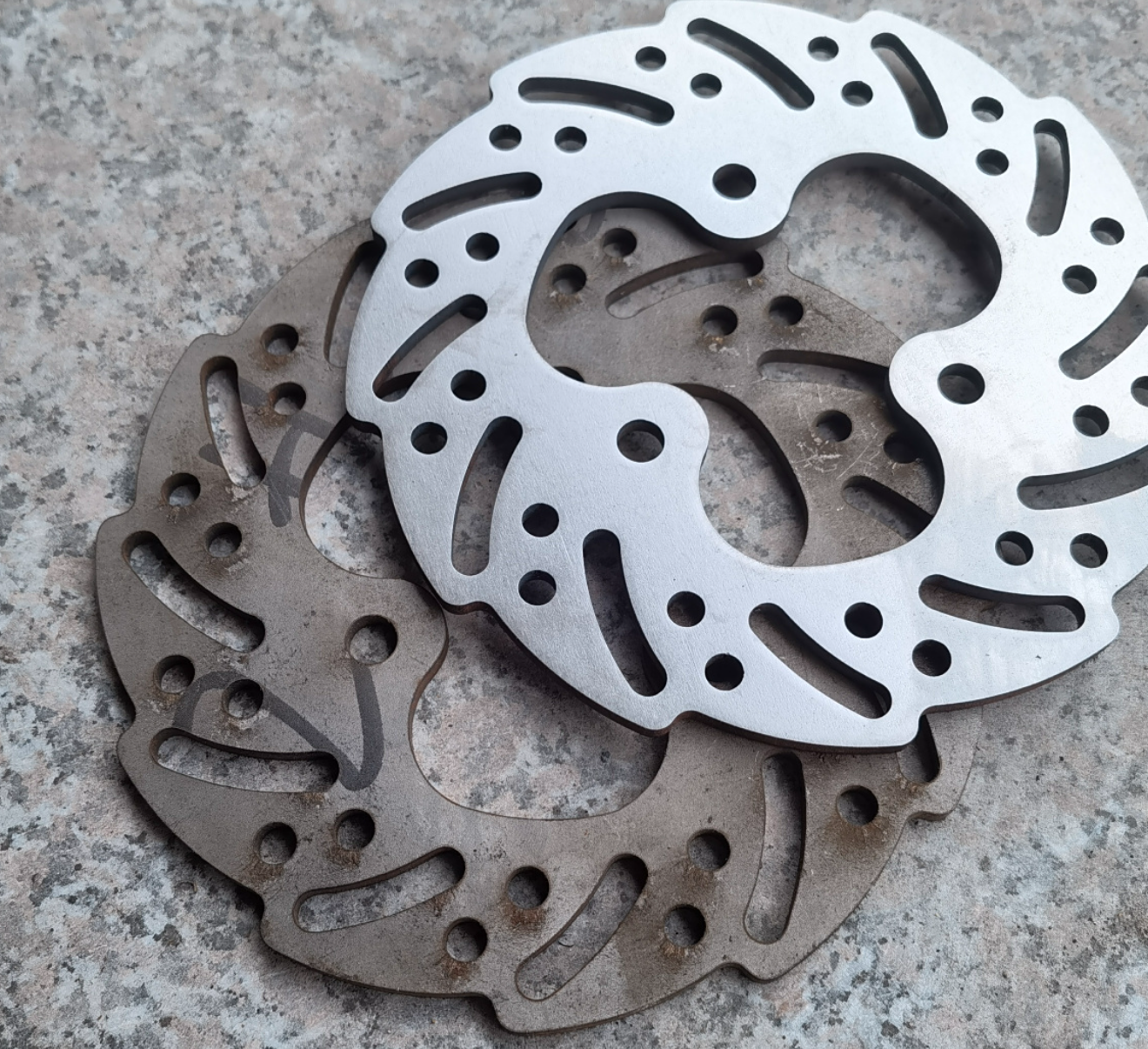
Finished Samples
Real parts finished on the HORISTAR HM series.
Sample Test Plan for Sheet Metal Finishing
HORISTAR offers free sample testing. Use the guide below to prepare your submission and know what to request back.
Send These Parts
- Carbon steel oxygen-cut parts (if oxide is the problem)
- Stainless parts (if visible finish matters)
- Thickest and thinnest material in your range
- Smallest part size
- A part with internal holes and contours
- A part that will be powder coated
Request Back
- Before/after photos
- Processing speed used
- Abrasive or brush configuration
- Edge close-up photos
- Confirmation whether small parts shifted
- Final configuration recommendation
Business Impact: Where the ROI Comes From
For a strong inquiry, share your current manual finishing time and daily part volume so HORISTAR can estimate whether automation is justified.
Get a Finishing Recommendation
Send HORISTAR your part photos and finish requirement. The team will recommend whether you need deburring, edge rounding, oxide removal, surface sanding or a combination — with free sample testing, a 2-year warranty and lifelong technical support.
For related decisions, compare the oxide removal machine guide, the CNC deburring vs manual deburring guide, and the HORISTAR CNC sanding and deburring machine page.
Please send: material, thickness, cutting method, part photos, largest/smallest part size, required edge radius if known, coating/welding/assembly requirement, and daily production volume.
Send Part Photos for Finishing Machine Selection