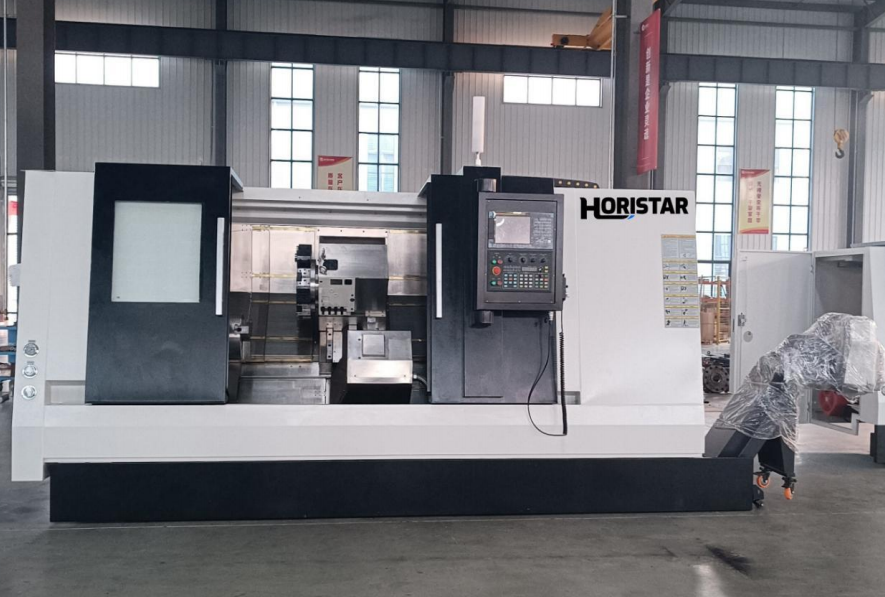
An integral high and low rail bed CNC lathe is a turning machine whose bed is cast as a single rigid unit, with the two guideways arranged at different heights on a slanted bed. The integral casting resists deformation under cutting load, the slant lets chips fall away from the cutting zone, and the high-low guideway layout supports stable axis movement. The HORISTAR TCK series adds a built-in electric spindle, pre-stretched ball screws and a 12-station servo turret — handling both straightforward batch turning and multi-operation turn-mill work.
By Doris Li, CNC Application Engineer, HORISTAR CNC Application Team. Updated July 1, 2026. Technical review: HORISTAR CNC Application Team.
The HORISTAR integral high and low rail bed CNC lathe is built around a one-piece, high-density cast-iron 45° slant bed with a high-low guideway layout. This structure gives the machine a rigid mechanical base, smooth chip evacuation and stable, repeatable cutting for batch production of metal parts. The series is available in three frame sizes — TCK56Y, TCK63Y and TCK80Y — with swing over bed from 560 mm to 800 mm and maximum cutting diameter from 300 mm to 600 mm.
With a 12-station servo power turret and an optional sub-spindle, one machine can turn, mill, drill, tap and even hob gears in a single setup — suited for shafts, sleeves, bushings, fittings, connectors, hydraulic and valve parts, fasteners and automotive components that would otherwise need a second operation. See the full CNC lathe machine range for all available models.
Main Technical Specifications
The table below uses HORISTAR’s published TCK-series parameters. Confirm the exact figures for your selected model and options with HORISTAR before ordering.
| Specification | Unit | TCK56Y | TCK63Y | TCK80Y |
|---|---|---|---|---|
| Swing over bed | mm | 560 | 630 | 800 |
| Max. cutting diameter | mm | 300 | 500 | 600 |
| Max. workpiece length | mm | 500–1000 | 1000–3000 | 1000–3000 |
| Spindle bore | mm | 65 | 80 | 80 |
| Spindle nose | — | A2-6 | A2-11 | A2-11 (A2-8 optional) |
| Spindle speed | rpm | 50–4500 | up to 3000 | up to 3000 |
| Spindle speed control | — | Stepless | Stepless | Stepless |
| Standard chuck | inch | 8″ hollow hydraulic | 10″ hollow hydraulic | 12″ hollow hydraulic |
| Turret | — | 12-station servo power turret (all models) | ||
| Main motor power | kW | 15 | 18.5 | 18.5 / 37 |
| Tailstock quill taper | — | MT4 / MT5 | MT5 | MT6 |
| Tailstock base travel | mm | 400 / 900 | 900 / 1400 / 1900 / 2900 | 900 / 1400 / 1900 / 2900 |
How the Bed and Motion System Are Built
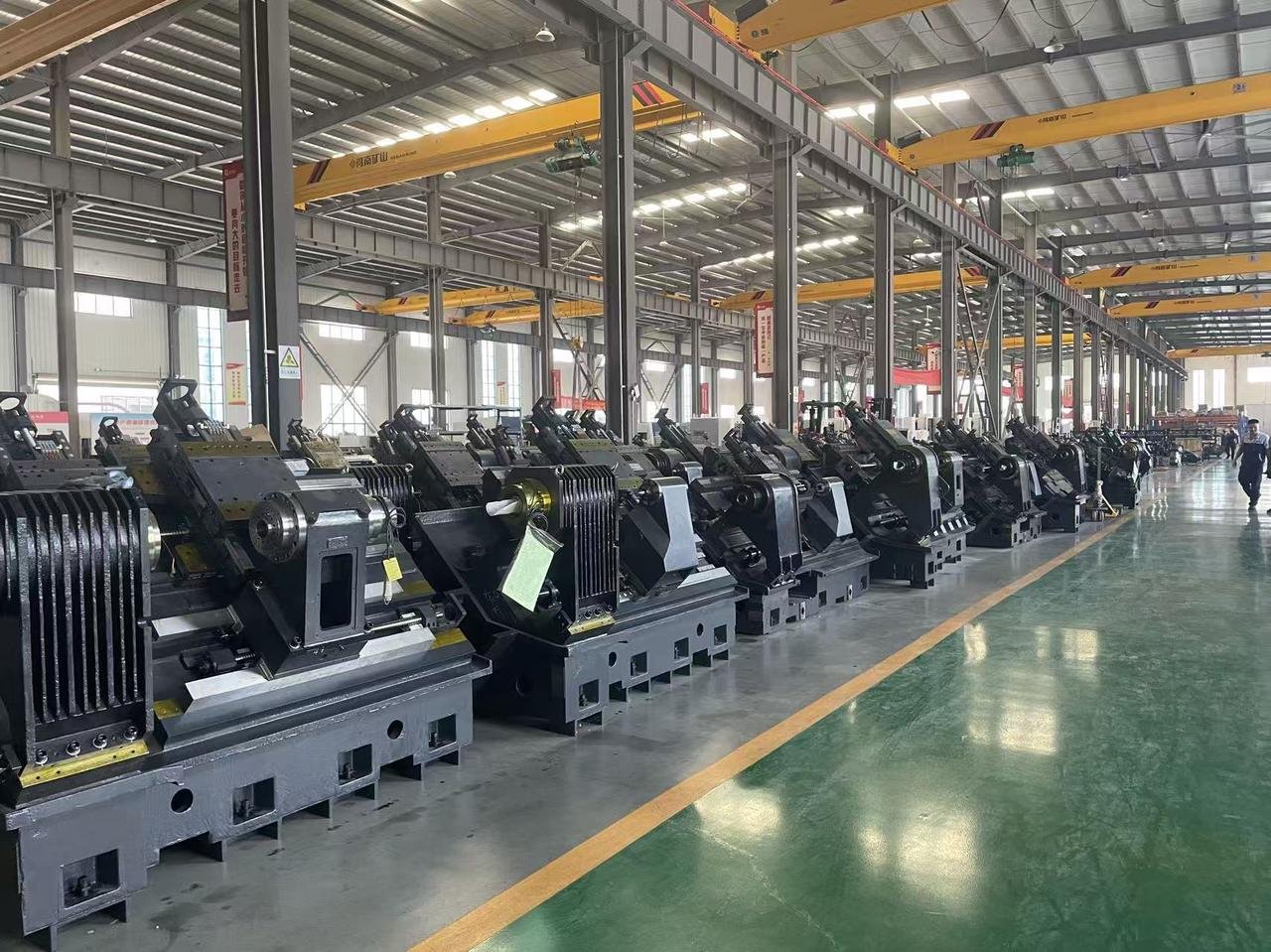
The bed is what allows every other component to hold accuracy, so it is worth looking at the construction in detail rather than treating “rigid bed” as a slogan.
Integral cast-iron 45° slant bed. Cast in one piece from high-density industrial cast iron, rib layout optimised using ANSYS finite-element analysis. The rib design resists deformation and vibration under heavy cutting while keeping accuracy stable over long production runs. The 45° slant lets chips fall directly into the collection system during high-speed cutting, reducing heat buildup at the cutting zone and manual cleaning.
Pre-stretched ball screws, no backlash. X and Z axes use servo direct drive with an elastic coupling and double-end fixed, pre-stretched ball screws. Pre-stretching and dual-end support eliminate backlash and keep positioning consistent as screws warm up during production.
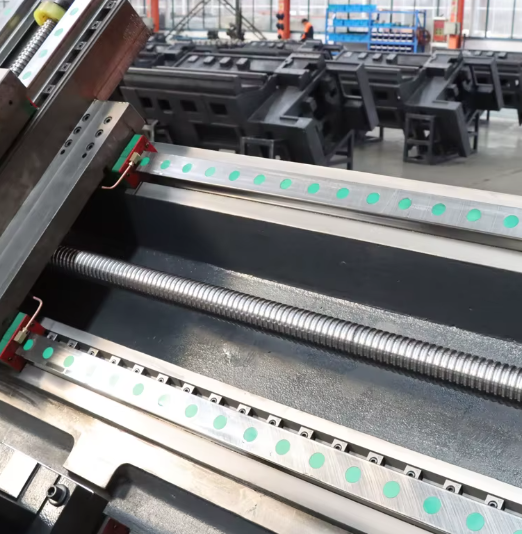
Low-friction guideways. The axes run on four-direction equal-load roller guideways with a ball-cage design, keeping friction heat and thermal deformation low even during rapid traverse. Precision linear ball guideways carry the saddle for smooth, accurate travel.
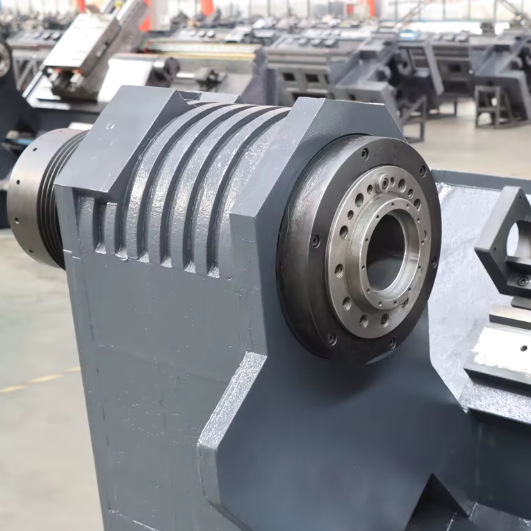
Built-in electric spindle. Direct-drive motor with no intermediate transmission gives low inertia, low noise, minimal vibration, fast acceleration and accurate angular positioning. The A2-6 main spindle runs to 4000–4500 rpm at ~176 Nm torque, bar capacity φ50 mm. An optional sub-spindle (A2-5) runs to 5000 rpm at ~42 Nm with AC variable-frequency vector control for stepless speed under changing loads.
12-station servo turret with Y-axis. Indexes 12 stations with ±50 mm Y-axis travel, supporting turning, milling, drilling, tapping and gear hobbing. A hard-rail Y-axis adds milling rigidity. Hydraulic clamping and a three-piece curvic coupling give fast, repeatable tool changes with no lift, keeping coolant and chips out of the mechanism.
The machine is built to the GB/T16462-2007 precision standard for numerically controlled turning machines.
Recommended Applications
| Application | Typical Parts | Why This Machine Fits |
|---|---|---|
| Shaft turning | Motor, transmission and guide shafts | Rigid integral bed plus tailstock support keeps long parts stable |
| Sleeve and bushing machining | Bushings, sleeves, bearing housings | Stable tool movement holds diameter and wall consistency |
| Hydraulic and pneumatic fittings | Connectors, adapters, threaded parts | Repeated turning and threading need stable positioning |
| Valve components | Valve stems, seats, cylindrical parts | Smooth cutting helps control surface quality |
| Turn-mill parts | Parts needing flats, holes, slots or threads off-axis | 12-station turret and Y-axis remove the second operation |
| Automotive and OEM batches | Small to medium batch turned parts | Servo drive and turret keep cycles repeatable |
These parts serve sectors HORISTAR already supplies: automotive, electronics, aerospace, construction and general OEM machining.
Choosing Between TCK56Y, TCK63Y and TCK80Y
Match the frame size to your largest workpiece first, then check the operations.
Chuck and Tooling System
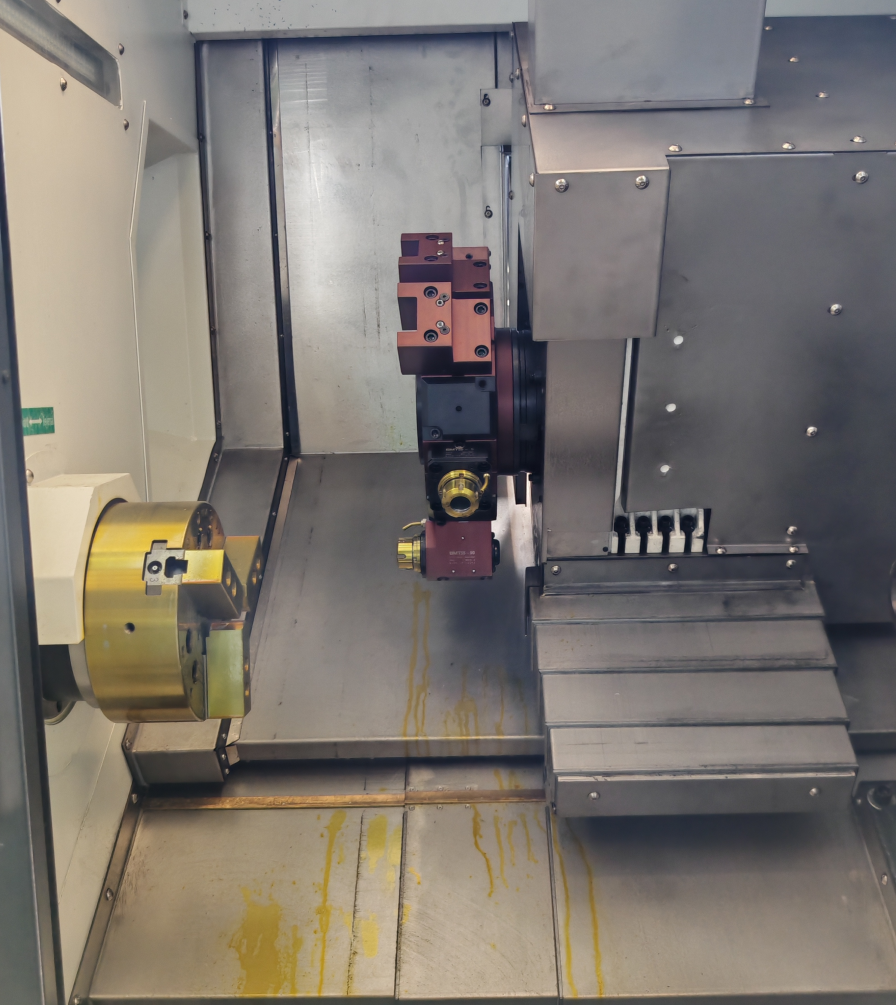
The standard chuck is a Taiwan-made hollow hydraulic chuck — 8″ on the TCK56Y (6″ optional), 10″ on the TCK63Y and 12″ on the TCK80Y — for fast fixture changes and secure clamping at high speed without deformation under heavy cutting. Custom hydraulic chucks and cylinders in other specifications are available on request.
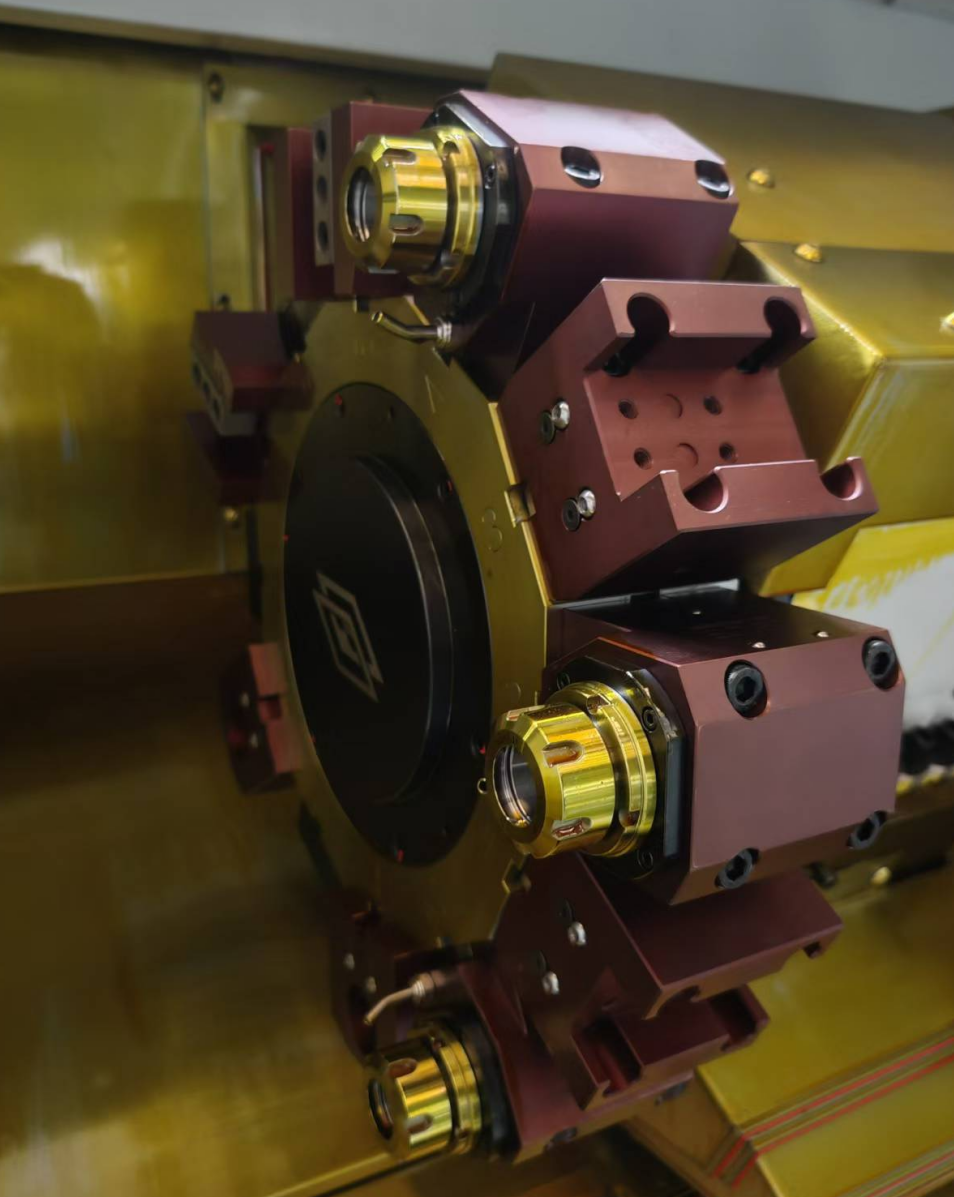
The saddle is integral high-density cast iron, with precision ball linear guideways, imported high-precision ball screws and servo direct drive on the X/Y axes. The hard-rail Y-axis adds milling rigidity, and the 12-station servo turret (±50 mm Y travel) supports integrated turning, milling, drilling, tapping and gear hobbing in a single setup.
Suitable Materials
The machine can be configured for common turning materials depending on tooling and parameters. Final results depend on the tool holder, insert, coolant, clamping method, spindle speed and cutting parameters chosen for the job.
How to Choose the Right Configuration
-
1Start with the drawingSend the part drawing first. It shows outer and inner diameters, length, tolerance, thread and groove requirements, and surface finish — everything needed to confirm frame size and tooling.
-
2Confirm material and hardnessSteel, stainless, aluminium and brass behave differently in turning. Hardness affects spindle power selection (15 kW vs 18.5 kW vs 37 kW), tool choice and cutting strategy.
-
3Decide whether you need turn-mill capabilityIf the part only needs turning, facing, boring, grooving and threading, the standard turret configuration is enough. If it also needs flats, cross holes, slots or off-axis features, the Y-axis and driven-tool turret let you finish it in one setup.
-
4Confirm clampingThe standard hollow hydraulic chuck suits most bar and round work. Castings, tubes and irregular blanks may need custom chucks or fixtures, which HORISTAR can quote.
-
5Ask for free sample testingHORISTAR offers free sample testing before you order: send a representative part and the engineering team will run it and return measured results, so the decision is based on real data rather than catalogue numbers.
What the Bed Structure Actually Influences
The bed does not cut the part directly, but it sets the cutting environment. Accuracy only holds when the spindle, guideways, ball screws, turret and chuck all sit on a stable base — so the integral bed should be judged as part of the full rigidity chain.
| Machine Area | Why It Matters | Verification Method |
|---|---|---|
| Cast bed and rib structure | Resists deformation under load | Ask for bed photos, ANSYS rib description and machine weight |
| Guideway layout | Affects axis stability and tool support | Confirm guideway type and axis travel (X/Z, ±50 mm Y) |
| Electric spindle and headstock | Drives vibration, roundness and finish | Request a spindle run test and trial-cut video |
| Pre-stretched ball screws | Affects positioning and repeatability | Confirm dual-end support and screw protection |
| Turret mounting | Affects tool rigidity and indexing | Confirm 12-station turret, curvic coupling and tool interface |
| Chip flow | Reduces buildup at the cutting zone | Ask for chip conveyor and enclosure photos |
Flat Bed, Slant Bed and Integral High-Low Rail Bed
Different bed structures serve different production needs. The HORISTAR TCK series uses the integral slant + high-low rail approach.
| Structure | Typical Strength | Typical Limitation | Best-Fit Buyer |
|---|---|---|---|
| Flat bed CNC lathe | Simple, easy access, lower cost | Weaker chip flow and rigidity for demanding jobs | Repair shops, simple parts, low volume |
| Slant bed CNC lathe | Better chip evacuation, production-oriented | Higher cost, more enclosed | Batch production, higher output, stable cutting |
| Integral high-low rail bed (TCK) | One-piece casting, strong support, good guideway and chip layout, turn-mill ready | Must be matched to the right spindle, turret and chuck | Buyers needing rigid, repeatable batch machining and optional turn-mill |
Accuracy Is a System
Buyers often search by bed structure because they want better accuracy. Structure matters, but final accuracy depends on the bed rigidity, spindle runout, chuck clamping accuracy, tool-holder rigidity, turret indexing repeatability, ball-screw and servo tuning, guideway alignment, coolant and chip control, material deformation during clamping, tool wear and the inspection method.
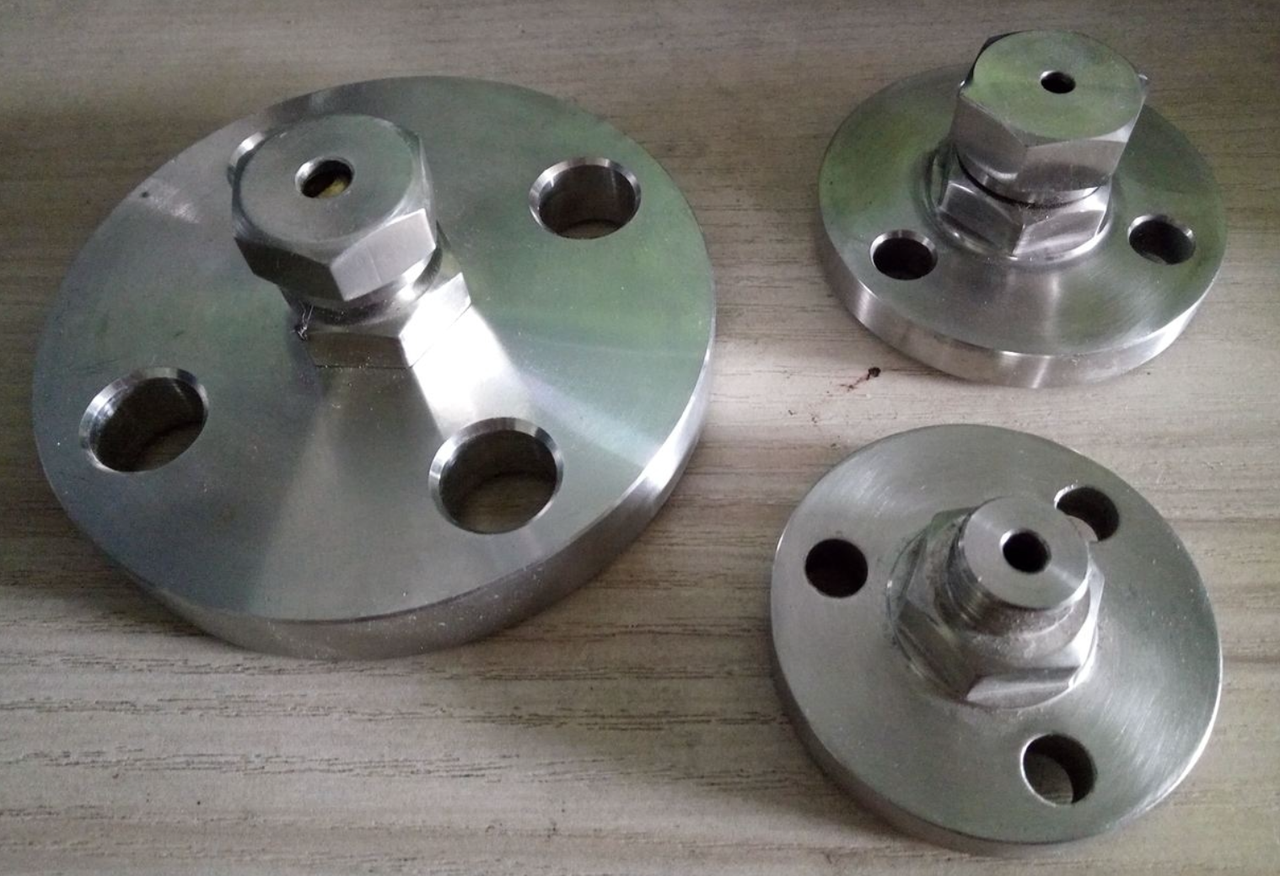
Machining Samples
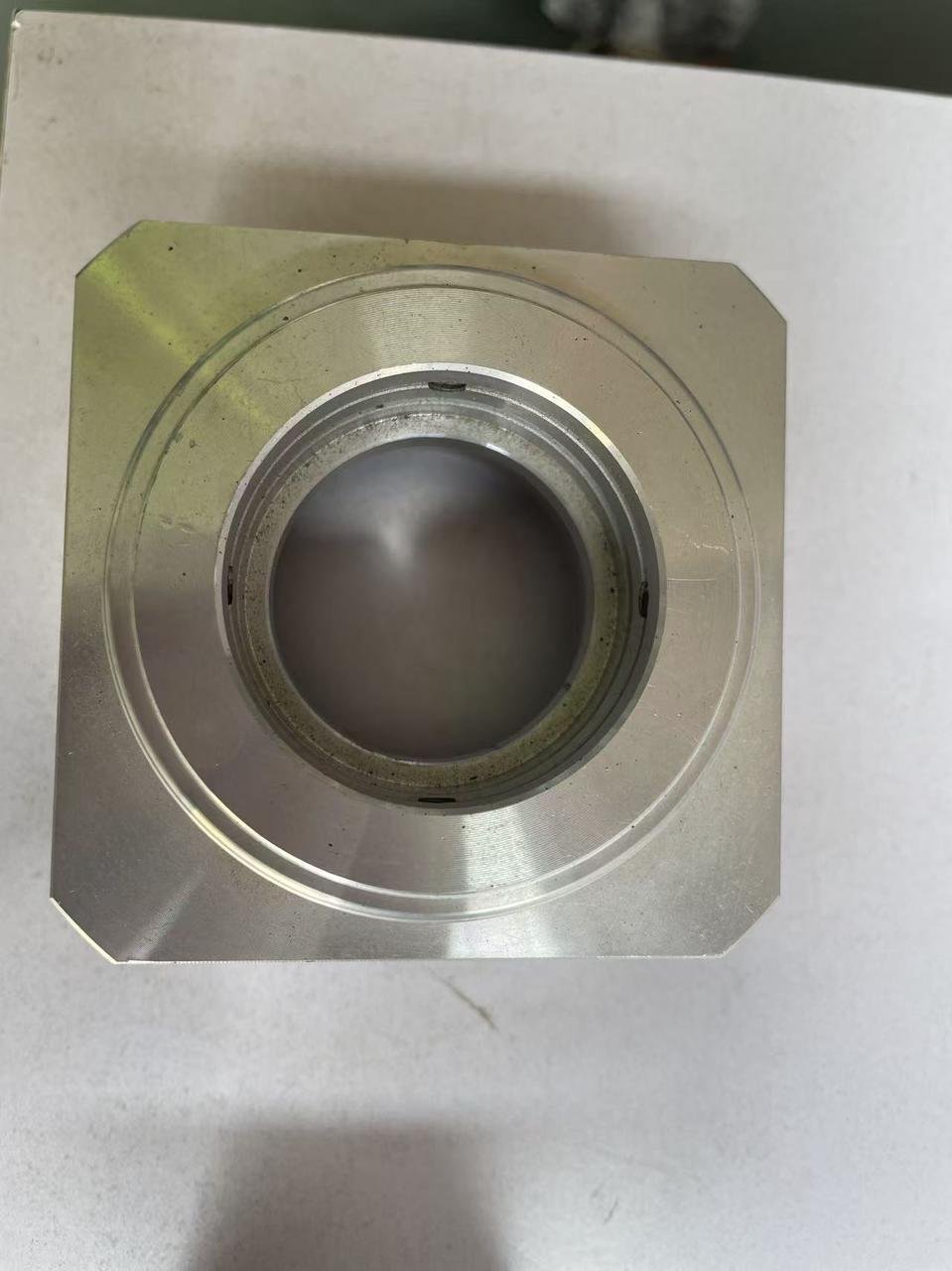
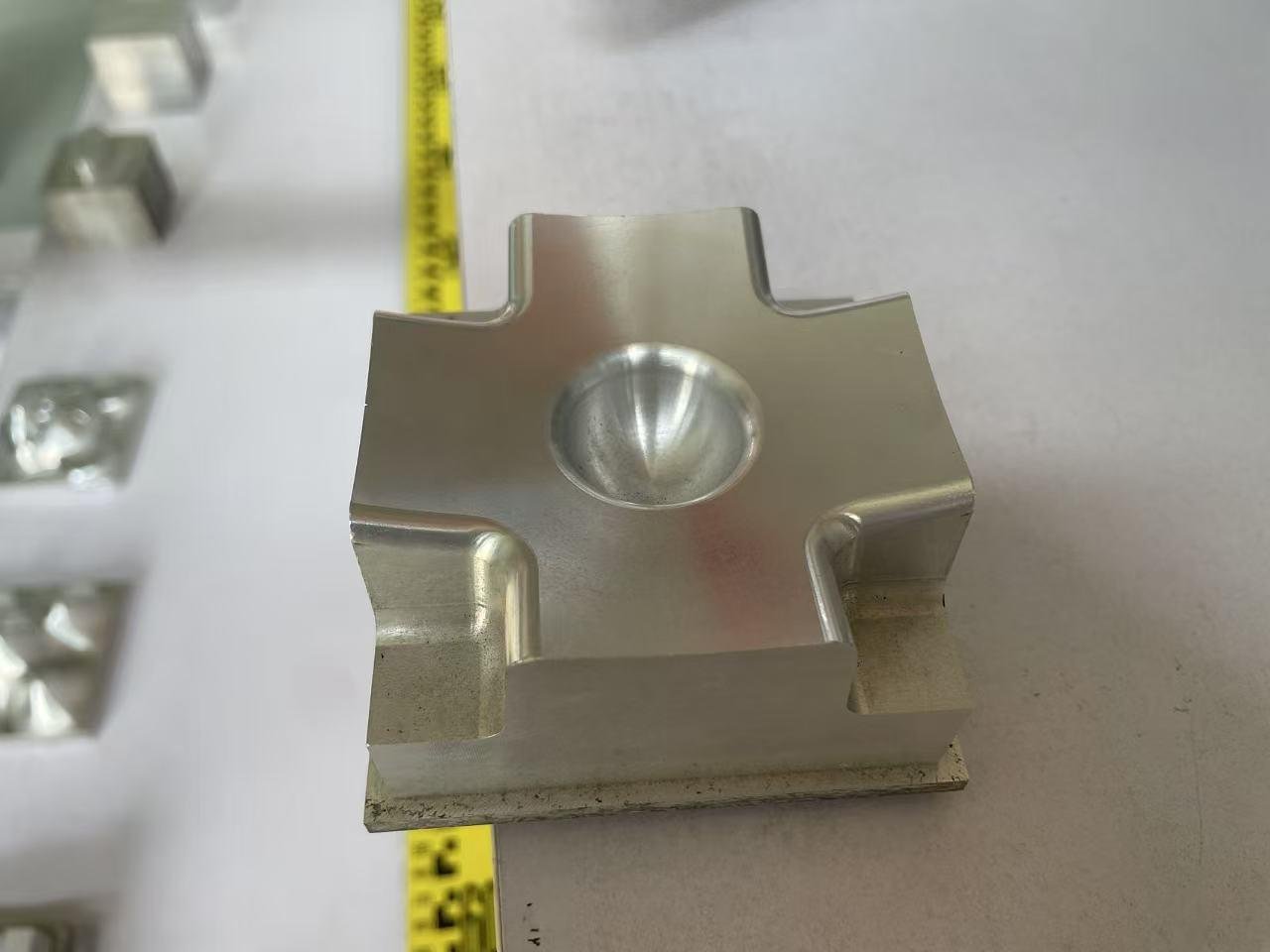
Real parts produced on the HORISTAR CNC lathe, showing surface finish and geometry across different materials.
Recommended Trial Cutting Plan
Before shipment or final acceptance, request a trial cut on a part that represents real production. A good test covers more than one operation.
| Test Item | What It Proves |
|---|---|
| Outer diameter turning | Tool stability, spindle behaviour, dimensional consistency |
| Facing | Flatness and end-face finish |
| Boring (if needed) | Internal machining stability |
| Grooving | Tool rigidity under interrupted load |
| Threading | Synchronisation and repeatability |
| Y-axis milling / drilling (if needed) | Turn-mill rigidity and positioning |
| Repeat-part cutting | Whether dimensions hold across several pieces |
| Surface finish photo | Chatter, vibration and tool marks |
Define the acceptance dimensions before the test. For tight tolerances, agree on measuring tools, temperature, material and inspection method in advance. HORISTAR can provide a test report with technical data and a remote video inspection before shipment.
Quote Worksheet
Rather than asking only “how much is the CNC lathe?”, the information below lets HORISTAR recommend the right model and options.
| Information Needed | Example |
|---|---|
| Workpiece material | 45# steel, stainless, aluminium, brass |
| Blank type | Bar stock, forged blank, casting, tube |
| Max diameter | 120 mm |
| Max length | 350 mm |
| Operations | Turning, boring, threading, grooving, milling |
| Required tolerance | OD ±0.02 mm, thread gauge pass |
| Surface finish | Ra value or visual sample |
| Production volume | 500 pieces/day or 5,000 pieces/month |
| Automation | Manual loading, bar feeder, robotic loading |
| Destination country | For voltage, service and documentation |
Operating Environment
For stable accuracy, install the machine in a dry, temperature-controlled indoor space.
- Power supply: AC 380 V ±10%, 50/60 Hz (advise HORISTAR in advance for special voltages)
- Ambient temperature: 5–40 °C, 24-hour average ≤ 35 °C
- Relative humidity: Per HORISTAR’s published limit, no condensation (confirm for your climate)
- Dust concentration: ≤ 10 mg/m³, free of corrosive gases
- Idle noise: ≤ 83 dB(A)
- Vibration at the foundation: < 0.5 G
The foundation must meet the machine’s installation requirements, and nearby vibration sources should be minimised.
When This Machine Is Not a Good Fit
A clear statement of limits helps serious buyers self-qualify:
- The parts are large prismatic components rather than rotational parts.
- The main process is milling, drilling or tapping across multiple faces of a block — a machining centre is the better tool.
- The work needs a swing or bar capacity beyond the TCK range, or heavy-duty oil-country turning.
- The tolerance is ultra-precision and requires dedicated thermal control.
- You need sheet-metal cutting rather than cylindrical turning.
Service, Warranty and Export Support
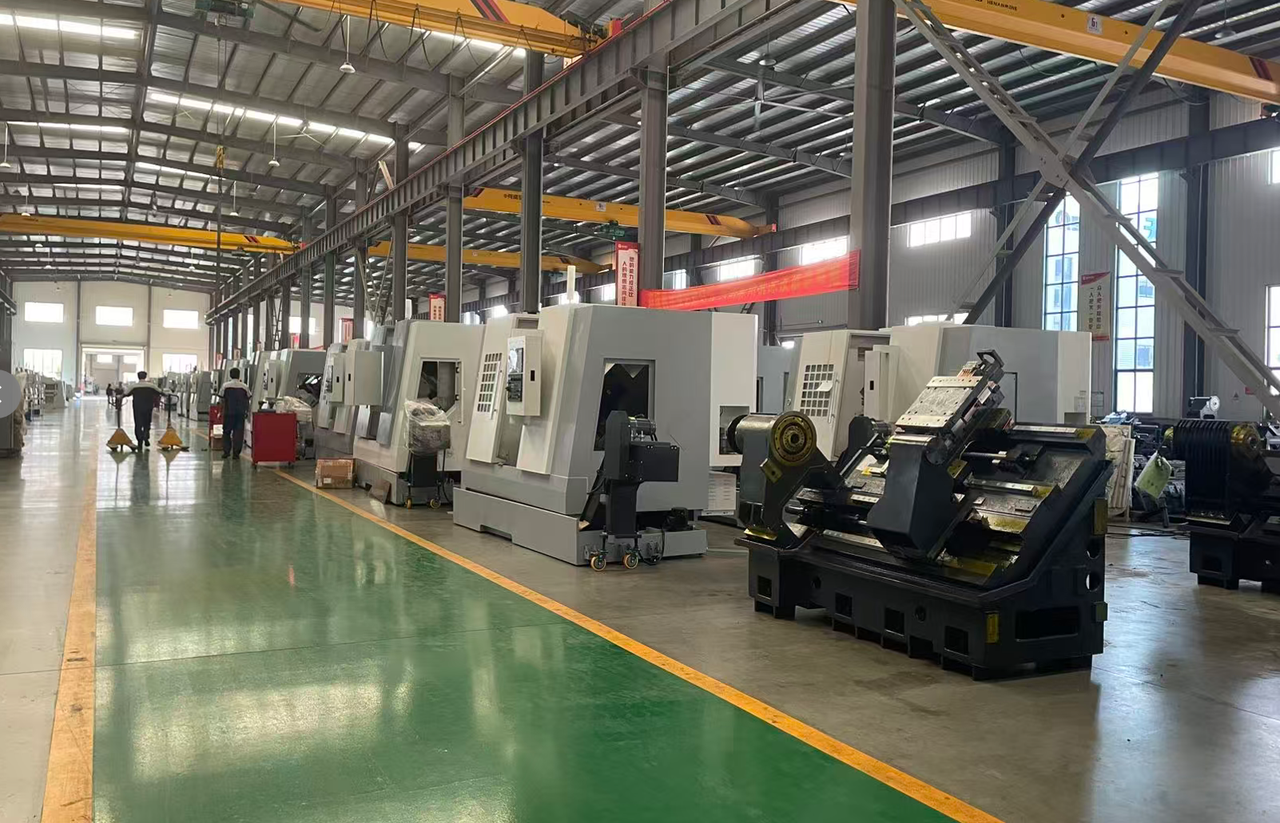
HORISTAR supports the machine across the full purchase cycle:
Standard commercial terms: 30% T/T deposit before production, 70% T/T before shipping. Installation guidance — on-site or remote — includes calibration and operator training.
Why Buyers Choose HORISTAR
HORISTAR manufactures CNC and laser machines from a production base of over 50,000 m², holds 30+ patents and is certified to ISO, CE and FDA standards, with designs following European and American standards. The company has independent R&D and an integrated team across R&D, design, production, inspection, sales and after-sales — with more than a decade of experience supplying customers across 100+ countries and sectors including automotive, electronics, aerospace, furniture, construction and advertising.
Send Your Part Drawing for a Configuration Recommendation
HORISTAR engineers will review your part and suggest the right TCK model, options and cutting strategy — with free sample testing before you commit to an order.
Sources and Review Record
Review record: Updated July 1, 2026 by Doris Li. Technical review completed by the HORISTAR CNC Application Team for TCK-series model data, buyer selection logic, RFQ inputs and safety-source mapping.
- HORISTAR, CNC Lathe Machine product page.
- International Organization for Standardization, ISO 23125:2015 Machine tools — Safety — Turning machines.
- International Organization for Standardization, ISO 12100:2010 Safety of machinery.
- Occupational Safety and Health Administration, 29 CFR 1910.212 Machine guarding.
- International Electrotechnical Commission, IEC 60204-1:2016 Safety of machinery — Electrical equipment of machines.