Quick Answer
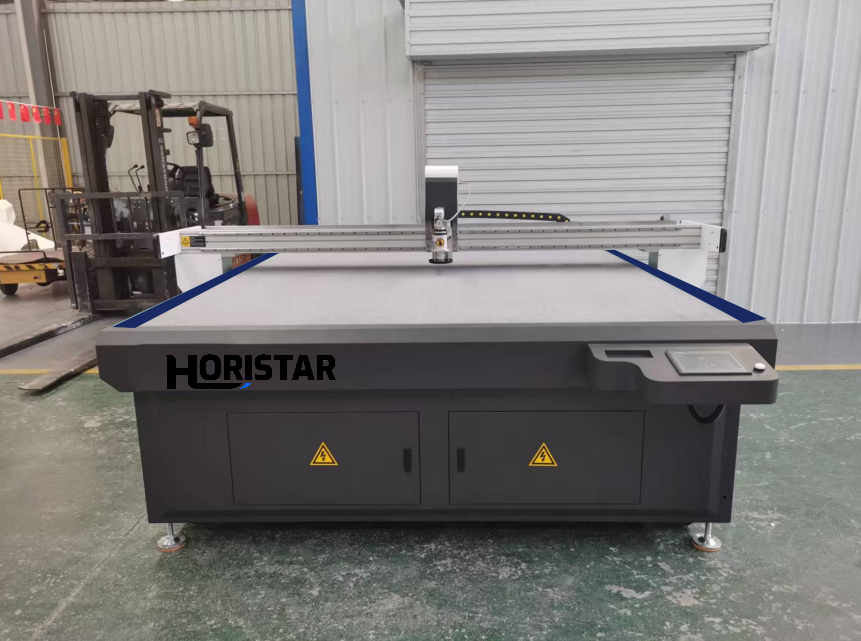
A CNC gasket cutting machine cuts gasket shapes from digital files using knife tools instead of fixed dies. The HORISTAR HM-1625 uses an oscillating knife with vacuum hold-down to cut rubber, silicone, cork and foam to ±0.1 mm tolerance from DXF or PLT files. It is ideal for custom gaskets, short runs, irregular shapes and frequent drawing changes, and is not designed for metal gasket cutting.
By Doris Li, CNC Application Engineer, HORISTAR CNC Application Team. Updated July 1, 2026. Technical review: HORISTAR CNC Application Team.
Main Technical Specifications
| Parameter | HM-1625 |
|---|---|
| Working area | 1600 × 2500 mm |
| Cutting thickness | 0.1–50 mm (heightened beam up to 100 mm, by request) |
| Cutting tolerance | ±0.1 mm |
| Max cutting speed | 1200 mm/s |
| Acceleration | 3000 mm/s² |
| Transmission interface | Ethernet |
| Supported formats | DXF, PLT, PDF, AI |
| Hold-down | Vacuum adsorption |
| Functions | Cutting, grooving, creasing, kiss-cutting, mark-point positioning |
| Tool head (recommended) | Double head: oscillating knife + V-cut + creasing + drag knife + kiss-cut |
The exact blade and tool package for rubber, silicone or foam is confirmed after sample testing.
Product Positioning
Choose this machine if your factory, workshop or service centre needs:
- Custom gasket cutting without dies
- Fast sample production from CAD drawings
- Small and medium batch gasket cutting
- Multi-shape gasket production
- Rubber, silicone, cork, foam or soft composite sheet cutting
- Lower tooling cost than die cutting
- More repeatable cutting than manual knife work
- Flexible production for maintenance and replacement parts
Tool Heads and Functions
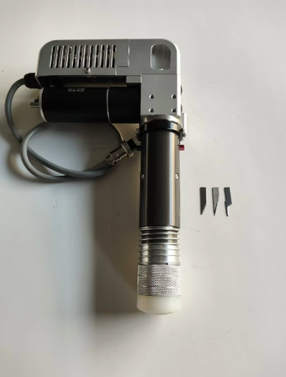
The HM-1625 carries a double cutting head that can combine an oscillating knife, V-cut tool, creasing tool, drag knife and kiss-cut tool. For gasket work the key tools are:
Suitable Gasket Materials
This machine is for non-metal materials. For metal gaskets, contact HORISTAR to recommend a different technology.
Precision Engineering
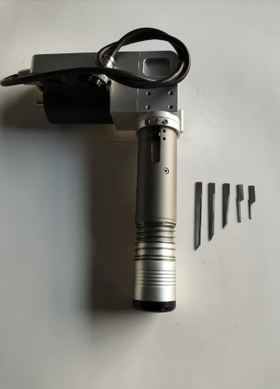
HORISTAR builds the machine from industrial-grade components for durability and accuracy:
Frame
CO₂ shielded-welding bed with secondary vibration aging treatment for deformation-free rigidity over the machine’s lifetime.
Guide Rails
Imported Taiwin high-speed rails with 45° ball geometry for smooth, repeatable motion under full cutting load.
Servo Motor
IP67-rated Donlim servo for fast positioning, high torque output and active vibration suppression during cuts.
Vacuum Pump
Aviation-grade aluminium shell with pure cathode-copper motor — corrosion-resistant, quiet and long-lasting.
Tank Chain
Genuine PA66 nylon drag chain for toughness, wear resistance and reliable cable management at high speeds.
Electronics
Delta driver, CHINT circuit protection, SKF bearings and AKS pneumatics — proven industrial-grade components throughout.
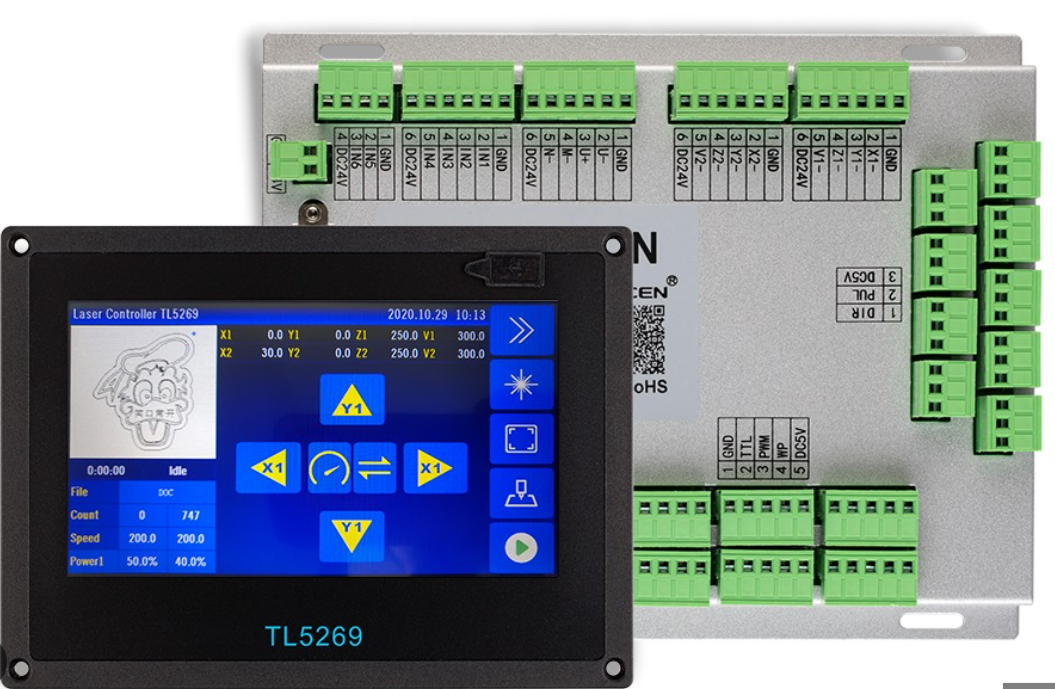
Intelligent Control and Nesting
ZhongRui Intelligent Control Platform
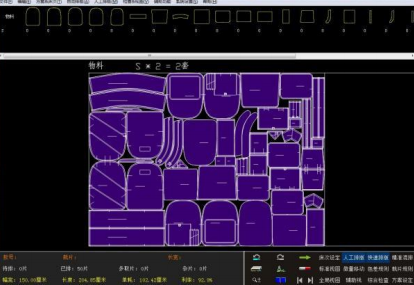
- Automatic nesting arranges parts for over 92% material utilisation — critical when gasket sheet is expensive or an order mixes many shapes.
- Red-light preview confirms the cutting area before the knife starts, preventing errors.
- Intelligent fault detection with on-screen error codes for fast diagnosis.
- Real-time position monitoring for full visibility of every cut in progress.
- Remote internet diagnosis so HORISTAR engineers can assist without an on-site visit.
- Lifetime free software upgrades for nesting and drawing software.
CNC Gasket Cutting vs Die Cutting
For one stable shape in very high volume, die cutting may still be efficient. For changing shapes and small batches, CNC gasket cutting is more flexible.
Gasket Cutting Is Controlled by Material Behaviour
Cutting quality is not determined only by machine accuracy. Rubber, silicone, cork and foam compress, stretch or recover after cutting, and soft sheets can move on the table.
| Material Behaviour | Cutting Risk | Process Response |
|---|---|---|
| Compression | Hole or edge deforms | Adjust blade pressure, speed and passes |
| Elastic recovery | Finished size changes | Sample-test and compensate the tool path |
| Soft sheet movement | Shape distortion | Strong vacuum hold-down, correct cut order |
| Adhesive backing | Liner damaged | Kiss-cut with depth control |
| Fibre reinforcement | Frayed edge | Test blade type and frequency |
| Thick foam | Side wall tilts | Oscillating tool, slower speed |
This is why HORISTAR asks for real material samples when accurate gasket dimensions are required.
Feature Size and Tolerance
Small holes, thin bridges and narrow sealing walls are the hardest features in digital gasket cutting.
Small Inner Holes
Thin Wall Between Holes
Sharp Internal Corners
Long Narrow Strips
Adhesive-Backed Gaskets
Tight Tolerance Gaskets
For many gaskets, a functional sealing fit matters more than a visually perfect edge — define which dimensions are critical before ordering.
Sample Cutting and Acceptance
HORISTAR offers free sample testing before purchase. A good test includes:
- One simple outer contour
- One part with inner holes
- One part with the smallest feature size
- One part from the thickest material
- One adhesive-backed part, if used
- Measurement and an edge close-up after cutting
- Confirmation that the backing liner is intact
Acceptance questions: Is the outer shape in tolerance? Are hole sizes acceptable? Are edges clean enough to seal? Did the material stretch? Is nesting efficient? Can the operator repeat the result?
Production Economics
CNC gasket cutting pays off when die cost and setup time hurt flexibility. Compare the whole workflow, not just cutting speed — consider:
- Number of shapes per month
- Die cost and lead time
- Frequency of drawing changes
- Material waste from manual layout
- Manual cutting hours
- Urgency of maintenance parts
- Value of producing samples before mass orders
Limitations
- Not for metal gasket cutting.
- Very hard or brittle sheets require testing before commitment.
- Extremely small holes are limited by blade geometry.
- Some reinforced materials may fray at the cut edge.
- Very thick material needs slower cutting and multiple passes.
- Tight-tolerance work should be validated by sample measurement after material relaxes.
Service, Warranty and Export Support
- Free sample testing with your own gasket material before ordering.
- Remote video inspection and a test report before shipment.
- 2-year warranty excluding consumables and non-human damage.
- Lifetime free software upgrades (nesting and drawing software) and lifelong technical support.
- On-site or remote installation, calibration and operator training — operators can start within hours.
- Daily multilingual support (~18 hours) via WhatsApp, email and WeChat.
- Standard terms: 30% T/T deposit before production, 70% T/T before shipping.
HORISTAR manufactures from a 50,000+ m² base, holds 30+ patents and is ISO, CE and FDA certified, serving 100+ countries.
Request a CNC Gasket Cutting Machine Quote
Send HORISTAR your gasket drawing and material information for a configuration recommendation and free sample test. Please include:
- Gasket material and hardness
- Material thickness
- Drawing file, sample photo or scanned pattern
- Minimum hole size required
- Required cutting tolerance
- Quantity per batch
- Whether material is adhesive-backed
- Required delivery timeline
Sources and Review Record
Review record: Updated July 1, 2026 by Doris Li. Technical review completed by the HORISTAR CNC Application Team for HM-1625 specifications, gasket-material limits, RFQ inputs and safety-source mapping.
- HORISTAR, Digital Knife Cutting Machine product page.
- ASTM International, ASTM F104 Classification System for Nonmetallic Gasket Materials.
- ASTM International, ASTM F36 Standard Test Method for Compressibility and Recovery of Gasket Materials.
- ASTM International, ASTM D2000 Standard Classification System for Rubber Products in Automotive Applications.
- International Organization for Standardization, ISO 12100:2010 Safety of machinery.