For metal sheet cutting, a fiber laser cutting machine is usually the stronger choice than a CO2 laser cutting machine. The reason is not only speed. Fiber lasers use a shorter wavelength, around 1.06 micrometer, which is absorbed more efficiently by most metals than the 10.6 micrometer wavelength of a CO2 laser. This gives fiber laser systems better performance on stainless steel, carbon steel, aluminum, galvanized sheet, brass and copper.
CO2 laser machines still have an important role, but mainly for non-metal materials such as acrylic, wood, MDF, leather, fabric, paper, rubber and some plastics. For a factory that mainly processes metal sheet parts, fiber laser is normally the more practical investment.
Fiber laser is generally preferred for metal sheet cutting because its shorter wavelength is absorbed more efficiently by metals, allowing faster cutting, lower optical maintenance and better compatibility with reflective materials such as aluminum, brass and copper. CO2 laser is usually better for non-metal materials such as acrylic, wood, leather and fabric. If the buyer’s main revenue comes from stainless steel, carbon steel or aluminum sheet parts, fiber laser should be evaluated first.
Why Wavelength Matters
The core difference between fiber and CO2 laser cutting is the laser wavelength.
Best for Metals
- Stainless steel
- Carbon steel
- Aluminum
- Brass & Copper
- Galvanized sheet
Best for Non-Metals
- Acrylic
- Wood / MDF
- Leather & Fabric
- Paper & Rubber
- Signs & Crafts
Metals generally absorb the shorter fiber laser wavelength more effectively. This is why fiber laser machines can cut metal sheets with higher efficiency, especially in thin and medium thickness ranges.
CO2 laser energy is absorbed well by many organic and non-metal materials. That is why CO2 systems are still widely used for acrylic signs, wood panels, leather cutting, textile cutting, paper products, rubber and engraving work.
The Short Decision Rule
Use This Rule First
- If more than 70% of your work is metal sheet cutting, start with fiber laser.
- If more than 70% of your work is non-metal cutting or engraving, start with CO2 laser.
- If your work is split between metal and non-metal, do not assume one machine should do everything. One fiber laser for metal and one CO2 laser for non-metal is often more stable than forcing one machine to cover both.
Fiber vs CO2 Laser Cutting: Core Comparison
| Decision Factor | Fiber Laser Cutting | CO2 Laser Cutting | Practical Meaning |
|---|---|---|---|
| Metal absorption | Stronger on most metals | Weaker on many metals | Fiber is better for daily metal sheet production. |
| Thin sheet speed | Usually faster | Usually slower | Fiber improves output on stainless, carbon steel and aluminum. |
| Reflective metals | Better fit when properly configured | More difficult | Fiber is preferred for aluminum, brass and copper. |
| Optical maintenance | Lower; no long mirror path | Higher; mirrors and alignment require care | Fiber reduces maintenance burden. |
| Energy efficiency | Higher electrical efficiency | Lower electrical efficiency | Fiber can reduce operating cost. |
| Non-metal cutting | Limited | Strong | CO2 remains better for acrylic, wood, leather and fabric. |
| Edge quality | Excellent with correct gas and parameters | Can be good in limited metal cases | Edge quality depends on gas, focus, speed and material. |
| Industrial metal use | Mainstream choice | Less common for new metal sheet lines | Fiber should be the default starting point for metal buyers. |
Material-by-Material Buyer Guide
🔩 Stainless Steel
Fiber laser is usually the preferred choice for stainless steel sheets. Nitrogen is commonly used when the buyer needs bright, oxidation-free stainless steel edges.
Ask the supplier:
- What stainless steel thickness range can this power cut reliably?
- What edge quality can be expected with nitrogen?
- What nitrogen pressure and consumption are typical?
- Can the supplier provide sample cuts on your actual stainless steel grade?
- What is the expected edge roughness and burr condition?
⚙️ Carbon Steel
Fiber laser is also strong for carbon steel. Oxygen is often used to support the cutting reaction and improve cutting ability on thicker carbon steel, while air or nitrogen may be considered for thinner sheets.
Ask the supplier:
- What is the recommended power for your maximum carbon steel thickness?
- Is oxygen cutting required for your thickness range?
- How much oxide edge is acceptable for your downstream process?
- Will parts be welded, painted, powder coated or assembled directly?
- Do you need slag-free cutting or only acceptable burr control?
✨ Aluminum
Aluminum is more reflective than carbon steel. Fiber laser is usually the better choice, but the machine must be configured for reflective metal cutting. Cutting head protection and parameter stability matter.
Ask the supplier:
- Is the machine suitable for reflective materials?
- What aluminum grades and thicknesses have been tested?
- Is there back-reflection protection?
- What gas is recommended for your aluminum parts?
- Can the machine cut your real sample without heavy burr or edge melting?
🟡 Brass and Copper
Brass and copper are challenging because they are reflective and conductive. Fiber laser is still normally preferred over CO2 for these materials, but not every fiber laser configuration is equally suitable.
Ask the supplier:
- What is the safe cutting range for brass and copper?
- What laser source and cutting head protection are included?
- Does the supplier have sample videos or test reports for your material?
- What thickness should not be recommended for stable production?
Thickness and Power: How to Think About It
There is no universal thickness chart that applies to every machine, because cutting ability depends on laser power, cutting head, focus control, gas system, machine rigidity, material grade and required edge quality. Use this practical decision framework:
| Production Situation | Typical Buying Direction |
|---|---|
| Thin sheet — signs, covers, enclosures, light fabrication | Lower to mid power fiber laser may be sufficient. Confirm speed and edge quality. |
| Mixed stainless steel and carbon steel fabrication | Mid to high power fiber laser is usually more flexible. |
| Thick carbon steel or heavy industrial parts | Higher power, strong bed structure and gas stability become critical. |
| Aluminum, brass or copper cutting | Confirm reflective material configuration before buying. |
| Occasional thin metal plus many non-metals | Separate fiber and CO2 systems may be better than one compromise machine. |
Typical Fiber Laser Power vs Maximum Thickness (Reference Only)
The table below shows commonly published industry reference ranges. These are typical figures for orientation only — always confirm against a sample cut with your actual material.
| Laser Power | Carbon Steel (O₂) | Stainless Steel (N₂) | Aluminum (N₂) | Typical Best Fit |
|---|---|---|---|---|
| 1.5 kW | ~6–10 mm | ~3–4 mm | ~2–3 mm | Thin sheet, signs, covers, light fabrication |
| 3 kW | ~16–20 mm | ~8–10 mm | ~6–8 mm | Mixed stainless and carbon steel fabrication |
| 6 kW | ~20–25 mm | ~12–16 mm | ~10–12 mm | Faster mid-thickness production |
| 12 kW | ~30–40 mm | ~25–30 mm | ~18–20 mm | Thick plate and heavy industrial parts |
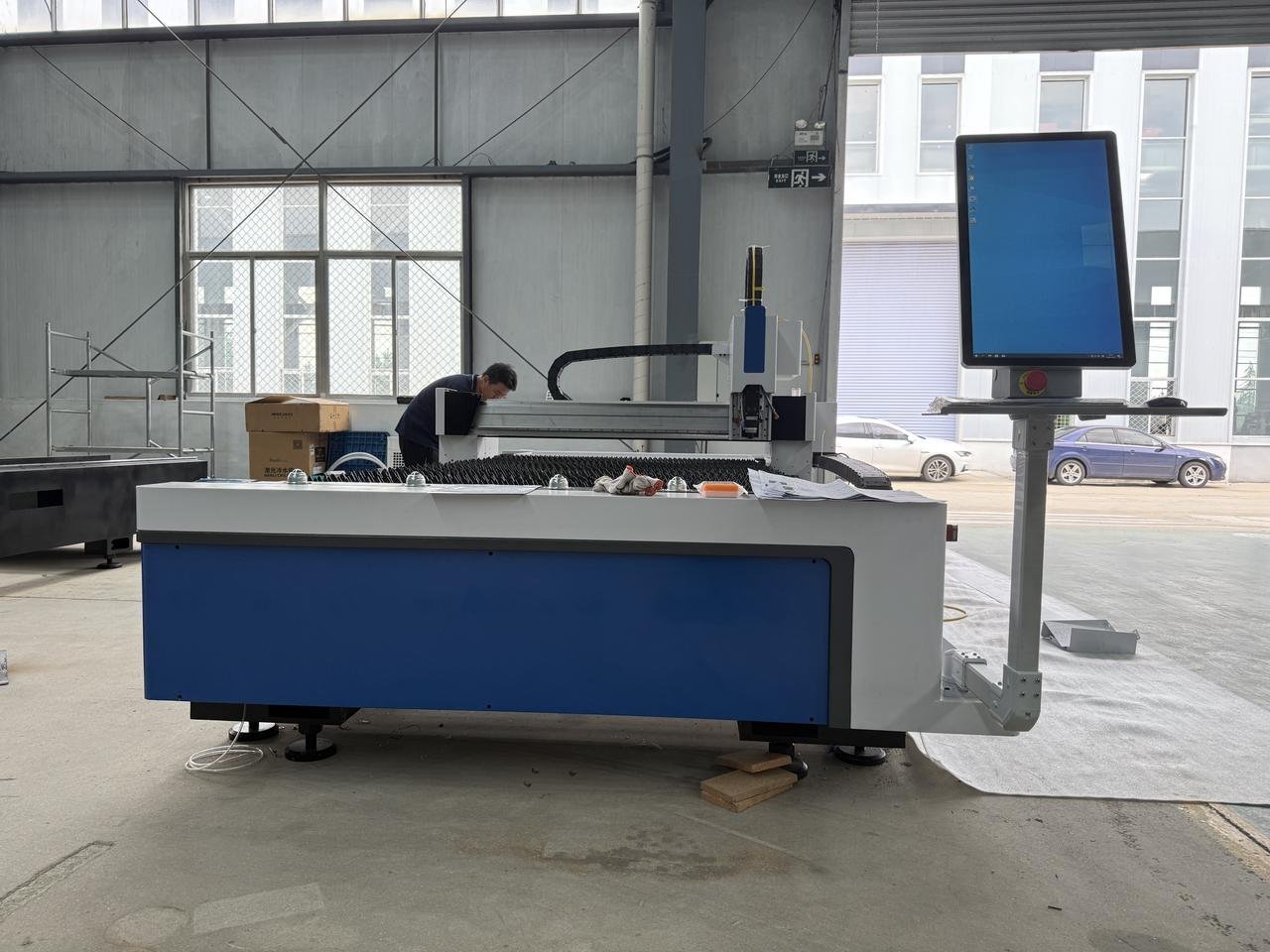
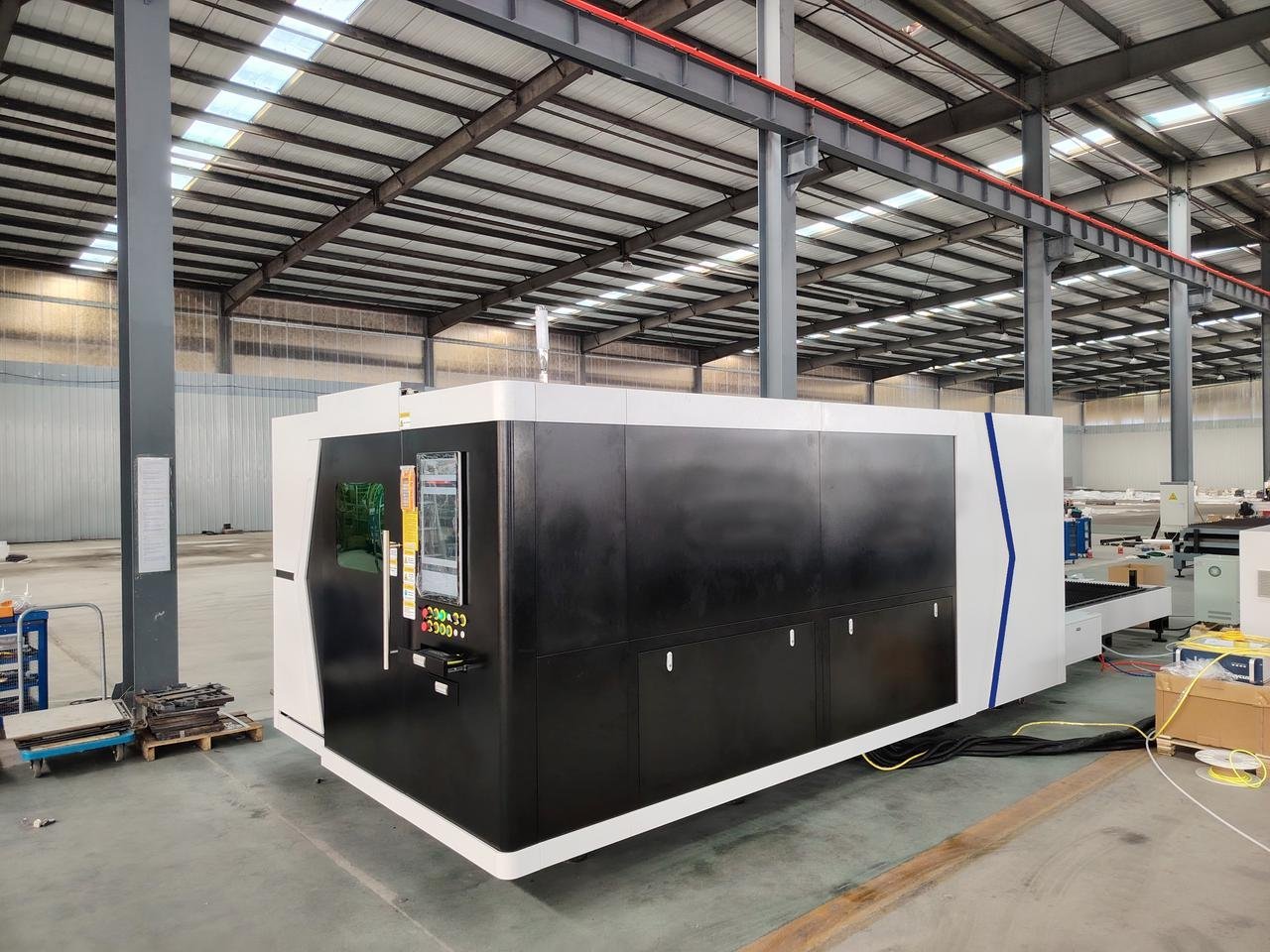
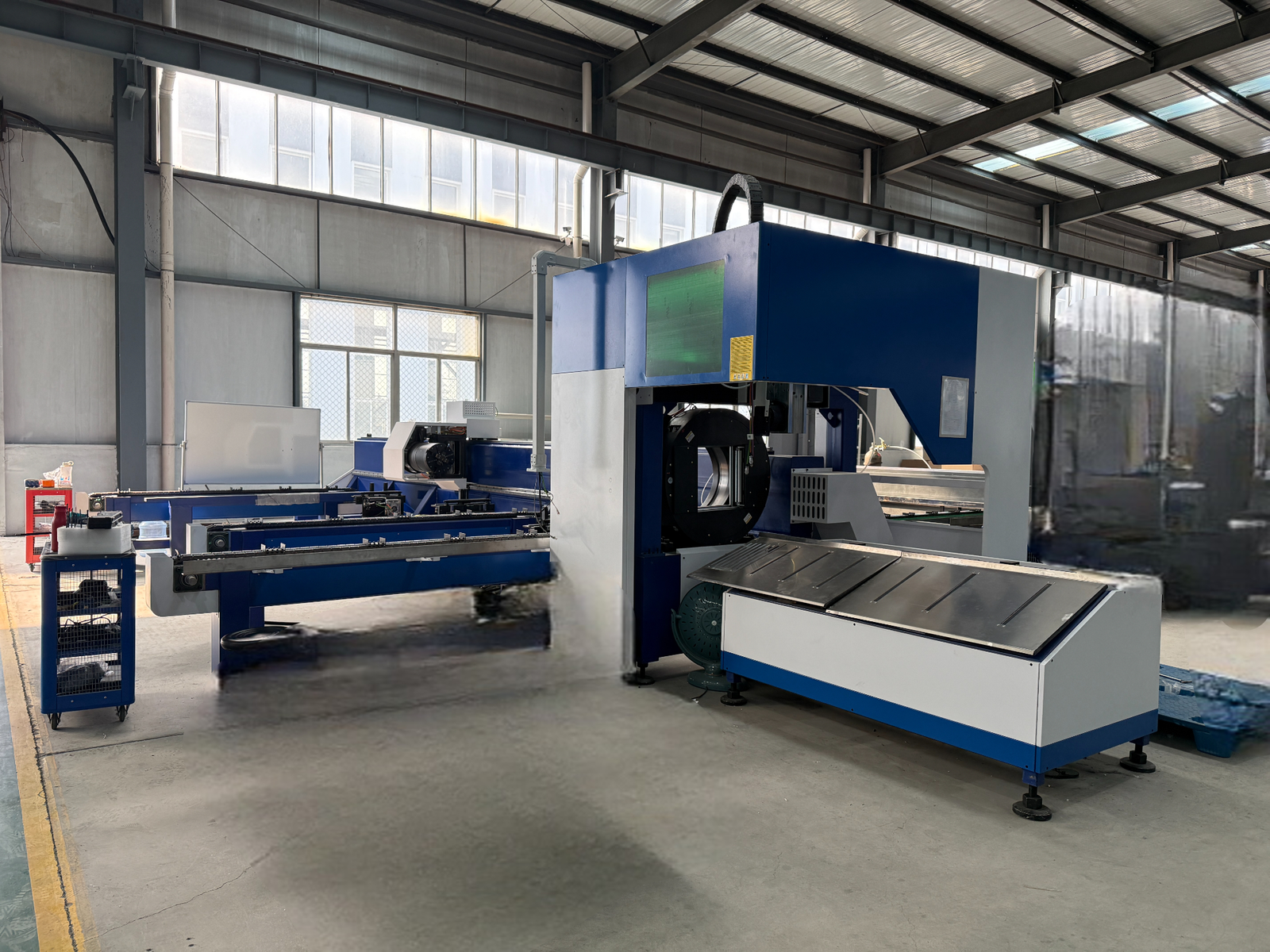
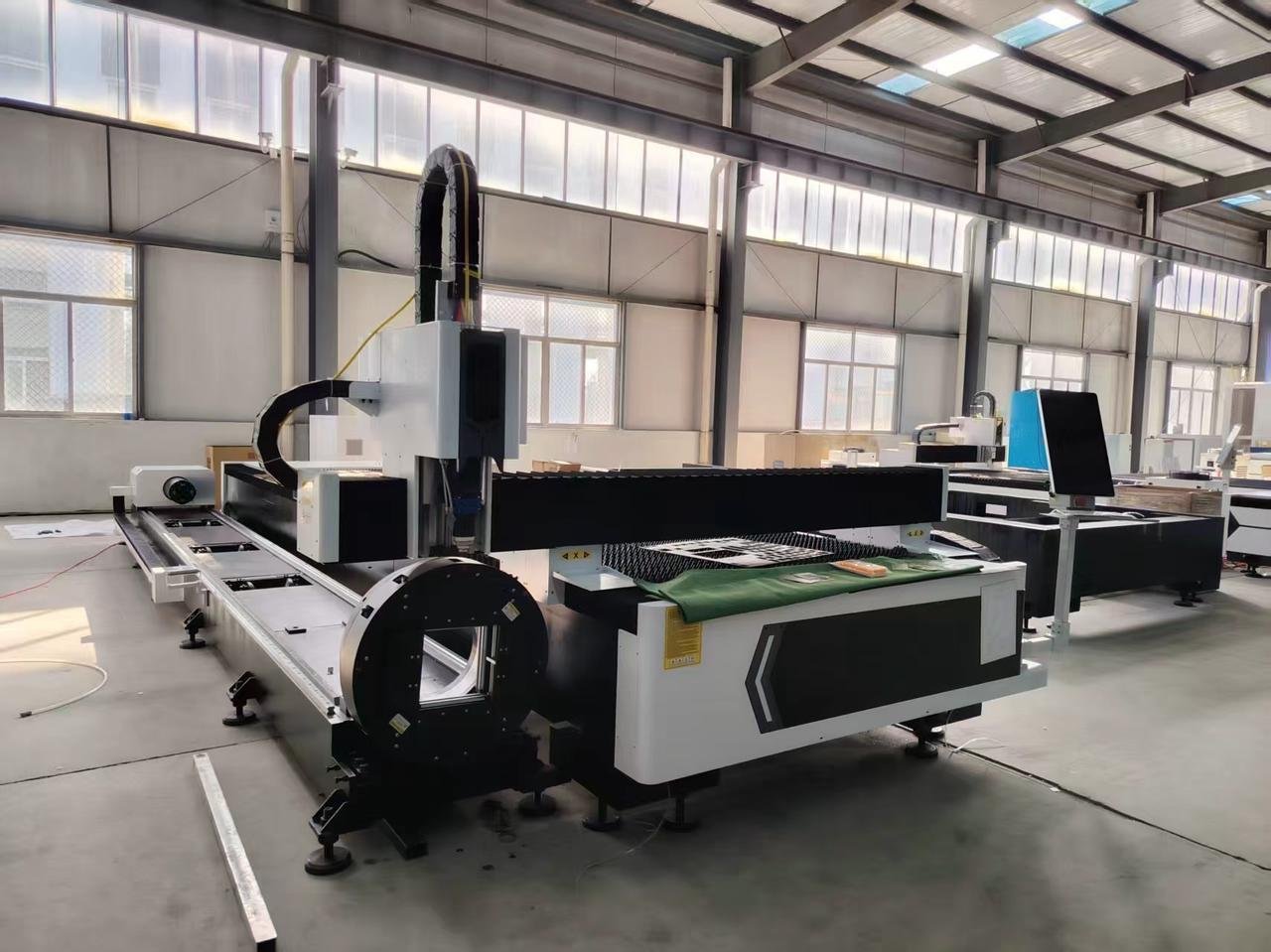
HORISTAR offers fiber laser cutting machines in single-table, closed-type, tube, and combined sheet & tube configurations, with flexible laser power options matched to your thickness range. Request the power-versus-thickness chart for the specific model that fits your material mix.
Do not buy only by wattage. A higher watt laser on a weak machine structure may still perform poorly. The machine bed, motion system, cutting head, cooling system, gas control and software all affect real cutting quality.
Assist Gas Selection
Assist gas affects edge quality, speed, oxidation, burr and operating cost.
| Assist Gas | Common Use | Typical Pressure | Buyer Note |
|---|---|---|---|
| Oxygen | Carbon steel cutting | ~0.5–2 bar (low pressure) | Supports the exothermic cutting reaction; leaves an oxidized edge that may need removal before coating or welding. |
| Nitrogen | Stainless steel and aluminum cutting | ~8–20 bar (high pressure) | Produces clean, oxidation-free edges, but high-pressure consumption makes it the main running-cost driver. |
| Compressed air | Thin carbon, stainless and aluminum sheet | ~6–16 bar (dry, filtered) | Lowest gas cost; edge can show slight oxidation and burr, so air quality and drying matter. |
Below roughly 3 mm, air cutting is often the most economical option for many shops. For bright, oxidation-free stainless edges, nitrogen is usually required. Gas cost is often ignored during machine selection, but on a nitrogen-heavy stainless line it can exceed the electricity cost.
Edge Quality: What Buyers Should Check
When evaluating a sample cut, do not only look at whether the machine cut through the material. Inspect the edge like a production buyer:
- Is there burr on the bottom edge?
- Is the edge vertical or tapered?
- Is there visible dross or slag?
- Is the heat affected zone acceptable?
- Is there oxide on the edge?
- Can the part go directly to welding, coating or assembly?
- Does the edge quality stay stable across the full sheet?
- Are small holes and sharp corners clean?
For stainless steel decorative parts, edge brightness may matter. For carbon steel structural parts, weld preparation may matter more. For aluminum, burr and heat distortion may be the key issue.
Speed Is Not the Only Metric
Many suppliers promote cutting speed, but buyers should focus on useful output: acceptable parts per shift.
Useful output depends on:
- Nesting efficiency
- Loading and unloading time
- Piercing time
- Gas switching
- Small-hole quality
- Part sorting
- Downtime
- Operator skill
- Maintenance frequency
A fast cutting machine with poor nesting or difficult unloading may not improve total production as much as expected.
Maintenance Comparison
Fiber laser machines generally require less optical path maintenance because the laser energy is delivered through fiber optics. CO2 laser systems often use mirrors and a longer optical path, which can require cleaning, alignment and more careful maintenance.
For buyers, this means:
- Fiber laser may reduce daily optical adjustment work.
- CO2 laser maintenance skill is more important.
- Dirty optics can reduce cutting performance.
- Cooling, dust control and lens protection still matter for both systems.
Maintenance should be part of the purchasing conversation, not an afterthought. Ask the supplier for the recommended maintenance schedule and typical consumable replacement intervals.
Total Cost of Ownership
The cheapest machine price is not always the lowest cost machine. Compare the total cost of producing acceptable parts.
Include:
- Machine purchase price
- Laser source and cutting head configuration
- Electricity consumption
- Assist gas consumption
- Lens and nozzle consumables
- Cooling system maintenance
- Operator training
- Software and nesting efficiency
- Downtime risk
- Local service availability
- Spare parts availability
For many sheet metal factories, fiber laser becomes more economical over time because it reduces maintenance burden and improves production efficiency.
When CO2 Laser Still Makes Sense
CO2 laser is still valuable if your production mainly involves non-metal materials.
Choose CO2 laser when your main materials are:
- Acrylic
- Wood or MDF
- Leather
- Fabric
- Paper
- Rubber
- Plastic
- Packaging samples
- Decorative panels
- Signs and crafts
When Fiber Laser Is the Right Choice
Choose fiber laser when your main materials are:
- Stainless steel
- Carbon steel
- Aluminum
- Galvanized steel
- Brass and copper
- Sheet metal parts
- Machinery components
- Enclosures and cabinets
- Automotive parts
- Fabrication parts
For industrial metal sheet cutting, fiber laser should usually be the first machine type to evaluate.
Common Buyer Mistakes
Mistake 1: Buying by power only
Laser power is important, but it is not the whole machine. A complete system includes machine bed, motion control, cutting head, chiller, gas control, software and service.
Mistake 2: Ignoring assist gas cost
Nitrogen can produce clean stainless steel edges, but gas consumption may be significant. Ask for realistic gas cost estimates before buying.
Mistake 3: Testing only easy materials
If your real production includes aluminum, brass, copper, coated sheet or thick carbon steel, test those exact materials before purchase.
Mistake 4: Forgetting downstream processes
A cut edge may look acceptable but fail later in welding, coating or assembly. Evaluate parts according to your full production process.
Mistake 5: Choosing one machine for incompatible materials
A CO2 laser may be excellent for acrylic but weak for metal. A fiber laser may be excellent for metal but not suitable for wood or leather cutting. Material mix should drive the decision.
Buyer Questions to Send the Supplier
Before requesting a quote, send:
- Material list
- Maximum and common thickness
- Sheet size
- Required daily output
- Edge quality requirement
- Main downstream process
- Need for stainless bright edge or carbon steel oxide edge
- Whether aluminum, brass or copper will be cut
- Photos or drawings of typical parts
- Budget range
- Local voltage and gas supply condition
Frequently Asked Questions
Conclusion
For metal sheet cutting, fiber laser is usually the correct starting point. It offers stronger metal absorption, faster processing on many sheet metals, lower optical maintenance and better compatibility with reflective metals. CO2 laser remains valuable for non-metal materials such as acrylic, wood, leather, fabric and rubber.
The best purchase decision comes from matching the laser type to your real material mix, thickness range, edge requirement, gas cost and production volume. For buyers cutting stainless steel, carbon steel or aluminum every day, fiber laser should be evaluated first.